Department of Robotics Engineering, Daegu Gyeongbuk Institute of Science and Technology (DGIST), Daegu 42988, Korea.
Center for BioMicroSystems, Korea Institute of Science and Technology (KIST), Seoul 02792, Korea.
Sensors (Basel). 2018 Nov 15;18(11):3955. doi: 10.3390/s18113955.
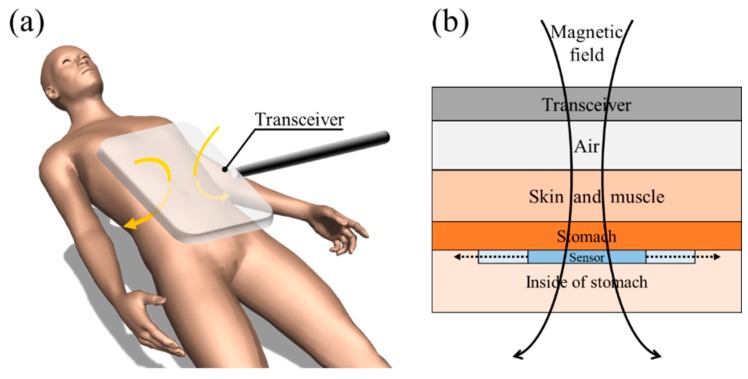
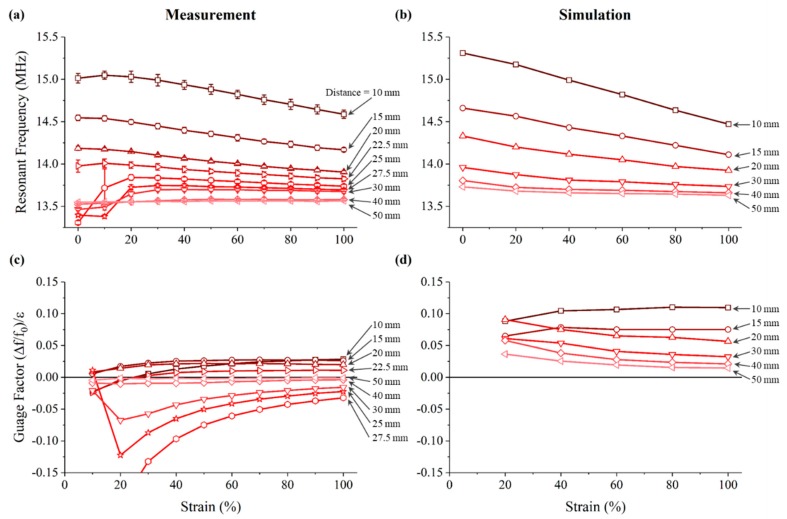
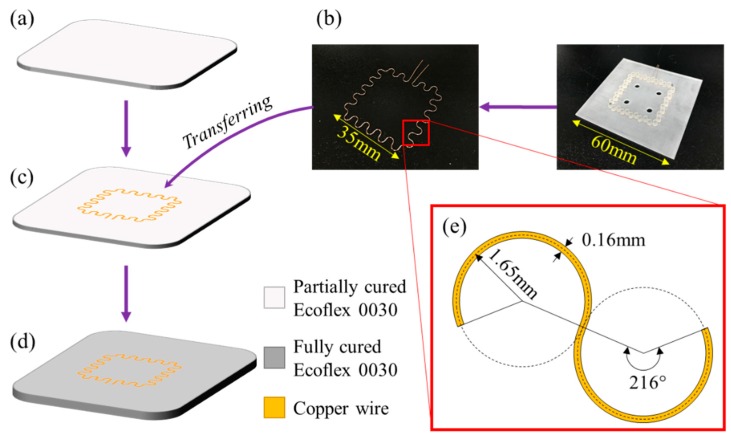
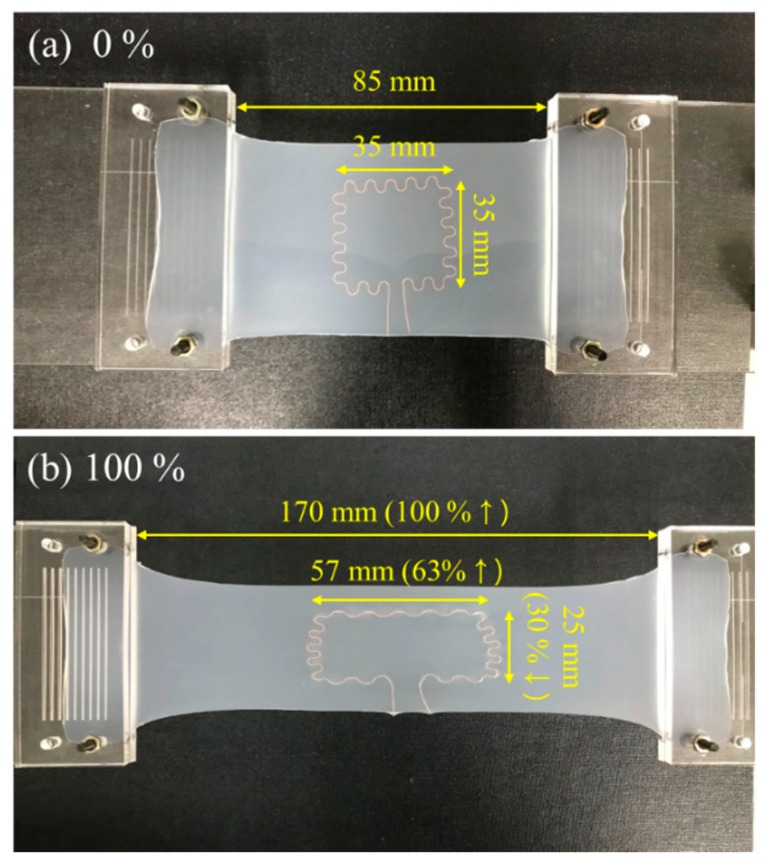
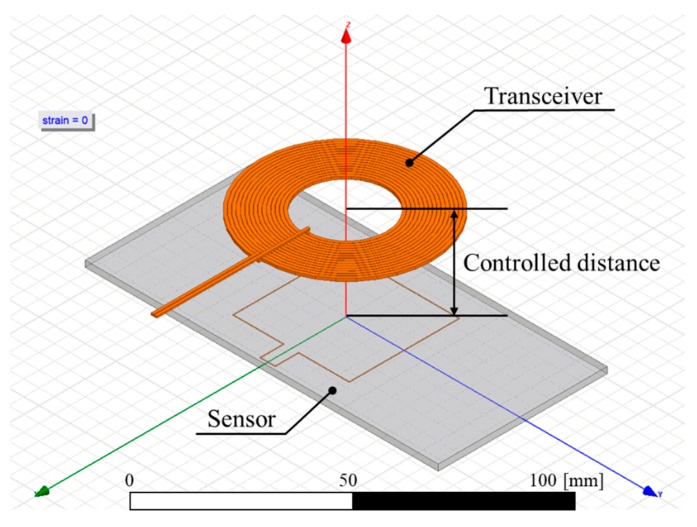
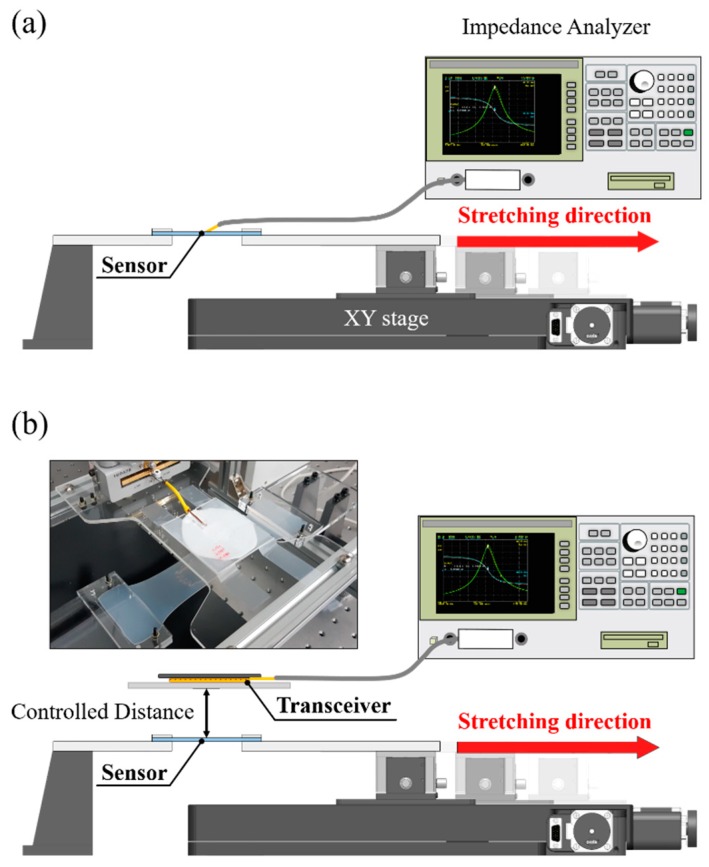
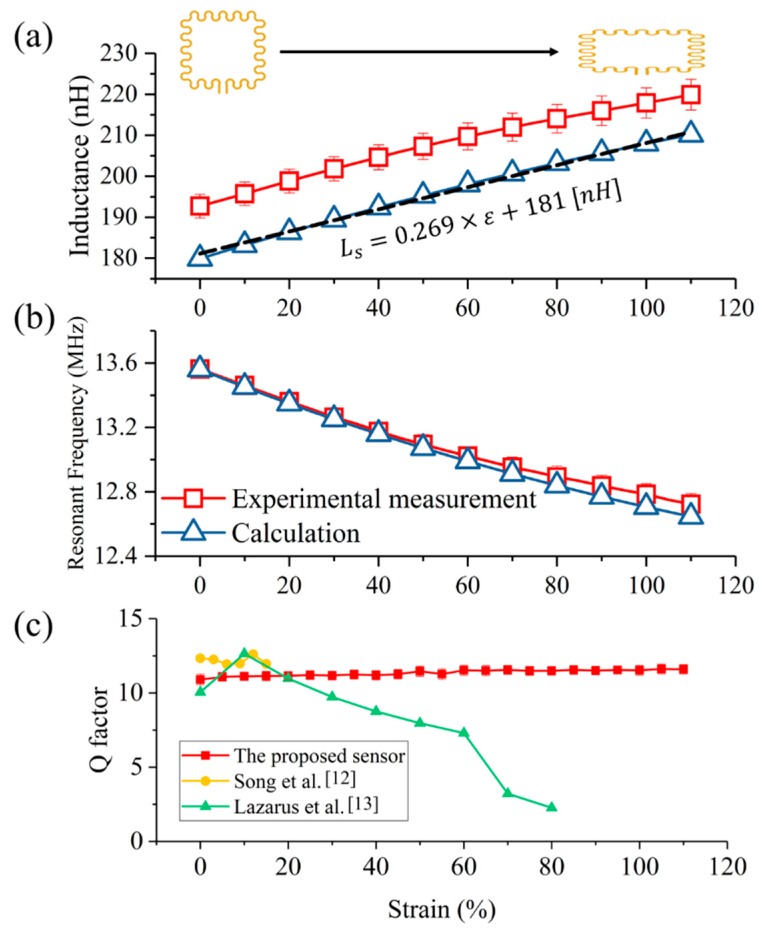
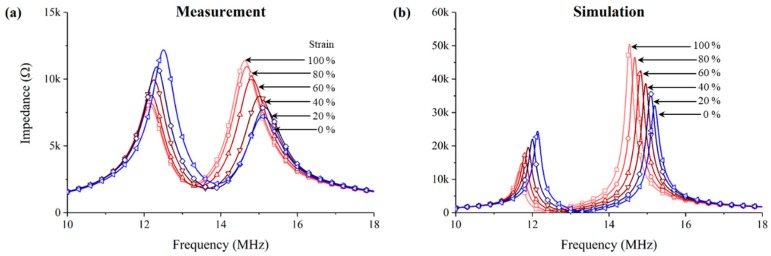
In this study, we demonstrated the feasibility of a wireless strain sensor using resonant frequency modulation through tensile impedance test and wireless sensing test. To achieve a high stretchability, the sensor was fabricated by embedding a copper wire with high conductivity in a silicone rubber with high stretchability, in which the resonant frequency can be modulated according to changes in strain. The characteristics of the sensor and the behavior of wireless sensing were calculated based on equations and simulated using finite element method. As the strain of the sensor increased, the inductance increased, resulting in the modulation of resonant frequency. In experimental measurement, as the strain of the sensor increased from 0% to 110%, its inductance was increased from 192 nH to 220 nH, changed by 14.5%, and the resonant frequency was shifted from 13.56 MHz to 12.72 MHz, decreased by 6.2%. It was demonstrated that using the proposed sensor, strains up to 110% could be detected wirelessly up to a few centimeters.
在这项研究中,我们通过拉伸阻抗测试和无线传感测试展示了一种使用谐振频率调制的无线应变传感器的可行性。为了实现高拉伸性,该传感器通过在高拉伸性的硅橡胶中嵌入高导电性的铜线来制造,其中谐振频率可以根据应变的变化进行调制。基于方程计算了传感器的特性和无线传感行为,并使用有限元法进行了模拟。随着传感器应变的增加,电感增加,导致谐振频率的调制。在实验测量中,随着传感器应变从 0%增加到 110%,其电感从 192nH 增加到 220nH,变化了 14.5%,谐振频率从 13.56MHz 降低到 12.72MHz,降低了 6.2%。结果表明,使用所提出的传感器,可以无线检测高达 110%的应变,距离可达几厘米。