Department of Dermatology, University Medical Center, 55131 Mainz, Germany.
Int J Mol Sci. 2018 Nov 15;19(11):3605. doi: 10.3390/ijms19113605.
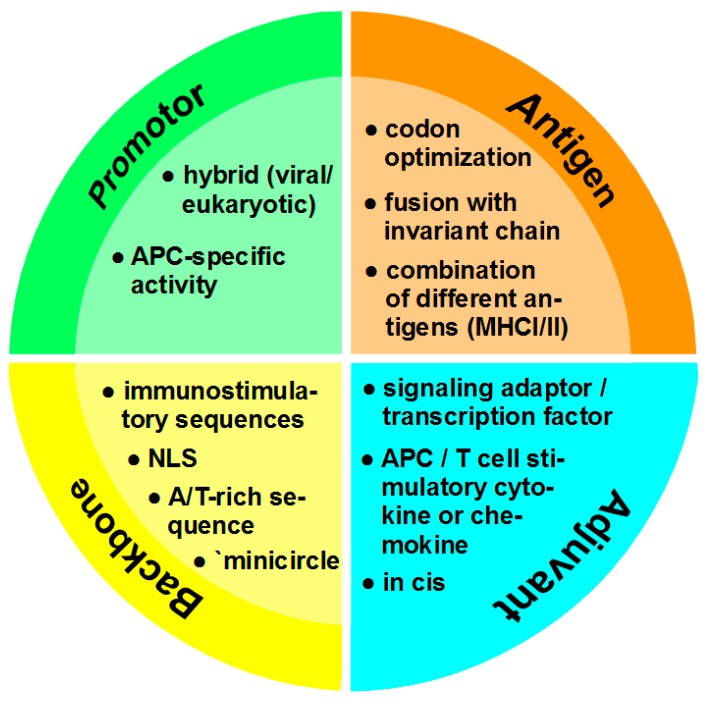
Two decades ago successful transfection of antigen presenting cells (APC) in vivo was demonstrated which resulted in the induction of primary adaptive immune responses. Due to the good biocompatibility of plasmid DNA, their cost-efficient production and long shelf life, many researchers aimed to develop DNA vaccine-based immunotherapeutic strategies for treatment of infections and cancer, but also autoimmune diseases and allergies. This review aims to summarize our current knowledge on the course of action of DNA vaccines, and which factors are responsible for the poor immunogenicity in human so far. Important optimization steps that improve DNA transfection efficiency comprise the introduction of DNA-complexing nano-carriers aimed to prevent extracellular DNA degradation, enabling APC targeting, and enhanced endo/lysosomal escape of DNA. Attachment of virus-derived nuclear localization sequences facilitates nuclear entry of DNA. Improvements in DNA vaccine design include the use of APC-specific promotors for transcriptional targeting, the arrangement of multiple antigen sequences, the co-delivery of molecular adjuvants to prevent tolerance induction, and strategies to circumvent potential inhibitory effects of the vector backbone. Successful clinical use of DNA vaccines may require combined employment of all of these parameters, and combination treatment with additional drugs.
二十年前,成功地在体内转染了抗原呈递细胞 (APC),这导致了原发性适应性免疫反应的诱导。由于质粒 DNA 的良好生物相容性、成本效益高的生产和长保质期,许多研究人员旨在开发基于 DNA 疫苗的免疫治疗策略,用于治疗感染和癌症,以及自身免疫性疾病和过敏。这篇综述旨在总结我们目前对 DNA 疫苗作用机制的认识,以及迄今为止导致其在人类中免疫原性差的因素。提高 DNA 转染效率的重要优化步骤包括引入 DNA 复合纳米载体,旨在防止细胞外 DNA 降解,实现 APC 靶向,并增强 DNA 的内体/溶酶体逃逸。病毒衍生的核定位序列的附着有助于 DNA 的核内进入。DNA 疫苗设计的改进包括使用 APC 特异性启动子进行转录靶向,排列多个抗原序列,共递送分子佐剂以防止诱导耐受,以及规避载体骨架潜在抑制作用的策略。DNA 疫苗的成功临床应用可能需要综合运用所有这些参数,并与其他药物联合治疗。