Crupi Annunziata N, Nunnelee Jordan S, Taylor David J, Thomas Amandine, Vit Jean-Philippe, Riera Celine E, Gottlieb Roberta A, Goodridge Helen S
Board of Governors Regenerative Medicine Institute, Cedars-Sinai Medical Center, Los Angeles, CA 90048, USA.
Department of Biomedical Sciences, Cedars-Sinai Medical Center, Los Angeles, CA 90048, USA.
Aging (Albany NY). 2018 Nov 18;10(11):3327-3352. doi: 10.18632/aging.101643.
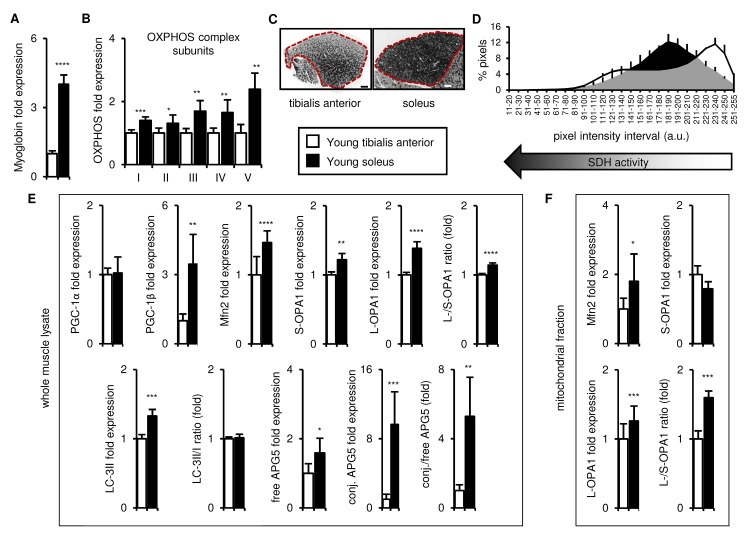
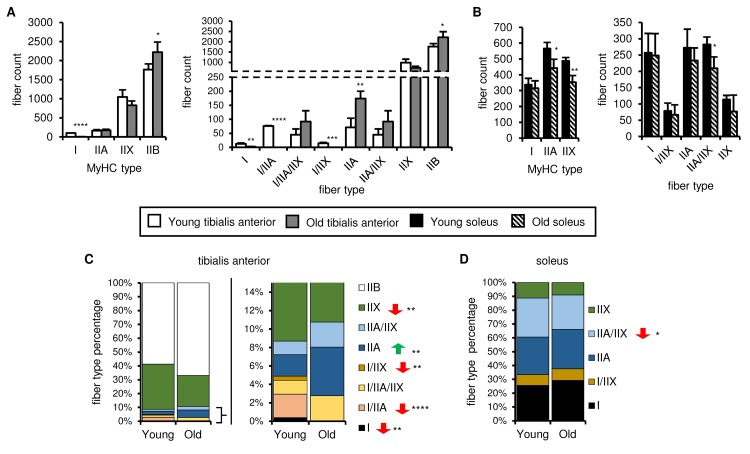
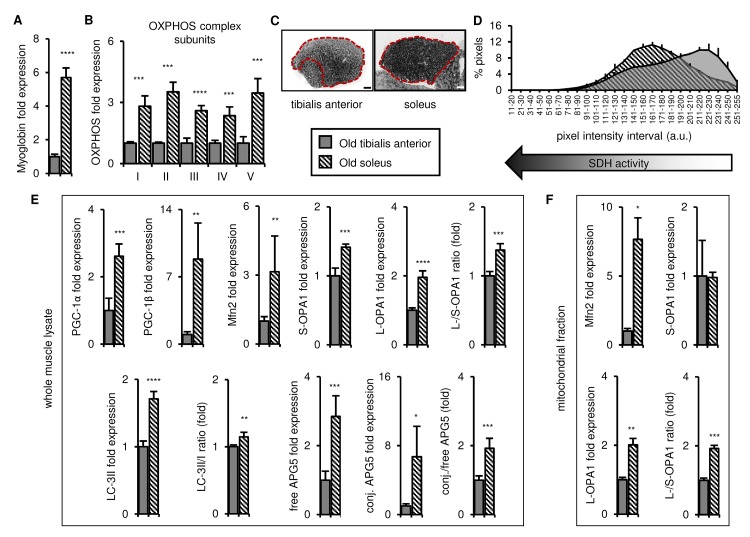
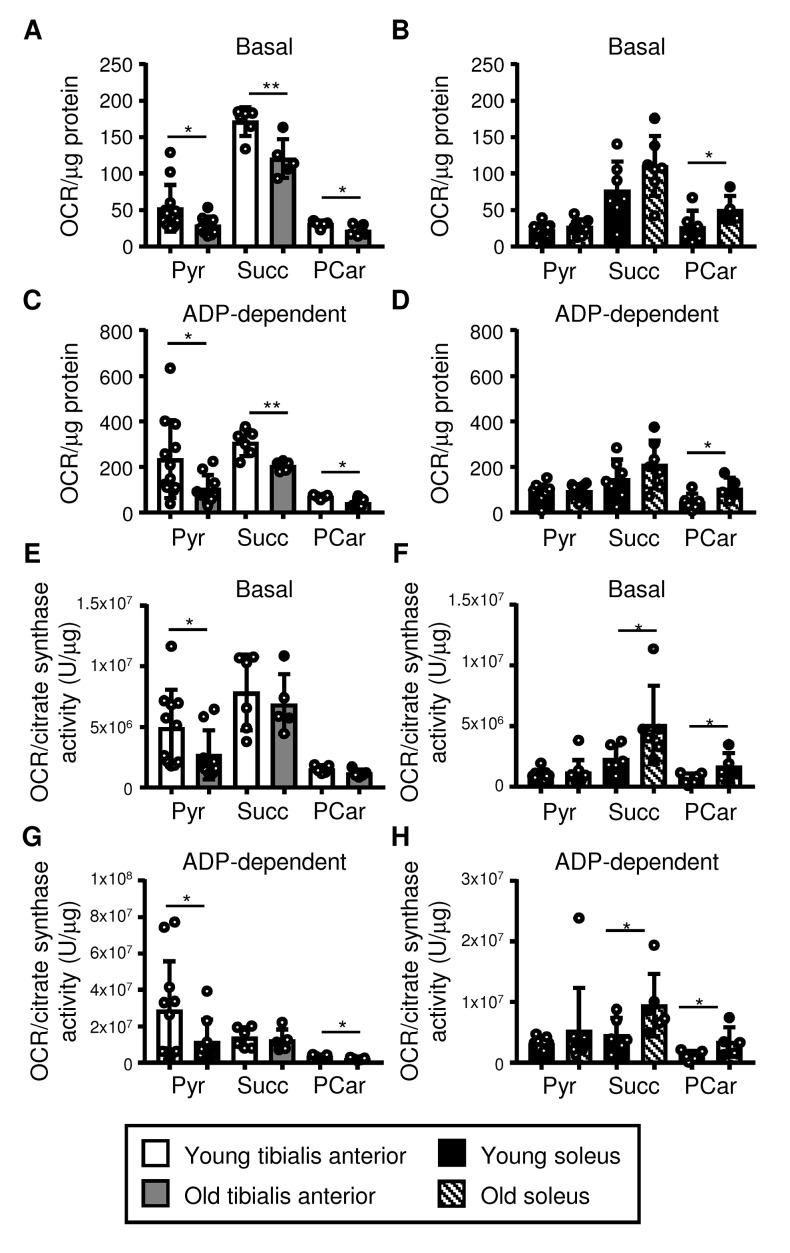
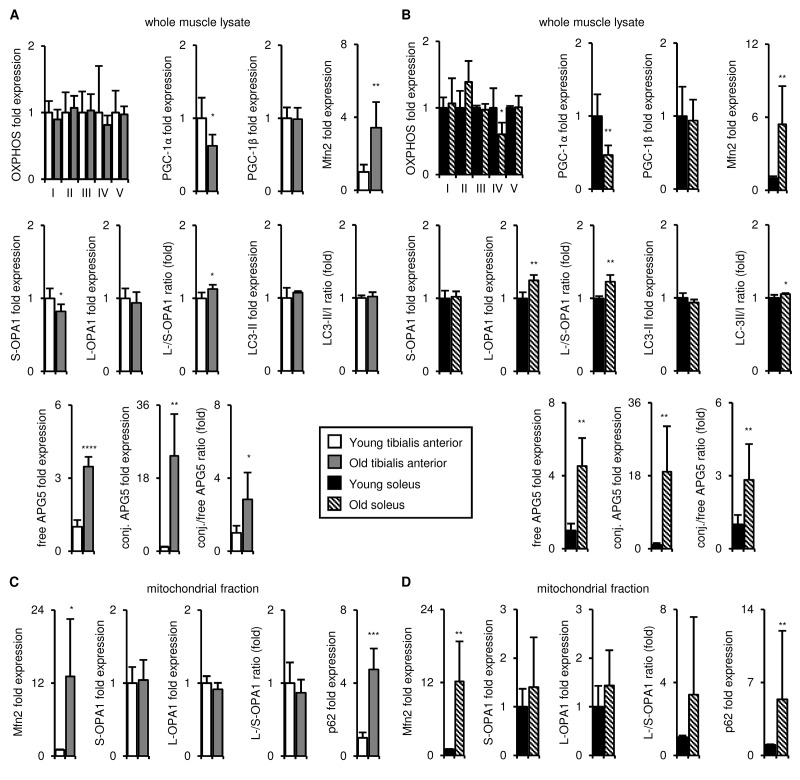
Preservation of mitochondrial function, which is dependent on mitochondrial homeostasis (biogenesis, dynamics, disposal/recycling), is critical for maintenance of skeletal muscle function. Skeletal muscle performance declines upon aging (sarcopenia) and is accompanied by decreased mitochondrial function in fast-glycolytic muscles. Oxidative metabolism promotes mitochondrial homeostasis, so we investigated whether mitochondrial function is preserved in oxidative muscles. We compared tibialis anterior (predominantly glycolytic) and soleus (oxidative) muscles from young (3 mo) and old (28-29 mo) C57BL/6J mice. Throughout life, the soleus remained more oxidative than the tibialis anterior and expressed higher levels of markers of mitochondrial biogenesis, fission/fusion and autophagy. The respiratory capacity of mitochondria isolated from the tibialis anterior, but not the soleus, declined upon aging. The soleus and tibialis anterior exhibited similar aging-associated changes in mitochondrial biogenesis, fission/fusion, disposal and autophagy marker expression, but opposite changes in fiber composition: the most oxidative fibers declined in the tibialis anterior, while the more glycolytic fibers declined in the soleus. In conclusion, oxidative muscles are protected from mitochondrial aging, probably due to better mitochondrial homeostasis and aging-associated changes in fiber composition. Exercise training aimed at enriching oxidative fibers may be valuable in preventing mitochondria-related aging and its contribution to sarcopenia.
线粒体功能的维持依赖于线粒体稳态(生物发生、动力学、处置/回收),这对维持骨骼肌功能至关重要。骨骼肌性能会随着衰老(肌肉减少症)而下降,并且在快速糖酵解型肌肉中伴有线粒体功能的降低。氧化代谢促进线粒体稳态,因此我们研究了线粒体功能在氧化型肌肉中是否得以维持。我们比较了年轻(3个月)和年老(28 - 29个月)的C57BL/6J小鼠的胫前肌(主要是糖酵解型)和比目鱼肌(氧化型)。在整个生命过程中,比目鱼肌始终比胫前肌更具氧化性,并且表达更高水平的线粒体生物发生、分裂/融合和自噬标志物。从胫前肌而非比目鱼肌分离的线粒体的呼吸能力在衰老时下降。比目鱼肌和胫前肌在与衰老相关的线粒体生物发生、分裂/融合、处置和自噬标志物表达方面表现出相似的变化,但在纤维组成方面呈现相反的变化:在胫前肌中,氧化性最强的纤维减少,而在比目鱼肌中,糖酵解性更强的纤维减少。总之,氧化型肌肉可免受线粒体衰老的影响,这可能是由于更好的线粒体稳态以及与衰老相关的纤维组成变化。旨在富集氧化型纤维的运动训练可能对预防与线粒体相关的衰老及其对肌肉减少症的影响具有重要价值。