Geographic Data Science Lab, Department of Geography & Planning, University of Liverpool, Liverpool, United Kingdom.
PLoS One. 2018 Nov 19;13(11):e0207523. doi: 10.1371/journal.pone.0207523. eCollection 2018.
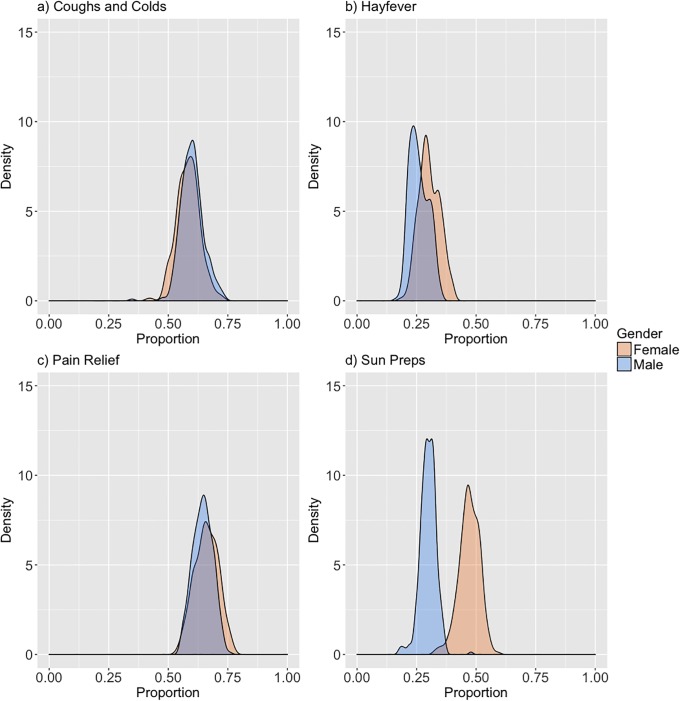
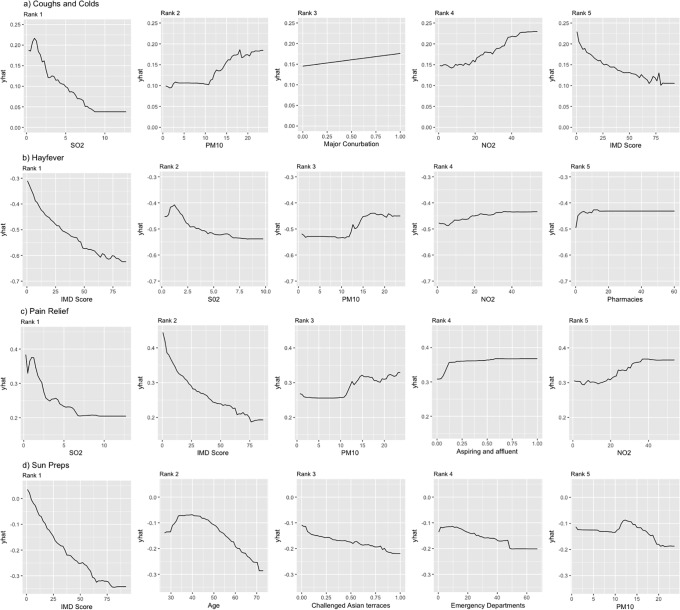
The availability alongside growing awareness of medicine has led to increased self-treatment of minor ailments. Self-medication is where one 'self' diagnoses and prescribes over the counter medicines for treatment. The self-care movement has important policy implications, perceived to relieve the National Health Service (NHS) burden, increasing patient subsistence and freeing resources for more serious ailments. However, there has been little research exploring how self-medication behaviours vary between population groups due to a lack of available data. The aim of our study is to evaluate how high street retailer loyalty card data can help inform our understanding of how individuals self-medicate in England. Transaction level loyalty card data was acquired from a national high street retailer for England for 2012-2014. We calculated the proportion of loyalty card customers (n ~ 10 million) within Lower Super Output Areas who purchased the following medicines: 'coughs and colds', 'Hayfever', 'pain relief' and 'sun preps'. Machine learning was used to explore how 50 sociodemographic and health accessibility features were associated towards explaining purchasing of each product group. Random Forests are used as a baseline and Gradient Boosting as our final model. Our results showed that pain relief was the most common medicine purchased. There was little difference in purchasing behaviours by sex other than for sun preps. The gradient boosting models demonstrated that socioeconomic status of areas, as well as air pollution, were important predictors of each medicine. Our study adds to the self-medication literature through demonstrating the usefulness of loyalty card records for producing insights about how self-medication varies at the national level. Big data offer novel insights that add to and address issues that traditional studies are unable to consider. New forms of data through data linkage may offer opportunities to improve current public health decision making surrounding at risk population groups within self-medication behaviours.
随着医学知识的普及和意识的提高,人们越来越倾向于自行治疗小病。自我药物治疗是指人们自行诊断并开出处方药进行治疗。自我护理运动具有重要的政策意义,被认为可以减轻国民保健制度(NHS)的负担,增加患者的生存能力,并为更严重的疾病释放资源。然而,由于缺乏可用数据,很少有研究探讨自我药物治疗行为如何因人群而异。我们的研究旨在评估商业街零售商会员卡数据如何帮助我们了解英格兰个体的自我药物治疗情况。我们从英格兰的一家全国性商业街零售商那里获取了 2012-2014 年的交易级会员卡数据。我们计算了在低级别超级街区(Lower Super Output Areas)内,购买以下药品的会员卡客户(n~1000 万)的比例:“咳嗽和感冒”、“花粉症”、“止痛”和“防晒”。我们使用机器学习来探索 50 个社会人口统计学和健康可达性特征如何与每种产品组的购买情况相关联。随机森林被用作基线,梯度提升作为我们的最终模型。我们的结果表明,止痛是最常见的购买药品。除了防晒产品外,性别对购买行为的影响很小。梯度提升模型表明,地区的社会经济地位以及空气污染是每种药物的重要预测因素。我们的研究通过展示会员卡记录在产生关于全国范围内自我药物治疗差异的见解方面的有用性,为自我药物治疗文献做出了贡献。大数据提供了新颖的见解,补充并解决了传统研究无法考虑的问题。通过数据链接的新形式的数据可能为改善当前围绕自我药物治疗行为中高危人群的公共卫生决策提供机会。