Al-Omrani Hamod, Marwah Mandeep Kaur, Al-Whaib Razan, Mekkawy Mohammed, Shokr Hala
Pharmacy Practice Department, College of Clinical Pharmacy, King Faisal University, Al-Ahsaa 31982, Saudi Arabia.
Aston Medical School, College of Health and Life Sciences, Aston University, Birmingham B4 7ET, UK.
Pharmacy (Basel). 2023 Nov 22;11(6):183. doi: 10.3390/pharmacy11060183.
Self-medication (SM) is a growing phenomenon worldwide that has recently been classified as one of the most serious public health problems. SM can result in an incorrect self-diagnosis, inappropriate treatment, potential adverse reactions, interactions, and the masking of more sinister disease.
To assess the prevalence of SM practices amongst healthcare professionals and the general population in Saudi Arabia and to identify the sociodemographic contributing factors to this practice.
A total of 540 participants were enrolled in this study. Participants were asked to complete the study questionnaire comprising two sections to gather demographic information and to collect data regarding SM practice.
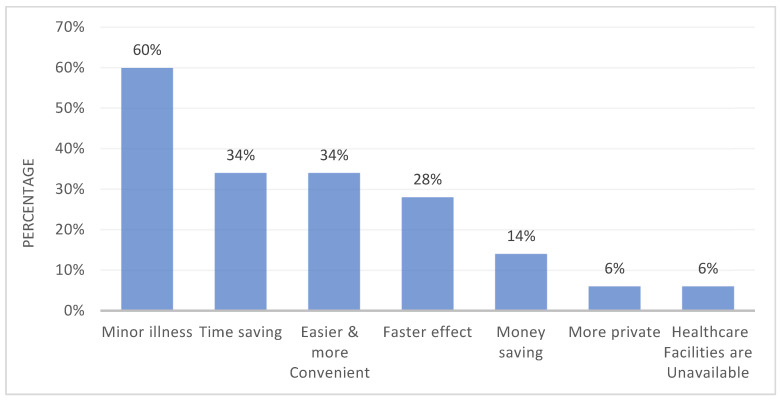
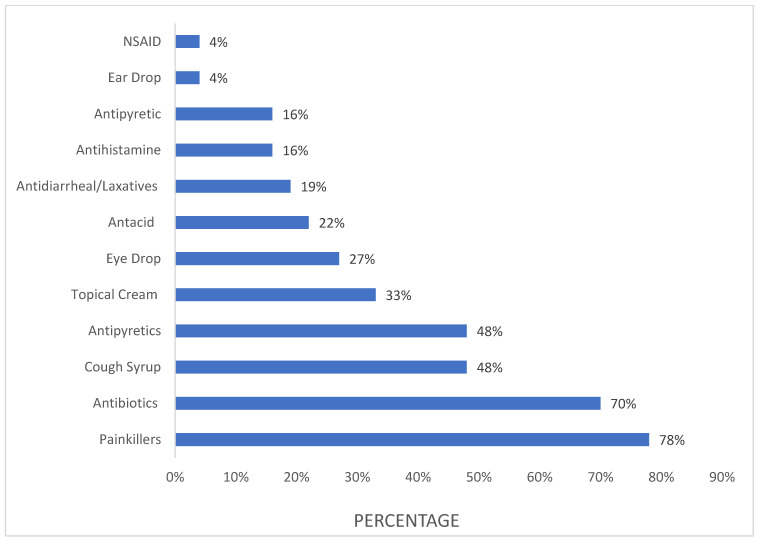
The prevalence of SM practice among the study participants was 78.6%, and it was the highest among the middle age groups of (21-40 years) 82% compared to the younger and older age groups. The observed prevalence was higher in the female participants (53.7%) and those who live alone. Type of education did not affect the attitude of SM ( = 0.374); however, level of education strongly affected the prevalence of the SM, with higher incidence among university graduates ( < 0.001). Analgesics with antipyretics properties were the most self-medicated drugs. Patients considering their illnesses minor was the main reason behind the high prevalence of this practice. Among healthcare professions the highest prevalence of SM was found among pharmacists (95%), followed by physicians, nurses, and other medical practitioners.
The general population should be better educated and made conscious about the consequences, risks, and side effects of SM. Awareness campaigns may prove to be useful in this matter, allowing the patient to consider the appropriateness of this practice. Individuals in the age group of 21-40 years, females, and those who live alone should be considered priority target populations in the design and implementation of SM awareness projects.
自我药疗(SM)在全球范围内是一个日益普遍的现象,最近已被列为最严重的公共卫生问题之一。自我药疗可能导致自我诊断错误、治疗不当、潜在的不良反应、药物相互作用以及掩盖更严重的疾病。
评估沙特阿拉伯医疗保健专业人员和普通人群中自我药疗行为的患病率,并确定促成这种行为的社会人口学因素。
本研究共纳入540名参与者。要求参与者完成包含两个部分的研究问卷,以收集人口统计学信息并收集有关自我药疗行为的数据。
研究参与者中自我药疗行为的患病率为78.6%,在年龄介于21至40岁的中年人群中最高,为82%,高于年轻和年长年龄组。观察到女性参与者(53.7%)和独居者的患病率较高。教育类型不影响自我药疗的态度(P = 0.374);然而,教育水平强烈影响自我药疗的患病率,大学毕业生中的发病率更高(P < 0.001)。具有解热特性的镇痛药是最常自我药疗的药物。患者认为自己的疾病不严重是这种行为高患病率的主要原因。在医疗保健专业人员中,自我药疗患病率最高的是药剂师(95%),其次是医生、护士和其他医务人员。
应更好地教育普通人群,使其了解自我药疗的后果、风险和副作用。在这方面开展宣传活动可能会有所帮助,使患者能够考虑这种行为的适当性。在设计和实施自我药疗意识项目时,21至40岁年龄组、女性和独居者应被视为优先目标人群。