Department of Cell Biology, University of Alberta, Edmonton, Alberta, T6G 2H7, Canada.
Department of Medicine, University of Alberta, Edmonton, Alberta, T6G 2E1 Canada.
Viruses. 2018 Nov 17;10(11):646. doi: 10.3390/v10110646.
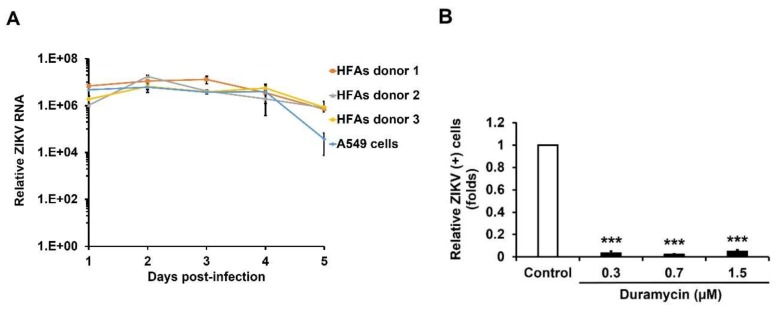
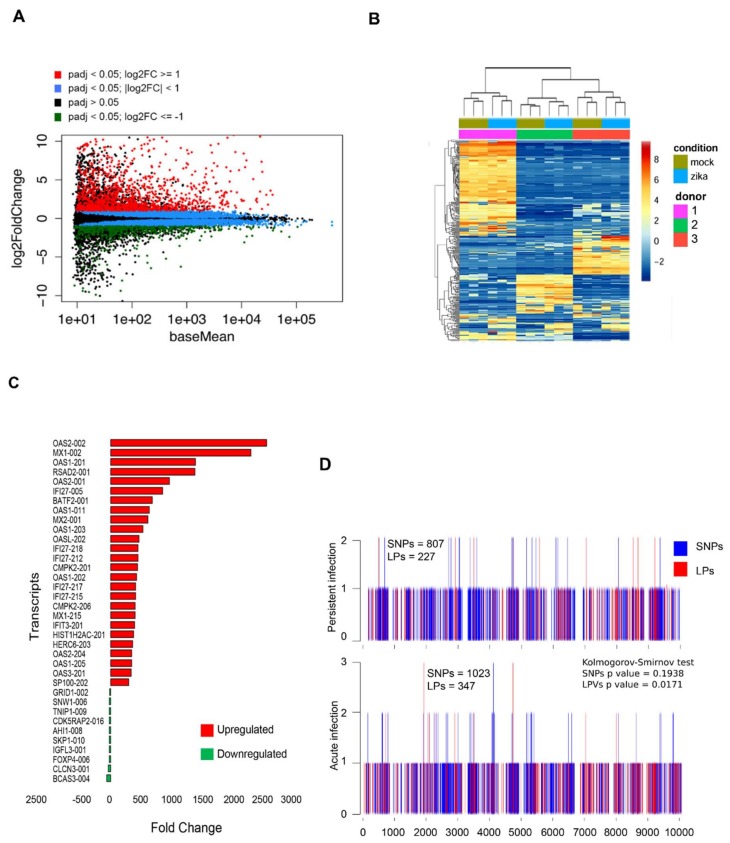
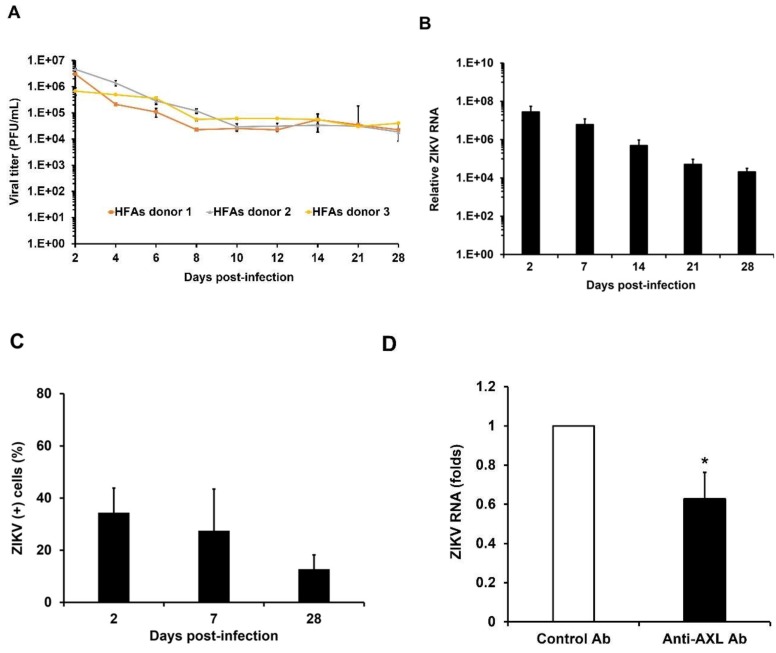
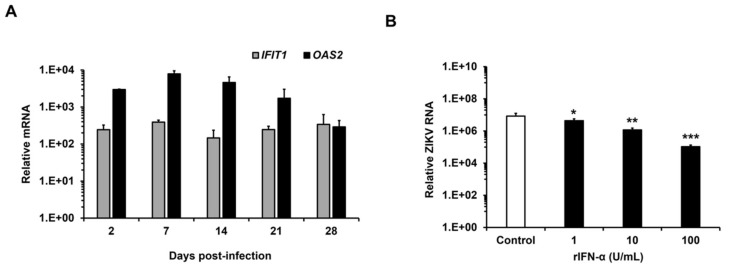
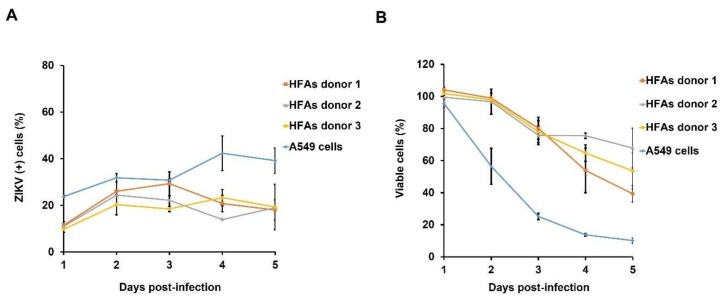
Zika virus (ZIKV) infection and persistence during pregnancy can lead to microcephaly and other fetal neurological disorders collectively known as Congenital Zika Syndrome. The immunological and virological events that contribute to the establishment of persistent ZIKV infection in humans are unclear though. Here we show that human fetal astrocytes (HFAs), the most abundant cell type in the central nervous system, become persistently infected with ZIKV resulting in continuous viral shedding for at least one month; a process that is facilitated by TIM/TAM receptors. HFAs are relatively resistant to ZIKV-induced apoptosis, a factor that may be important for chronic infection of these cells. Once infection was established, interferon treatment did not reduce virus replication. Moreover, the fact that the innate immune system was highly activated in persistently infected HFAs indicates that the virus can thrive in the presence of a sustained antiviral response. RNAseq analyses of persistently infected cells revealed that ZIKV alters host gene expression in a manner that could affect developmental processes. Conversely, data from sequencing of ZIKV genomes in persistently infected HFAs suggest that adaptive mutations were not required for establishing chronic infection. Based on these results, we postulate that HFAs are reservoirs for ZIKV in the fetal brain and that moderate apoptosis combined with inefficient antiviral response from these cells may contribute to the establishment of chronic brain infection associated with the ZIKV neurodevelopmental abnormalities.
寨卡病毒(ZIKV)感染和在怀孕期间的持续存在可能导致小头畸形和其他胎儿神经紊乱,统称为先天性寨卡综合征。然而,导致人类中持续的寨卡病毒感染的确切免疫和病毒学事件仍不清楚。在这里,我们显示人类胎儿星形胶质细胞(HFAs),中枢神经系统中最丰富的细胞类型,被寨卡病毒持续感染,导致至少持续一个月的持续病毒释放;这个过程是由 TIM/TAM 受体促进的。HFAs 对寨卡病毒诱导的细胞凋亡具有相对抗性,这一因素可能对这些细胞的慢性感染很重要。一旦感染建立,干扰素治疗不能减少病毒复制。此外,在持续感染的 HFAs 中先天免疫系统高度激活的事实表明,病毒可以在持续的抗病毒反应存在下茁壮成长。对持续感染细胞的 RNAseq 分析表明,寨卡病毒以一种可能影响发育过程的方式改变宿主基因表达。相反,来自持续感染的 HFAs 中的寨卡病毒基因组测序的数据表明,建立慢性感染不需要适应性突变。基于这些结果,我们推测 HFAs 是胎儿大脑中寨卡病毒的储库,这些细胞适度的细胞凋亡和低效的抗病毒反应可能导致与寨卡病毒神经发育异常相关的慢性脑感染的建立。