Department of Molecular Microbiology, Washington University School of Medicine, St. Louis, Missouri, USA.
Department of Medicine, University of Massachusetts Medical School, Worcester, Massachusetts, USA.
mBio. 2018 Nov 20;9(6):e02087-18. doi: 10.1128/mBio.02087-18.
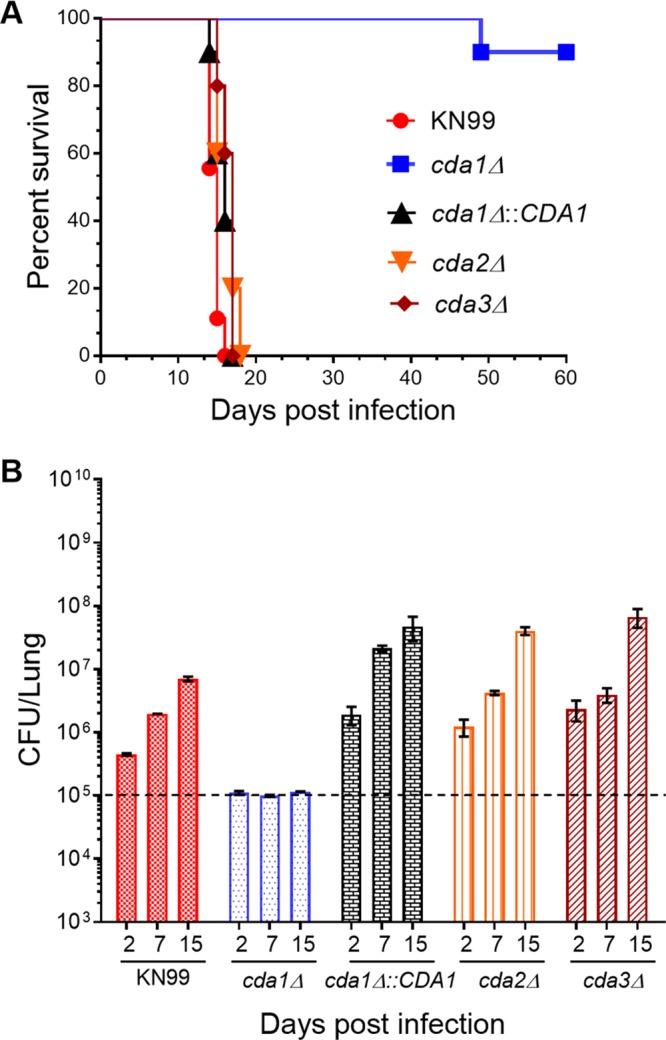
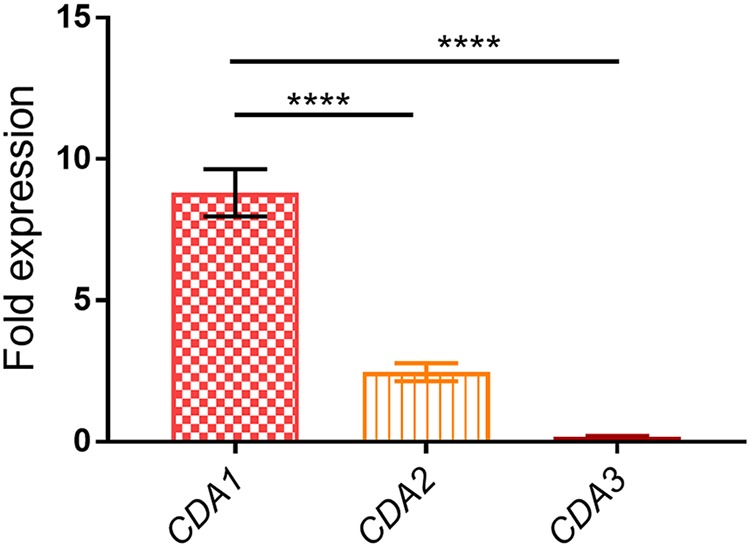
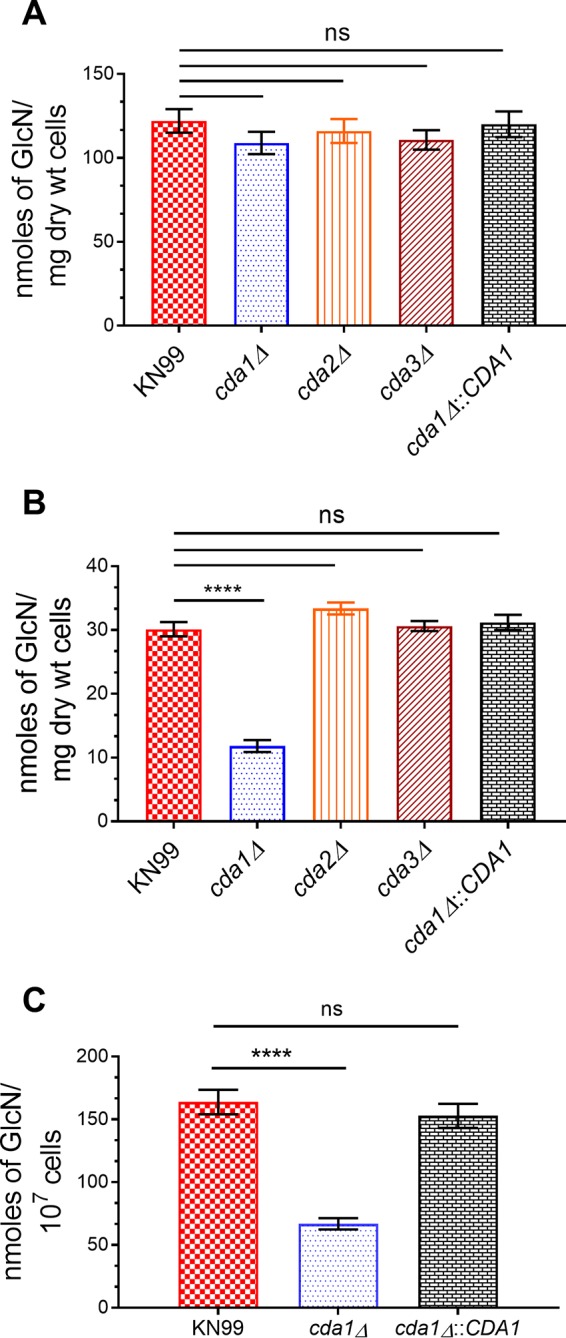
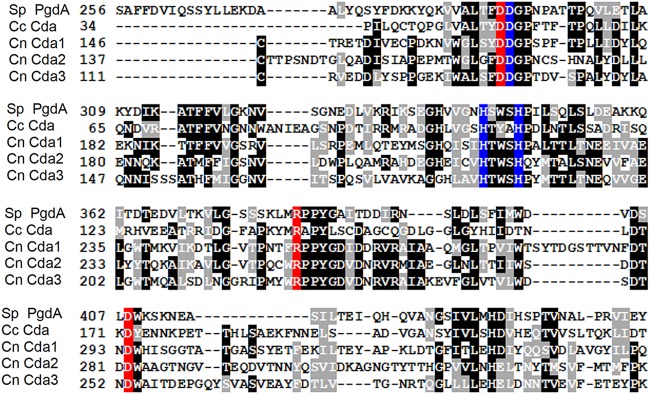
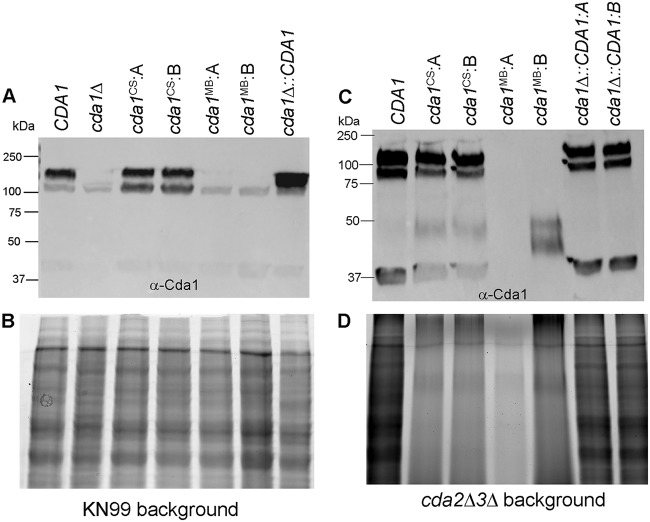
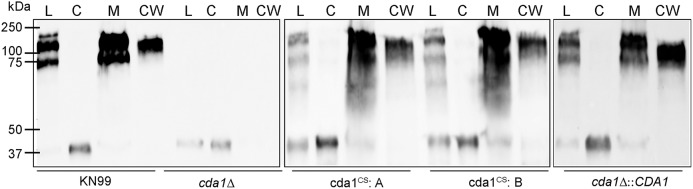
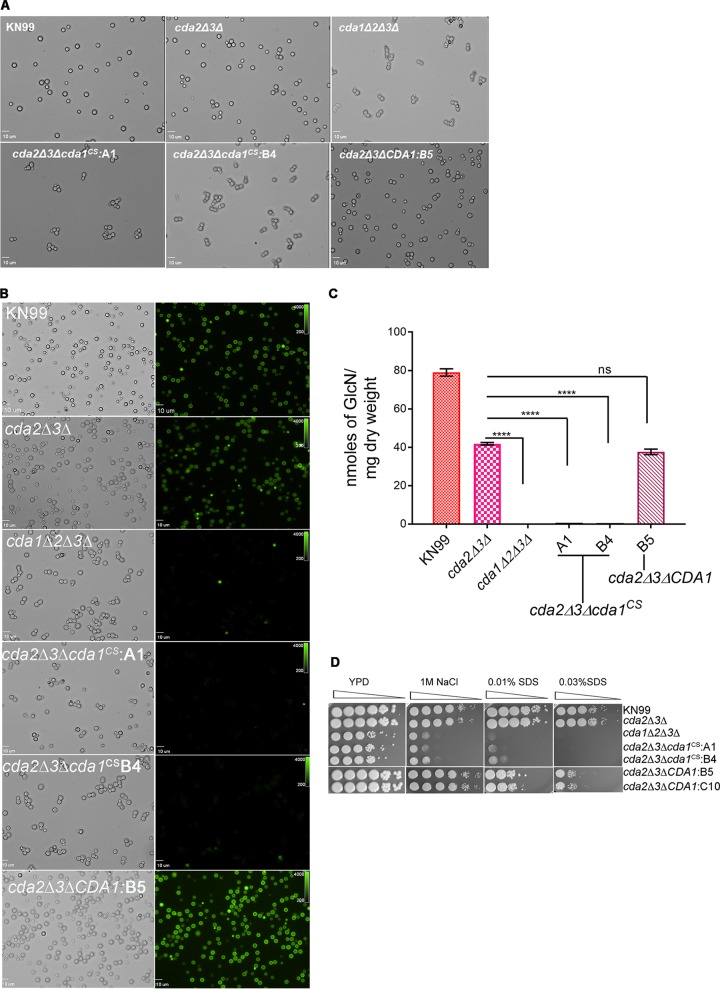
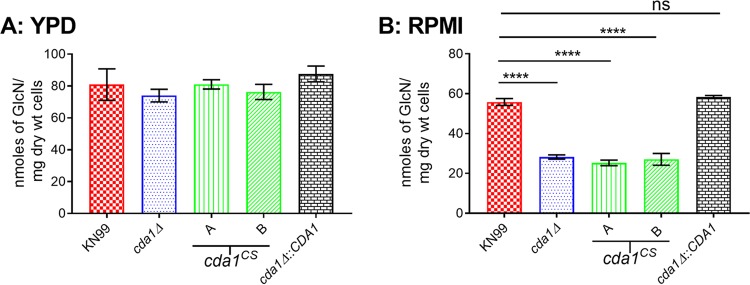
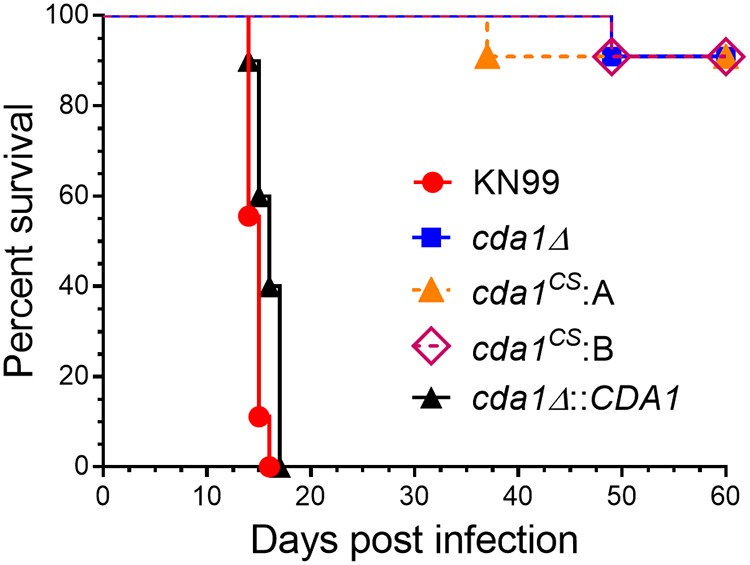
Chitin is an essential component of the cell wall of conferring structural rigidity and integrity under diverse environmental conditions. Chitin deacetylase genes encode the enyzmes (chitin deacetylases [Cdas]) that deacetylate chitin, converting it to chitosan. The functional role of chitosan in the fungal cell wall is not well defined, but it is an important virulence determinant of Mutant strains deficient in chitosan are completely avirulent in a mouse pulmonary infection model. carries genes that encode three Cdas (Cda1, Cda2, and Cda3) that appear to be functionally redundant in cells grown under vegetative conditions. Here we report that Cda1 is the principal Cda responsible for fungal pathogenesis. Point mutations were introduced in the active site of Cda1 to generate strains in which the enzyme activity of Cda1 was abolished without perturbing either its stability or localization. When used to infect CBA/J mice, Cda1 mutant strains produced less chitosan and were attenuated for virulence. We further demonstrate that Cda genes are transcribed differently during a murine infection from what has been measured is unique among fungal pathogens that cause disease in a mammalian host, as it secretes a polysaccharide capsule that hinders recognition by the host to facilitate its survival and proliferation. Even though it causes serious infections in immunocompromised hosts, reports of infection in hosts that are immunocompetent are on the rise. The cell wall of a fungal pathogen, its synthesis, composition, and pathways of remodelling are attractive therapeutic targets for the development of fungicides. Chitosan, a polysaccharide in the cell wall of is one such target, as it is critical for pathogenesis and absent in the host. The results we present shed light on the importance of one of the chitin deacetylases that synthesize chitosan during infection and further implicates chitosan as being a critical factor for the pathogenesis of .
几丁质是细胞壁的重要组成部分,赋予真菌在各种环境条件下结构刚性和完整性。几丁质脱乙酰酶基因编码的酶(几丁质脱乙酰酶[Cdas])将几丁质脱乙酰化,将其转化为壳聚糖。壳聚糖在真菌细胞壁中的功能作用尚未明确,但它是真菌毒力的重要决定因素。缺乏壳聚糖的突变株在小鼠肺部感染模型中完全丧失毒力。携带编码三个 Cda(Cda1、Cda2 和 Cda3)的基因,这些基因在营养生长条件下似乎具有功能冗余。本文报道,Cda1 是主要的 Cda,负责真菌病发病机制。在 Cda1 的活性位点引入点突变,生成酶活性被完全消除而不干扰其稳定性或定位的突变株。当用于感染 CBA/J 小鼠时,Cda1 突变株产生的壳聚糖较少,毒力减弱。我们进一步证明,在感染期间,Cda 基因的转录与在体外培养时所测量的不同。是引起哺乳动物宿主疾病的真菌病原体中独特的,因为它分泌多糖荚膜,阻碍宿主识别,从而促进其存活和增殖。尽管它在免疫功能低下的宿主中引起严重感染,但在免疫功能正常的宿主中感染的报道正在增加。真菌病原体的细胞壁、其合成、组成和重塑途径是开发杀真菌剂的有吸引力的治疗靶点。壳聚糖是细胞壁中的一种多糖,是一种这样的靶点,因为它对发病机制至关重要,而在宿主中不存在。我们的研究结果阐明了在感染过程中合成壳聚糖的几丁质脱乙酰酶之一的重要性,并进一步表明壳聚糖是真菌病发病机制的关键因素。