Takeya Ryuji, Patel Aniruddh D, Tanaka Masaki
Department of Physiology, Hokkaido University School of Medicine, Sapporo, Japan.
Department of Psychology, Tufts University, Medford, MA, United States.
Front Psychol. 2018 Nov 6;9:2172. doi: 10.3389/fpsyg.2018.02172. eCollection 2018.
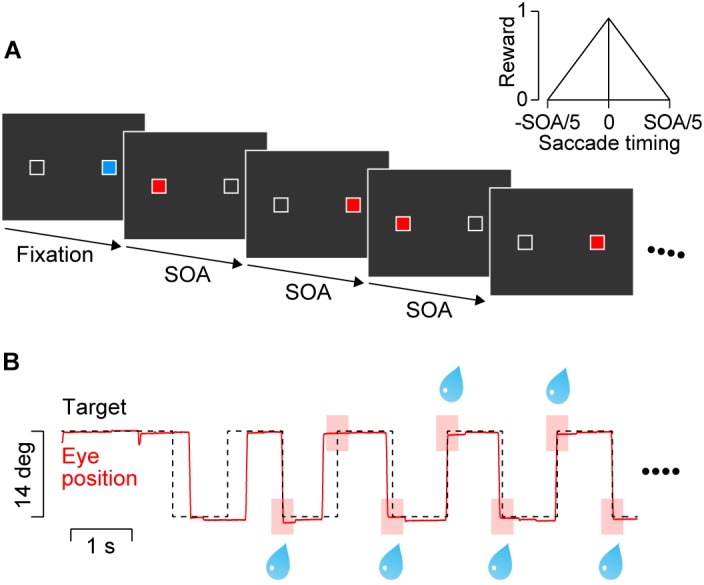
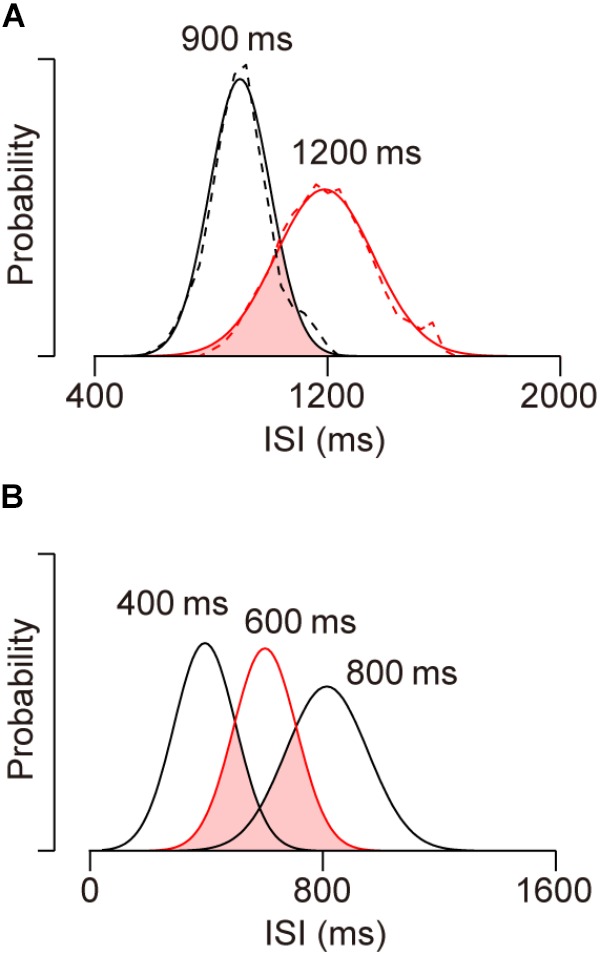
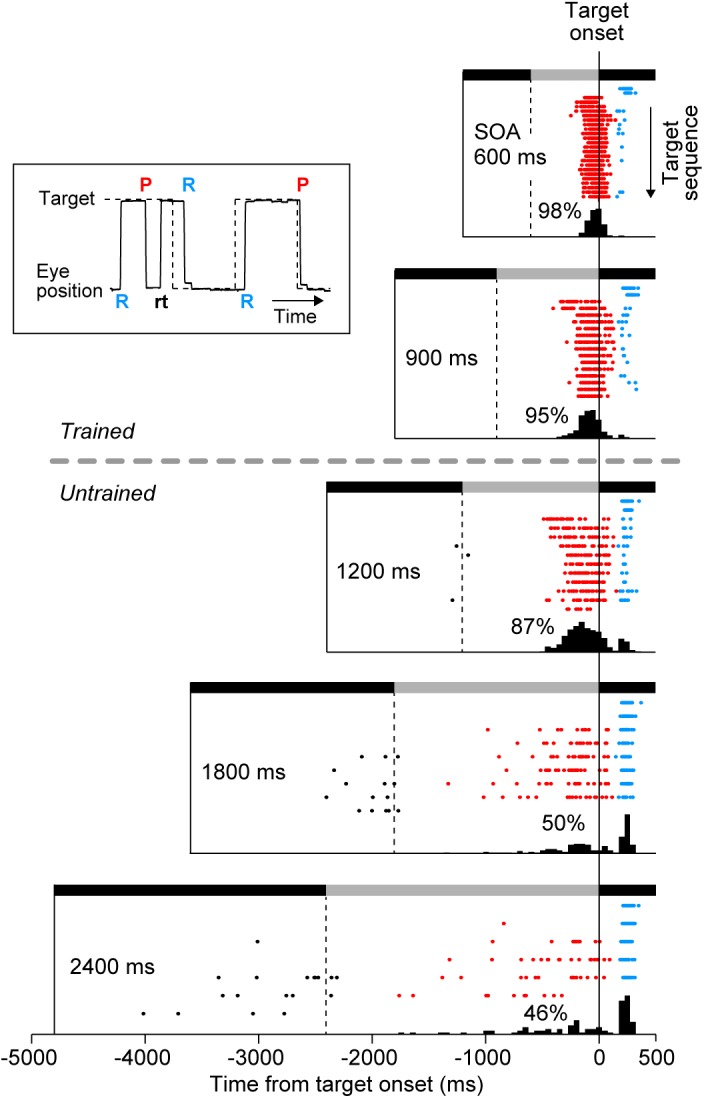
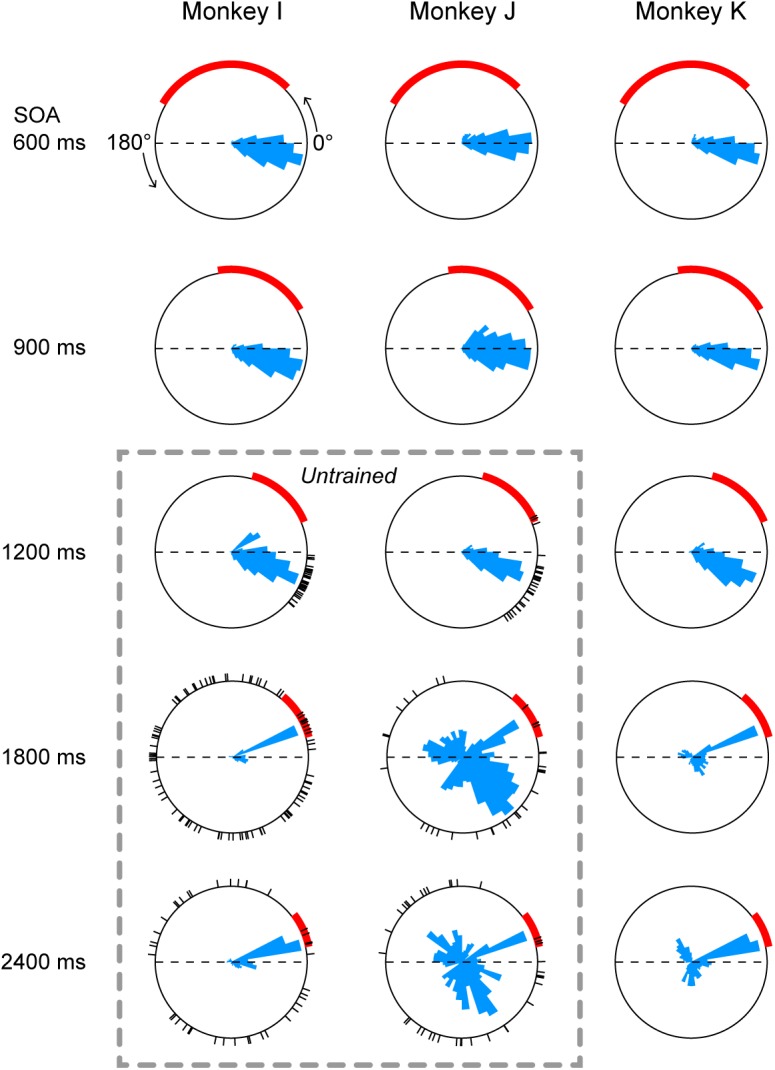
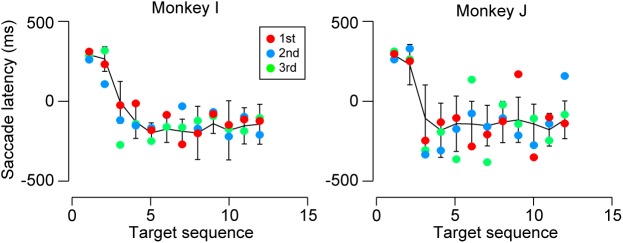
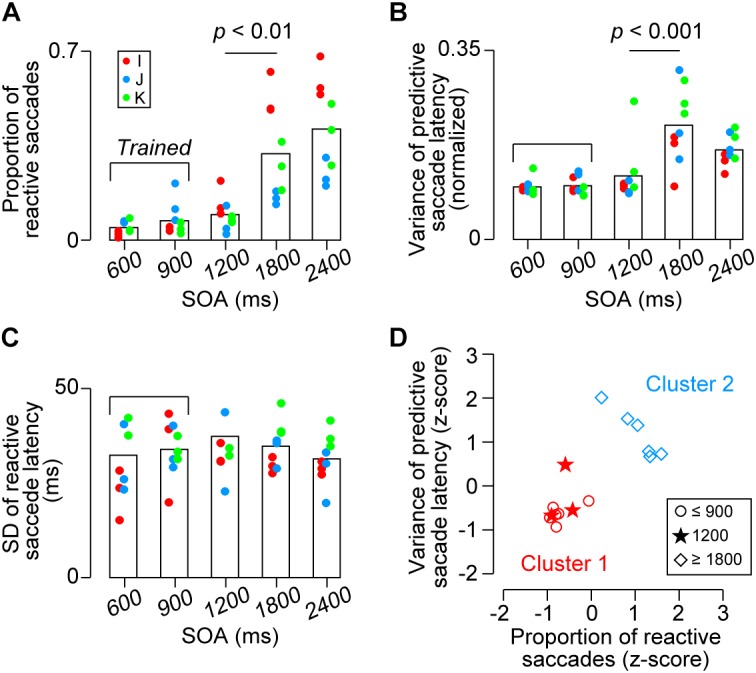
Synchronized movements with external periodic rhythms, such as dancing to a beat, are commonly observed in daily life. Although it has been well established that some vocal learning species (including parrots and humans) spontaneously develop this ability, it has only recently been shown that monkeys are also capable of predictive and tempo-flexible synchronization to periodic stimuli. In our previous study, monkeys were trained to make predictive saccades for alternately presented visual stimuli at fixed stimulus onset asynchronies (SOAs) to obtain a liquid reward. The monkeys generalized predictive synchronization to novel SOAs in the middle of trained range, suggesting a capacity for tempo-flexible synchronization. However, it is possible that when encountering a novel tempo, the monkeys might sample learned saccade sequences from those for the short and long SOAs so that the mean saccade interval matched the untrained SOA. To eliminate this possibility, in the current study we tested monkeys on novel SOAs outside the trained range. Animals were trained to generate synchronized eye movements for 600 and 900-ms SOAs for a few weeks, and then were tested for longer SOAs. The accuracy and precision of predictive saccades for one untrained SOA (1200 ms) were comparable to those for the trained conditions. On the other hand, the variance of predictive saccade latency and the proportion of reactive saccades increased significantly in the longer SOA conditions (1800 and 2400 ms), indicating that temporal prediction of periodic stimuli was difficult in this range, similar to previous results on synchronized tapping in humans. Our results suggest that monkeys might share similar synchronization mechanisms with humans, which can be subject to physiological examination in future studies.
与外部周期性节奏同步的动作,比如跟着节拍跳舞,在日常生活中很常见。虽然已经充分证实一些发声学习物种(包括鹦鹉和人类)能自发形成这种能力,但直到最近才发现猴子也能够对周期性刺激进行预测性和节奏灵活的同步。在我们之前的研究中,训练猴子针对以固定刺激起始异步(SOA)交替呈现的视觉刺激做出预测性扫视,以获得液体奖励。猴子能够将预测性同步推广到训练范围中间的新SOA,这表明它们具有节奏灵活同步的能力。然而,当遇到新节奏时,猴子可能会从针对短SOA和长SOA的已学习扫视序列中进行采样,以使平均扫视间隔与未训练的SOA相匹配。为了排除这种可能性,在当前研究中,我们在训练范围之外的新SOA上测试猴子。动物被训练在600毫秒和900毫秒的SOA下产生同步眼球运动,持续几周时间,然后测试更长的SOA。对于一个未训练的SOA(1200毫秒),预测性扫视的准确性和精确性与训练条件下相当。另一方面,在更长的SOA条件(1800毫秒和2400毫秒)下,预测性扫视潜伏期的方差和反应性扫视的比例显著增加,这表明在这个范围内对周期性刺激进行时间预测很困难,这与之前关于人类同步敲击的结果类似。我们的结果表明,猴子可能与人类共享相似的同步机制,这在未来的研究中可以进行生理学检验。