Ghanemi Abdelaziz, Yoshioka Mayumi, St-Amand Jonny
Department of Molecular Medicine, Faculty of Medicine, Laval University, Quebec G1V 0A6, Canada.
Functional Genomics Laboratory, CREMI, Québec Genome Center, CHUL-CHU de Québec Research Center, Québec, Québec G1V 4G2, Canada.
J Clin Med. 2018 Nov 20;7(11):453. doi: 10.3390/jcm7110453.
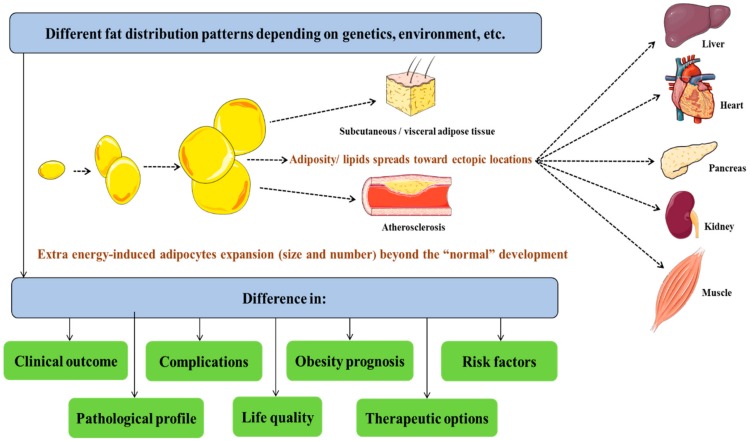
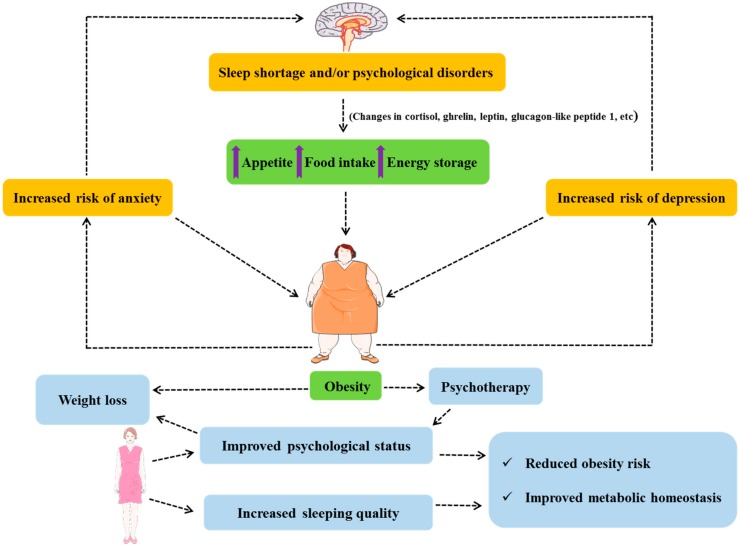
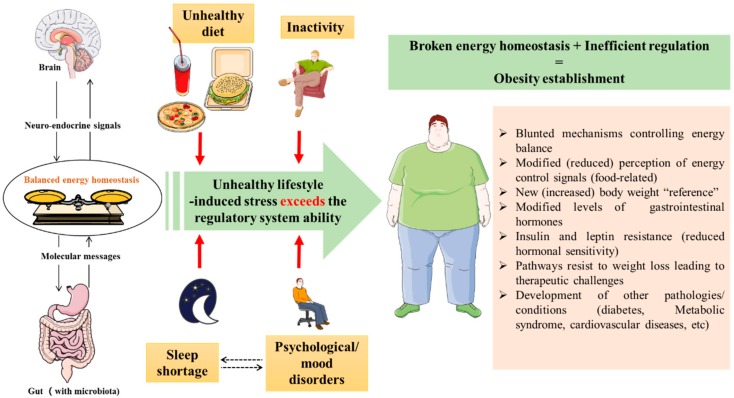
Obesity represents an abnormal fat accumulation resulting from energy imbalances. It represents a disease with heavy consequences on population health and society economy due to its related morbidities and epidemic proportion. Defining and classifying obesity and its related parameters of evaluation is the first challenge toward understanding this multifactorial health problem. Therefore, within this review we report selected illustrative examples of the underlying mechanisms beyond the obesity pathogenesis which is systemic rather than limited to fat accumulation. We also discuss the gut-brain axis and hormones as the controllers of energy homeostasis and report selected impacts of obesity on the key metabolic tissues. The concepts of "broken energy balance" is detailed as the obesity starting key step. Sleep shortage and psychological factors are also reported with influences on obesity development. Importantly, describing such mechanistic pathways would allow clinicians, biologists and researchers to develop and optimize approaches and methods in terms of diagnosis, classification, clinical evaluation, treatment and prognosis of obesity.
肥胖是由能量失衡导致的异常脂肪堆积。由于其相关的发病率和流行程度,肥胖是一种对人群健康和社会经济造成严重后果的疾病。定义和分类肥胖及其相关评估参数是理解这一多因素健康问题的首要挑战。因此,在本综述中,我们报告了肥胖发病机制背后潜在机制的一些有代表性的例子,肥胖发病机制是全身性的,而非仅限于脂肪堆积。我们还讨论了作为能量稳态控制器的肠-脑轴和激素,并报告了肥胖对关键代谢组织的一些影响。“能量平衡失调”的概念被详细阐述为肥胖的起始关键步骤。还报告了睡眠不足和心理因素对肥胖发展的影响。重要的是,描述这些机制途径将使临床医生、生物学家和研究人员能够在肥胖的诊断、分类、临床评估、治疗和预后方面开发和优化方法。