Hongqiao International Institute of Medicine, Shanghai Tongren Hospital/Faculty of Public Health, Shanghai Jiao Tong University School of Medicine, Shanghai, 200025, China.
Clinical Research Center, Shanghai Jiao Tong University School of Medicine, Shanghai, 200025, China.
BMC Cancer. 2018 Nov 21;18(1):1150. doi: 10.1186/s12885-018-5023-0.
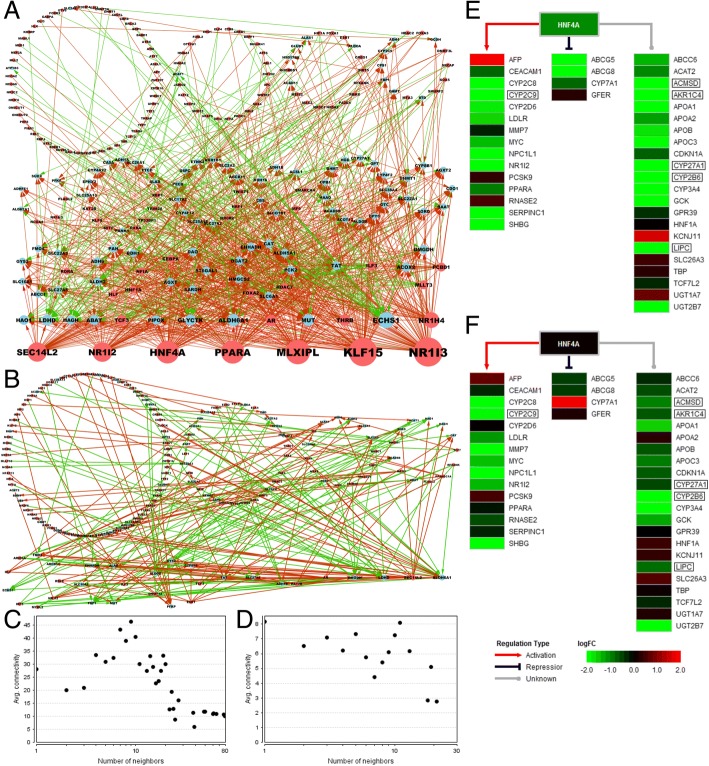
Hepatocellular carcinoma (HCC) is a malignant tumor that threatens global human health. High PKM2 expression is widely reported in multiple cancers, especially in HCC. This study aimed to explore the effects of PKM2 on global gene expression, metabolic damages, patient prognosis, and multiple transcriptional regulation relationships, as well as to identify several key metabolic genes and screen some small-molecule drugs.
Transcriptome and clinical HCC data were downloaded from the NIH-GDC repository. Information regarding the metabolic genes and subsystems was collected from the Recon 2 human metabolic model. Drug-protein interaction data were obtained from the DrugBank and UniProt databases. We defined patients with PKM2 expression levels ≥11.25 as the high-PKM2 group, and those with low PKM2 expression (< 11.25) were defined as the low-PKM2 group.
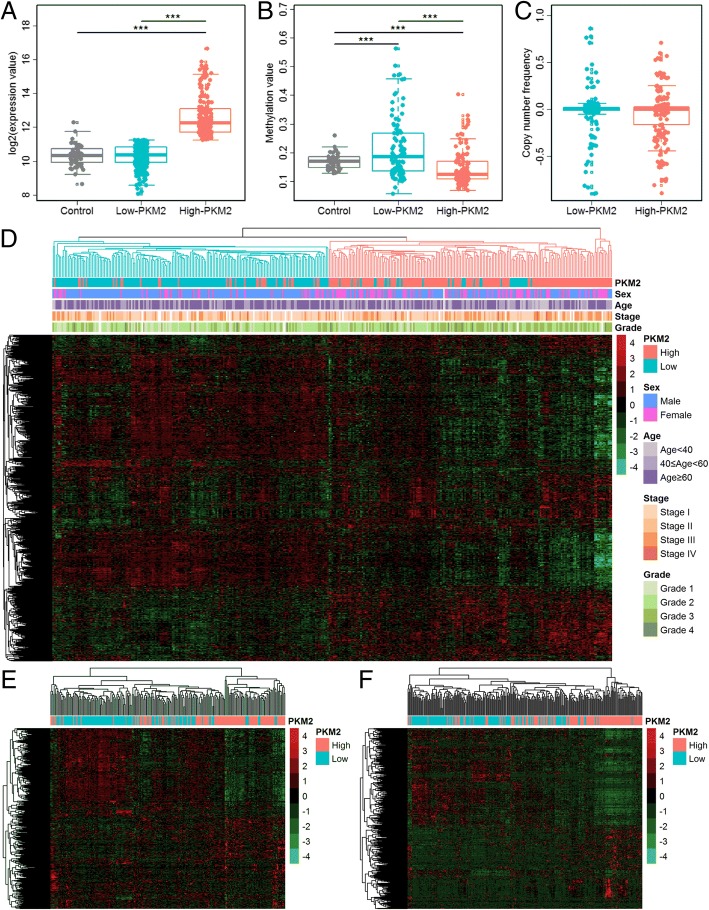
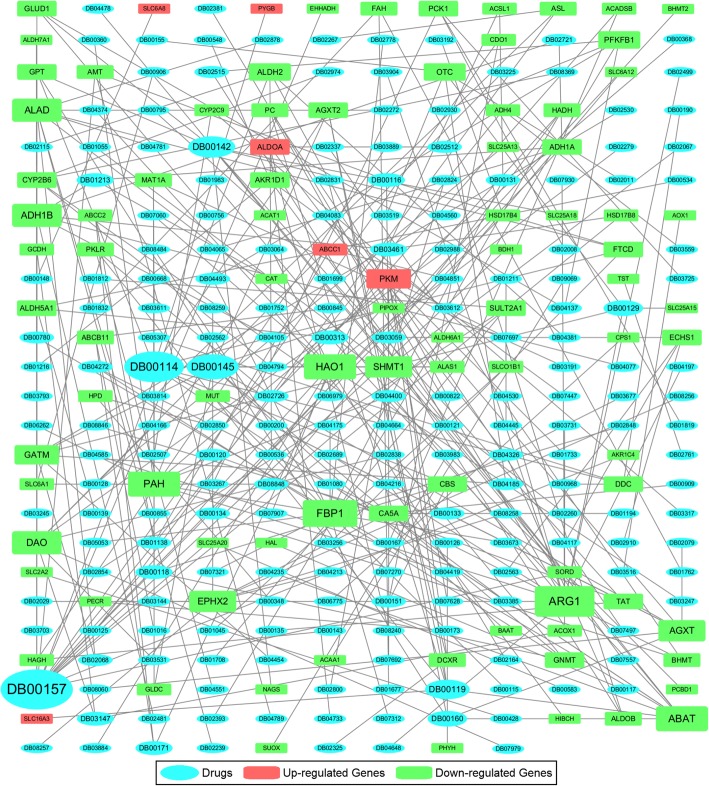
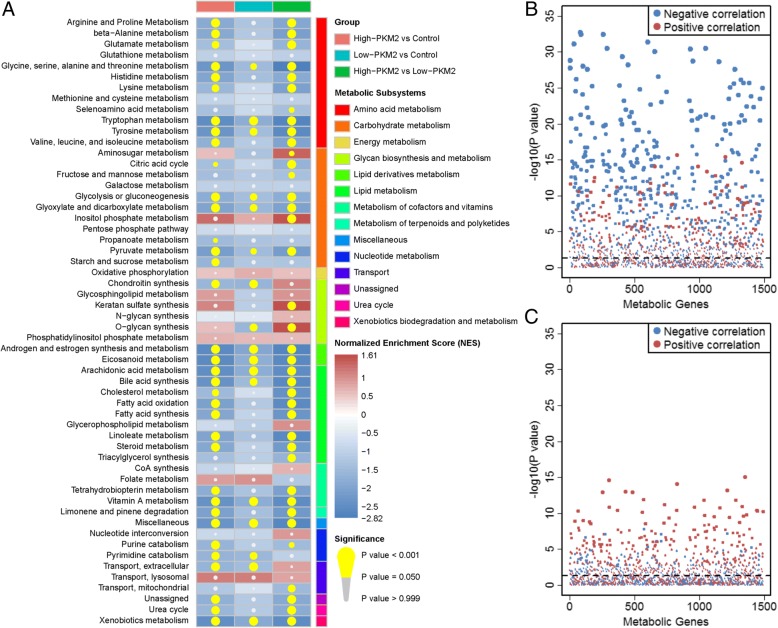
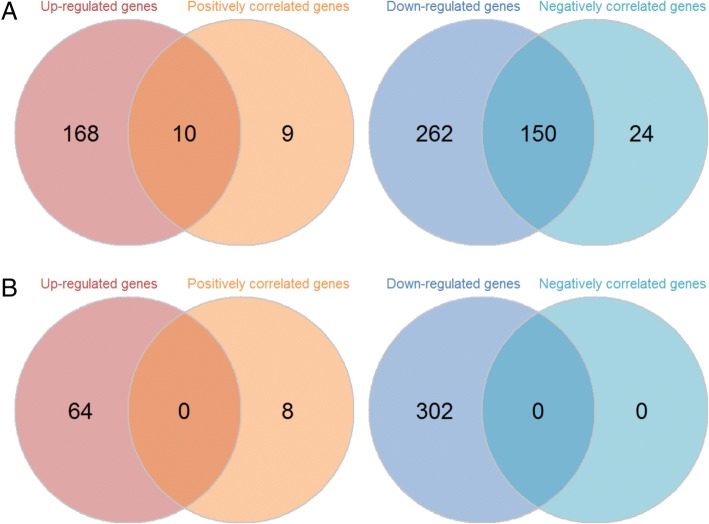
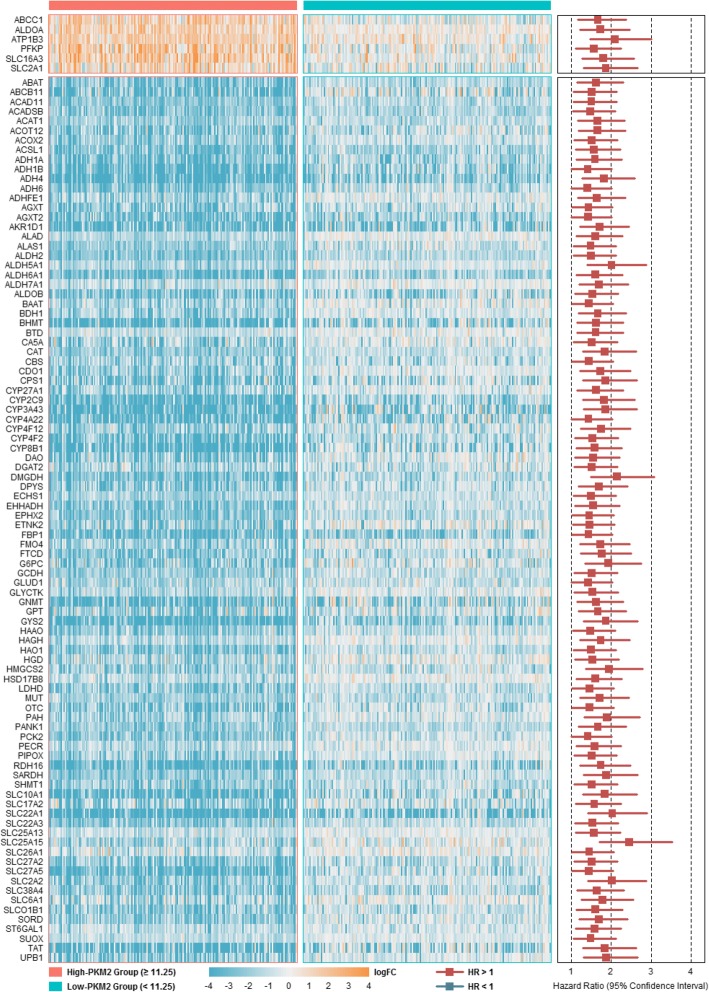
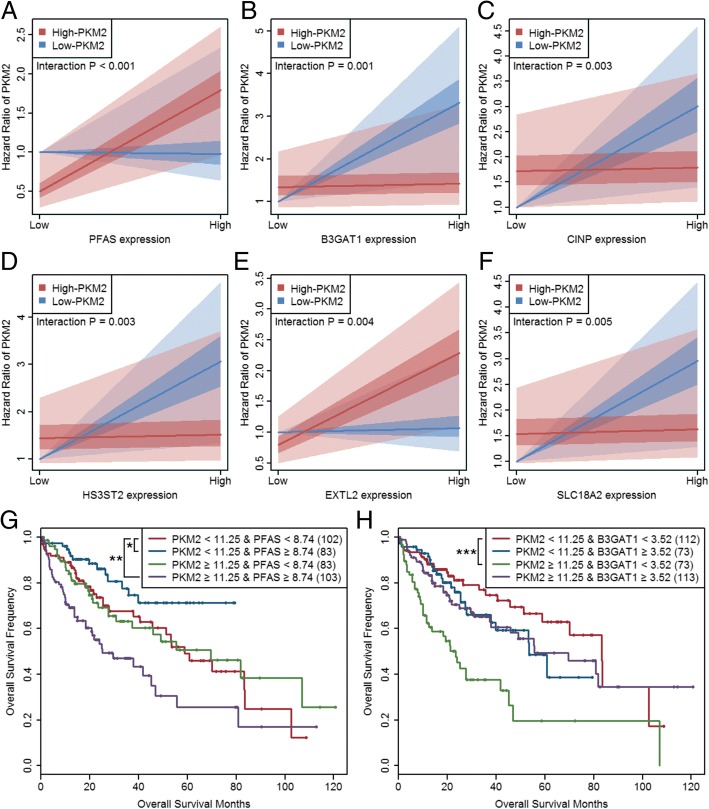
The results showed that the global metabolic gene expression levels were obviously divided into the high- or low-PKM2 groups. In addition, a greater number of affected metabolic subsystems were observed in the high-PKM2 group. Furthermore, we identified 98 PKM2-correlated deregulated metabolic genes that were associated with poor overall patient survival. Together, these findings suggest more comprehensive influences of PKM2 on HCC. In addition, we screened several small-molecule drugs that target these metabolic enzymes, some of which have been used in antitumor clinical studies.
HCC patients with high PKM2 expression showed more severe metabolic damage, transcriptional regulation imbalance and poor prognosis than low-PKM2 individuals. We believe that our study provides valuable information for pathology research and drug development for HCC.
肝细胞癌(HCC)是一种威胁全球人类健康的恶性肿瘤。高 PKM2 表达广泛报道于多种癌症中,尤其在 HCC 中。本研究旨在探讨 PKM2 对全球基因表达、代谢损伤、患者预后和多种转录调控关系的影响,以及鉴定几个关键代谢基因和筛选一些小分子药物。
从 NIH-GDC 数据库下载转录组和临床 HCC 数据。从 Recon 2 人类代谢模型中收集代谢基因和子系统的信息。从 DrugBank 和 UniProt 数据库中获取药物-蛋白相互作用数据。我们将 PKM2 表达水平≥11.25 的患者定义为高 PKM2 组,将 PKM2 表达水平<11.25 的患者定义为低 PKM2 组。
结果表明,全球代谢基因表达水平明显分为高或低 PKM2 组。此外,在高 PKM2 组中观察到更多受影响的代谢子系统。此外,我们鉴定了 98 个与 PKM2 相关的失调代谢基因,这些基因与患者总生存不良相关。这些发现表明 PKM2 对 HCC 的影响更为全面。此外,我们筛选了一些针对这些代谢酶的小分子药物,其中一些已用于抗肿瘤临床研究。
高 PKM2 表达的 HCC 患者比低 PKM2 个体表现出更严重的代谢损伤、转录调控失衡和预后不良。我们相信,我们的研究为 HCC 的病理学研究和药物开发提供了有价值的信息。