Ouyang Lei, Yi Liang, Li Jingkun, Yi Shijiang, Li Shisheng, Liu Peng, Yang Xinming
Department of Otolaryngology, Head and Neck Surgery, the Second Xiangya Hospital, Central South University, Changsha 410011, Hunan, People's Republic of China,
Department of Otolaryngology, Head and Neck Surgery, the Affiliated Hospital of Guilin Medical College, the Institute of Otolaryngology of Guilin Medical College, Guilin, 541001 Guangxi, People's Republic of China,
Onco Targets Ther. 2018 Nov 1;11:7613-7624. doi: 10.2147/OTT.S179866. eCollection 2018.
Previous reports show that SIRT6 serves as a critical modulator of the development of multiple malignancies as well as other disorders. However, its role in nasopharyngeal carcinoma (NPC) is unknown. Thus, we elucidated the effects of SIRT6 on the survival of NPC cells, and modulation of cell death.
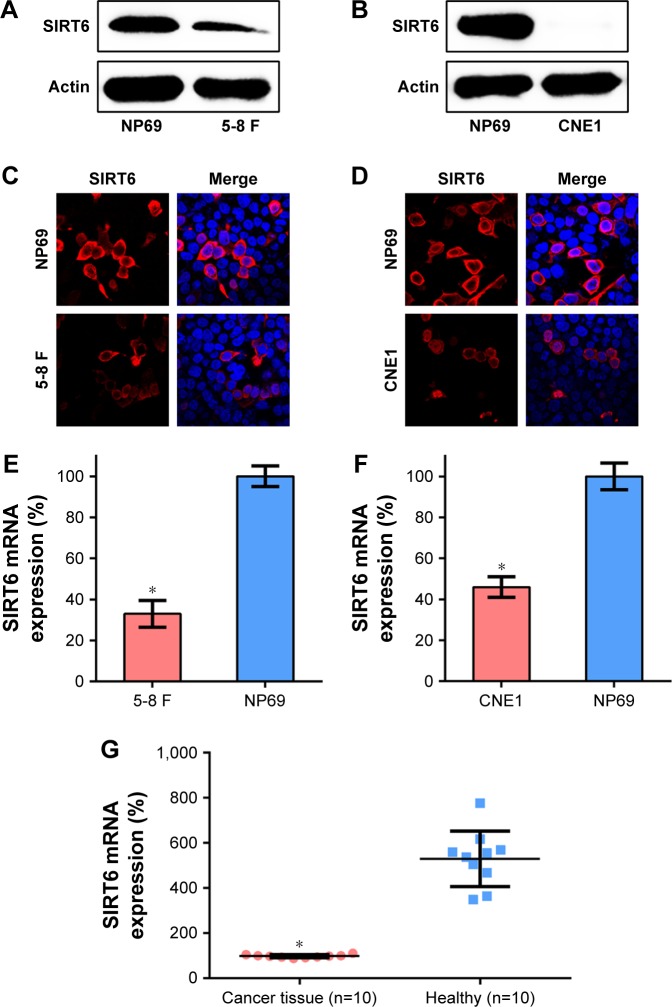
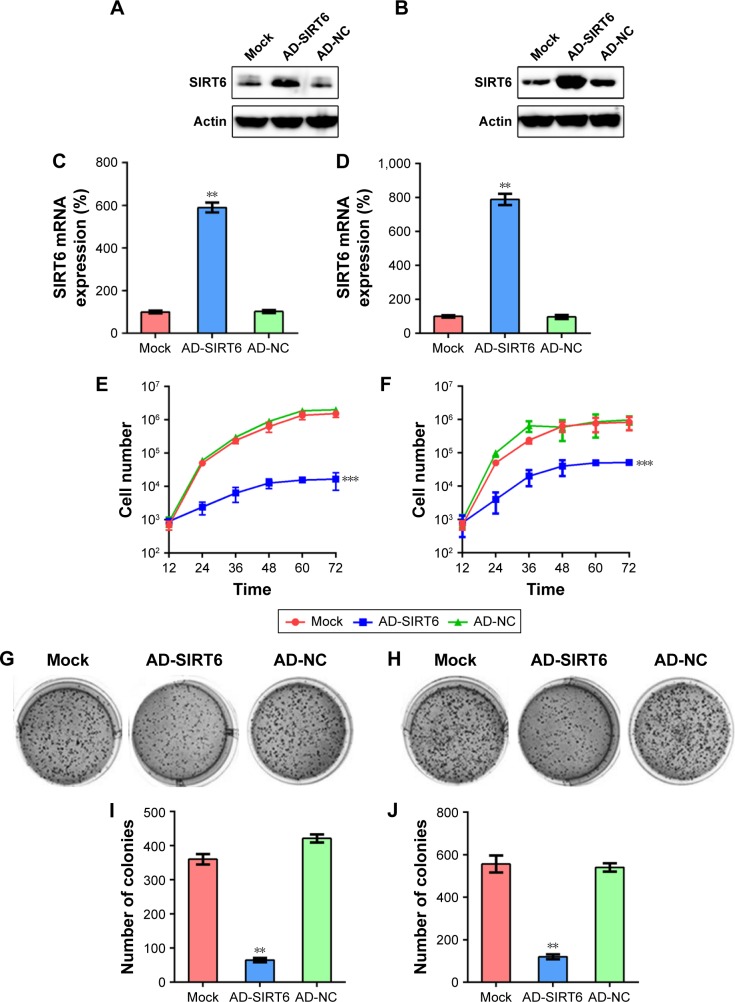
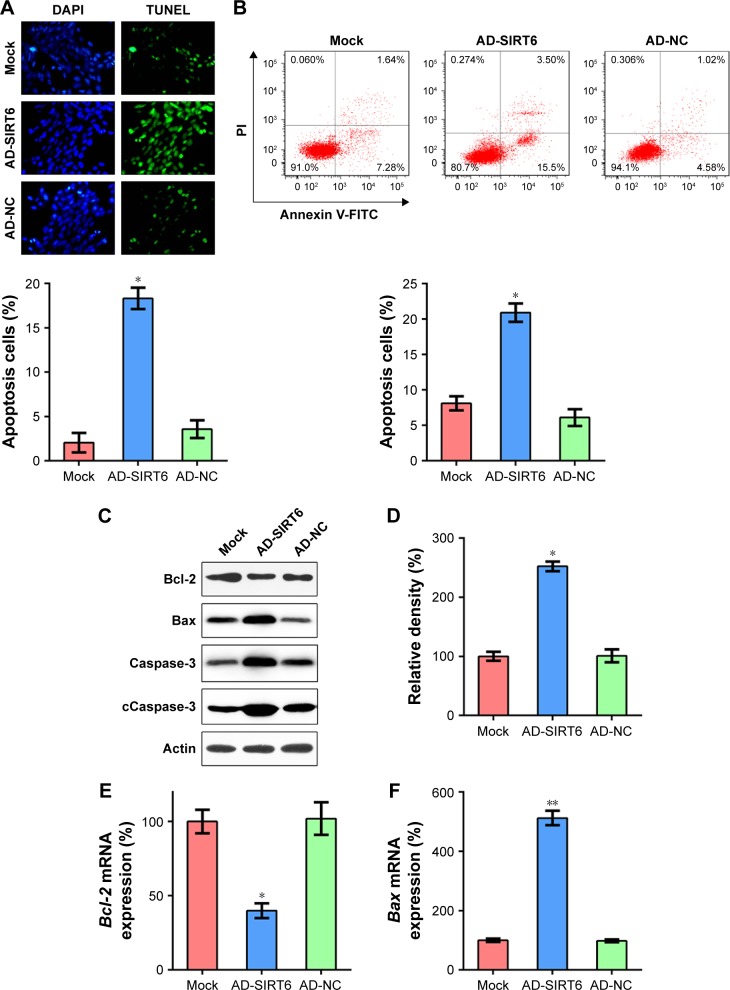
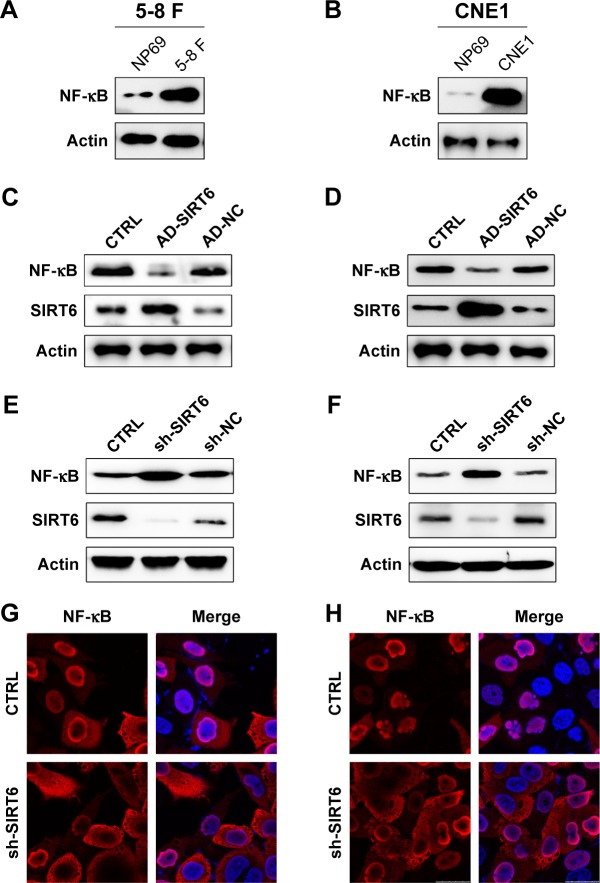
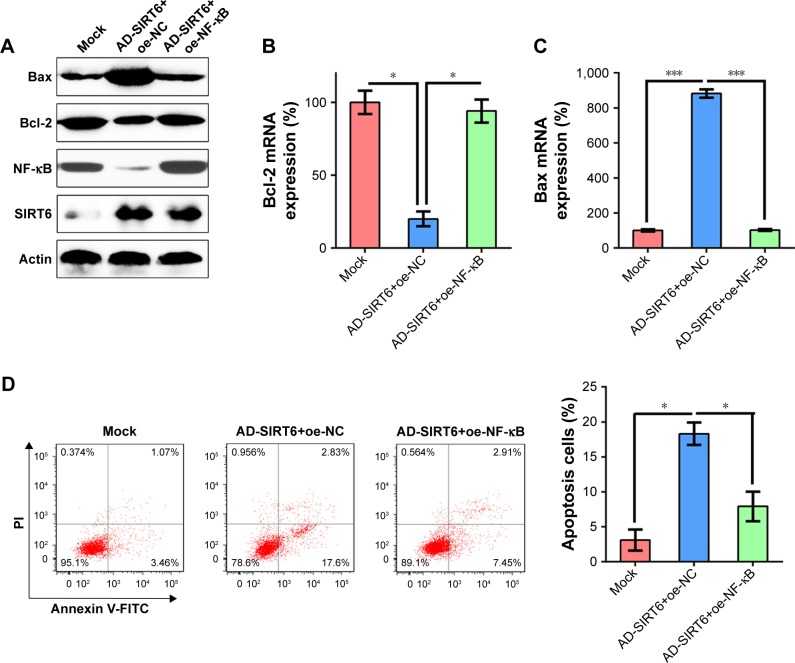
We found that expression of SIRT6 is downregulated in ten human NPC specimens as well as in the human NPC cell lines, 5-8 F and CNE1, as compared with that in healthy tissues and normal nasopharyngeal NP69 cells. The MTT assay and colony formation assay revealed that upregulation of SIRT6 impaired the proliferation, as well as the survival of 5-8 F and CNE1 cells. The TUNEL assay, annexin V-FITC/propidium iodide, and flow cytometry were performed to detect apoptosis. The results revealed that the expression of SIRT6 resulted in increased apoptosis.
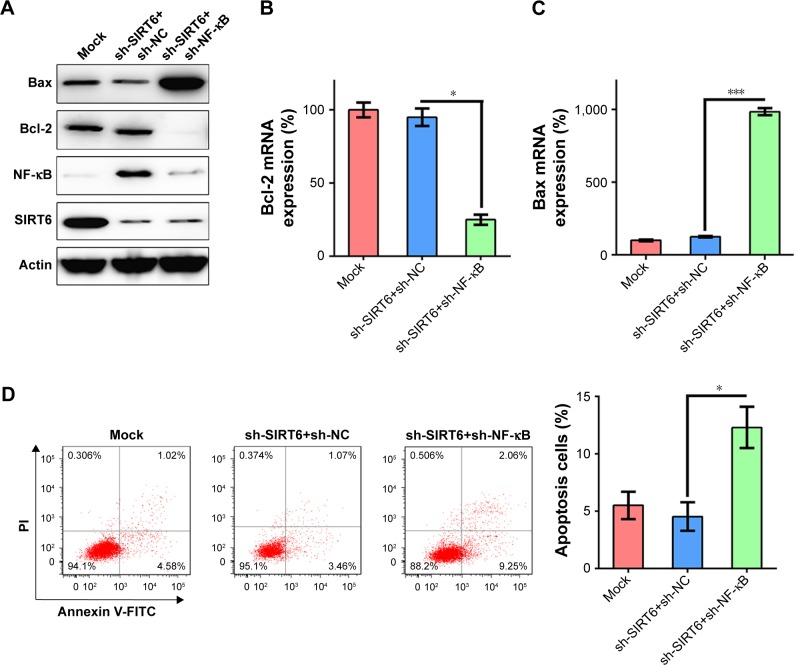
Western blotting results showed that SIRT6 overexpression decreased anti-apoptotic Bcl-2 levels, whereas it promoted an increase in pro-apoptotic Bax and cleaved caspase-3 levels. Moreover, NF-κB levels were markedly reduced in cells expressing SIRT6, whereas they were increased in cells transfected with shRNA-SIRT6. Recovery of NF-κB expression was found to counter the suppressive influence of SIRT6 on NPC cell survival, whereas, knockdown increased apoptosis of NPC cells.
Thus, the findings of our study offer insight into the biological and molecular mechanisms underlying the development of NPC and may lead to the development of new and innovative strategies for the treatment of NPC.
先前的报告表明,SIRT6是多种恶性肿瘤以及其他疾病发展的关键调节因子。然而,其在鼻咽癌(NPC)中的作用尚不清楚。因此,我们阐明了SIRT6对NPC细胞存活的影响以及对细胞死亡的调节作用。
我们发现,与健康组织和正常鼻咽NP69细胞相比,在10例人类NPC标本以及人类NPC细胞系5-8F和CNE1中,SIRT6的表达下调。MTT法和集落形成试验表明,SIRT6的上调损害了5-8F和CNE1细胞的增殖及存活。进行TUNEL试验、膜联蛋白V-FITC/碘化丙啶染色及流式细胞术检测细胞凋亡。结果显示,SIRT6的表达导致细胞凋亡增加。
蛋白质印迹结果表明,SIRT6过表达降低了抗凋亡蛋白Bcl-2的水平,而促进了促凋亡蛋白Bax和裂解的caspase-3水平的升高。此外,在表达SIRT6的细胞中NF-κB水平显著降低,而在用shRNA-SIRT6转染的细胞中NF-κB水平升高。发现恢复NF-κB表达可对抗SIRT6对NPC细胞存活的抑制作用,而敲低则增加NPC细胞的凋亡。
因此,我们的研究结果为NPC发生的生物学和分子机制提供了见解,并可能导致开发新的创新性NPC治疗策略。