Li Ning, Mao Dong, Cao Yansha, Li Hua, Ren Fu, Li Keyan
Department of Biochemistry and Molecular Biology, College of Basic Medicine, Jinzhou Medical University, Jinzhou, Liaoning 121000, P.R. China.
Department of Large Intestine, The First Affiliated Hospital of Jinzhou Medical University, Jinzhou Medical University, Jinzhou, Liaoning 121000, P.R. China.
Int J Oncol. 2018 May;52(5):1515-1527. doi: 10.3892/ijo.2018.4304. Epub 2018 Mar 5.
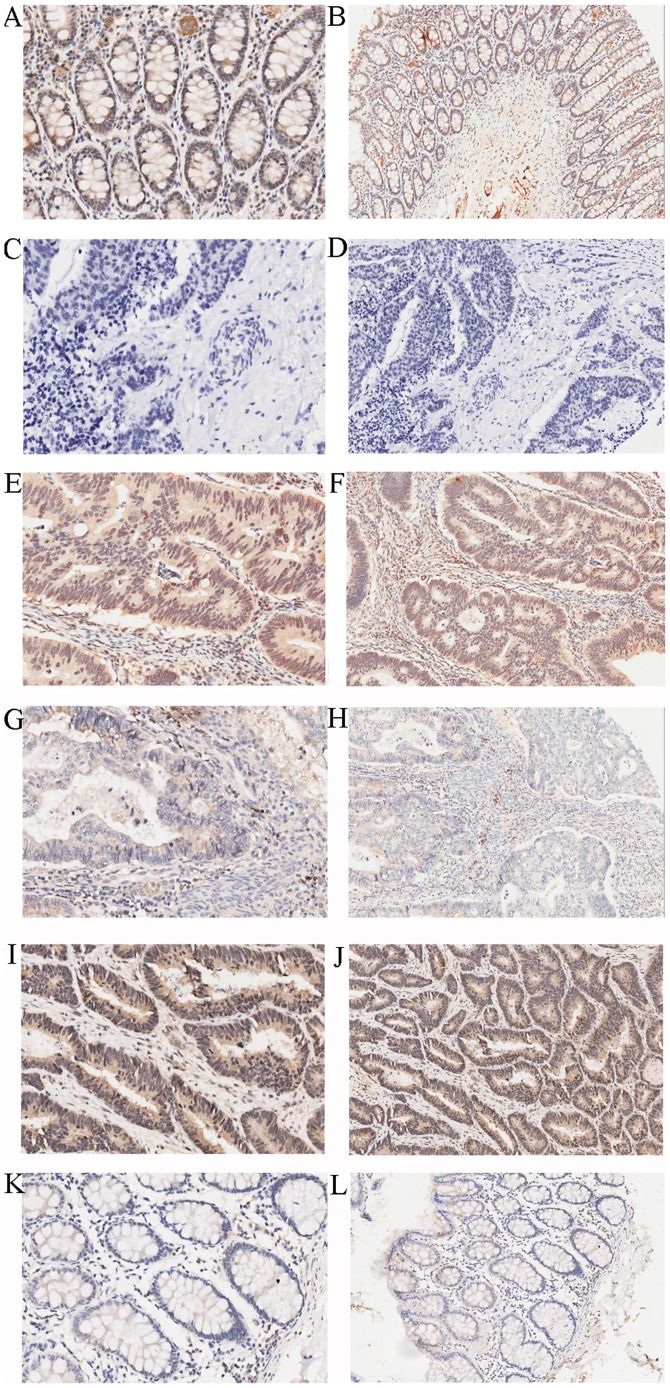
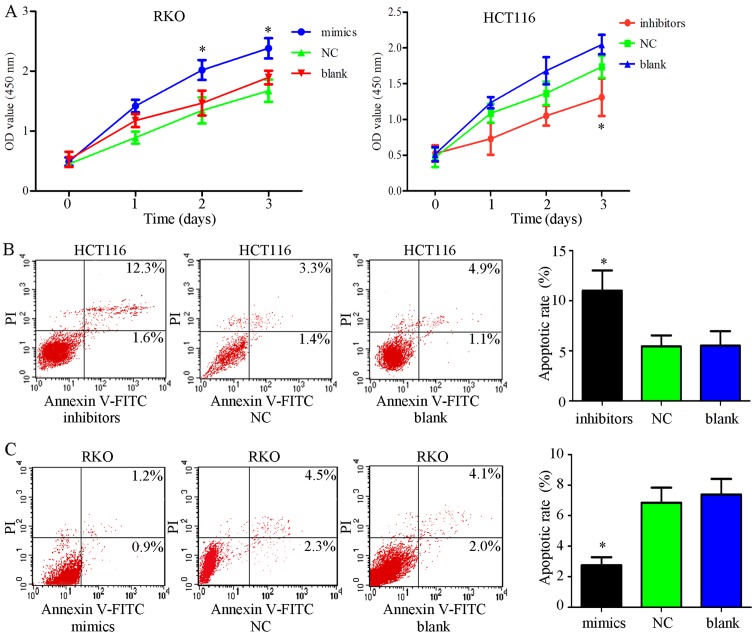
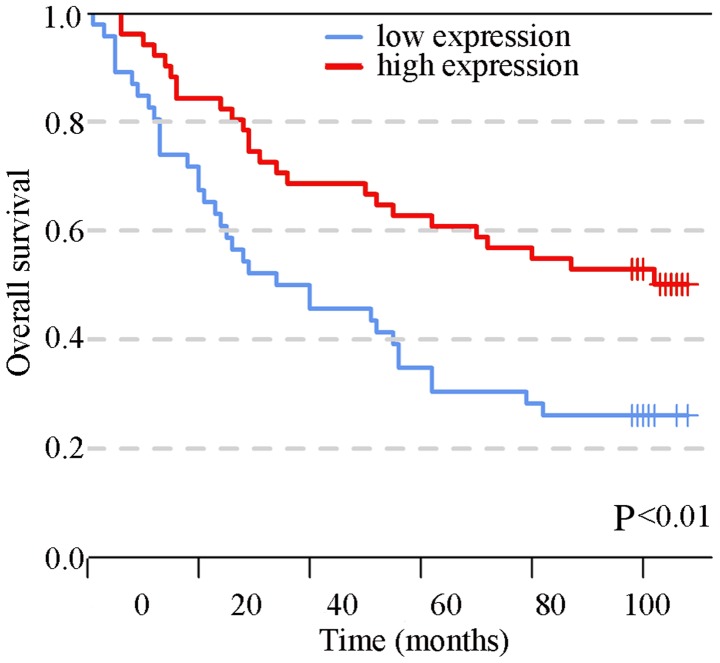
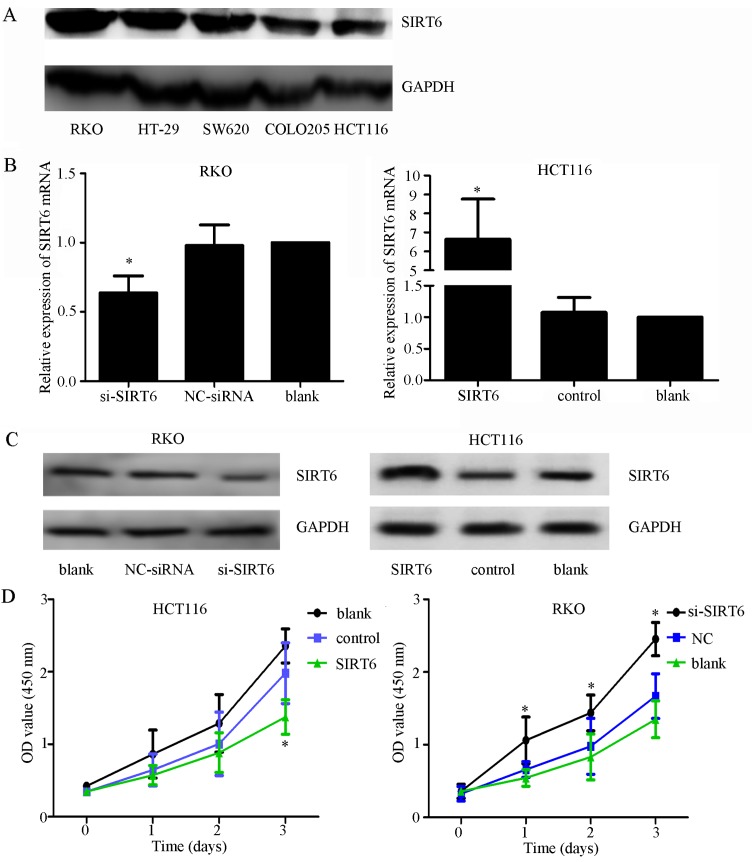
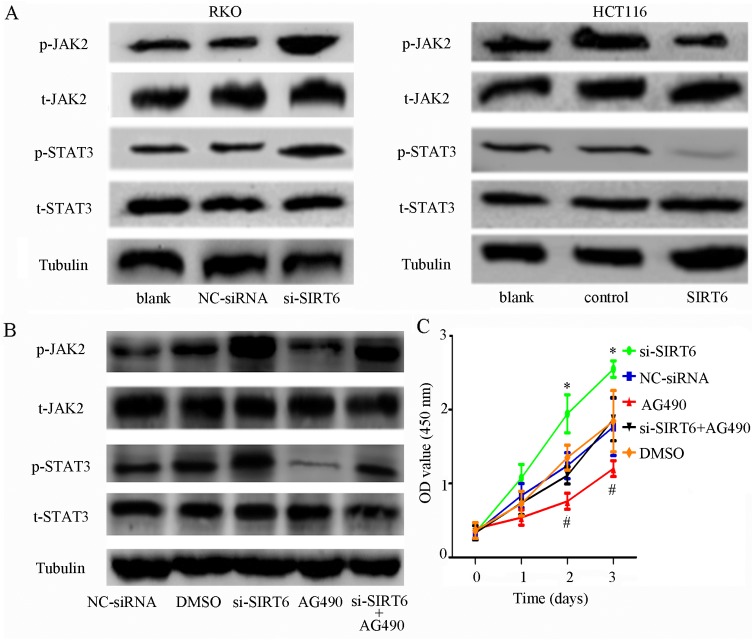
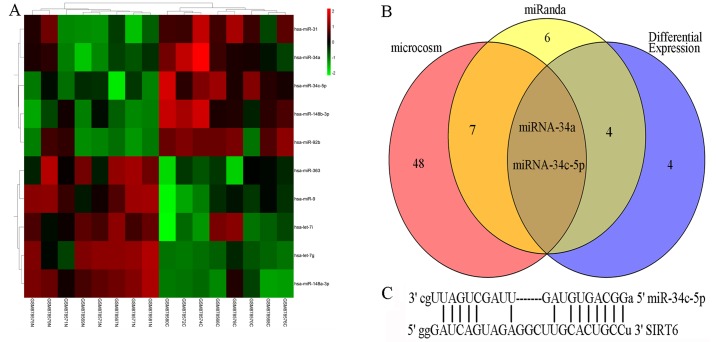
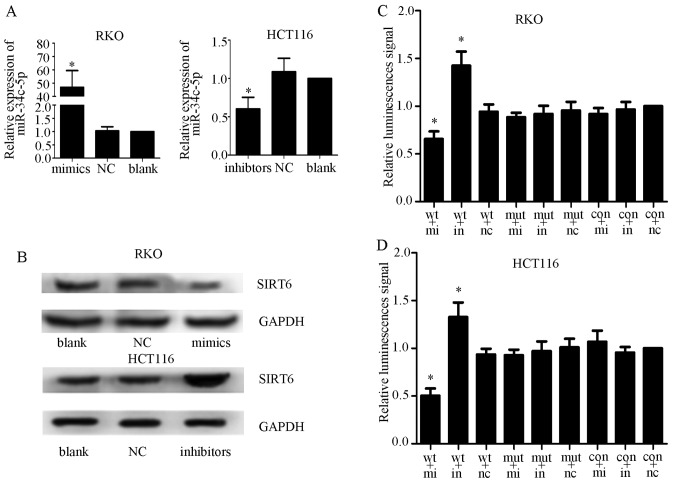
Sirtuin 6 (SIRT6) is a member of the nicotinamide adenine dinucleotide positivity-dependent class III deacetylase sirtuin family. The present study aimed to explore the expression and function of SIRT6 in colon cancer. Furthermore, the partial mechanism underlying the dysregulation of SIRT6 was investigated. The results of immunohistochemistry demonstrated that SIRT6 was markedly downregulated in colon cancer tissues, and patients with high SIRT6 expression had a better prognosis than those who did not. The proliferation and apoptotic assays demonstrated that SIRT6 was able to suppress colon cancer cell proliferation and induce apoptosis via the Janus kinase 2 (JAK2)/signal transducer and activator of transcription 3 (STAT3) signaling pathway. MicroRNAs (miRNAs/miRs) are important non-coding RNAs, which have a critical role in the negative regulation of their target genes. Through bioinformatics analysis and further experiments, the results demonstrated that miR-34c-5p was not only dysregulated in colon cancer tissues but may also regulate SIRT6 expression via interaction with the 3'-untranslated region of SIRT6 mRNA. The proliferation and apoptotic assays indicated that miR-34c-5p could directly promote cell growth and inhibit apoptosis via activation of the JAK2/STAT3 signaling pathway, which was similar to silencing SIRT6. In conclusion, the results of the present study demonstrated that miR-34c-5p promoted colon cancer cell proliferation by targeting SIRT6 via activation of the JAK2/STAT3 signaling pathway. It may be hypothesized that SIRT6 is a potential biomarker for colon cancer prognosis, and the miR-34c-5p/SIRT6/JAK2/STAT3 axis may provide novel insights into colon cancer treatment.
沉默调节蛋白6(SIRT6)是烟酰胺腺嘌呤二核苷酸阳性依赖性Ⅲ类脱乙酰酶沉默调节蛋白家族的成员。本研究旨在探讨SIRT6在结肠癌中的表达及功能。此外,还研究了SIRT6失调的部分机制。免疫组织化学结果表明,SIRT6在结肠癌组织中明显下调,SIRT6高表达的患者预后优于未高表达的患者。增殖和凋亡检测表明,SIRT6能够通过Janus激酶2(JAK2)/信号转导子和转录激活子3(STAT3)信号通路抑制结肠癌细胞增殖并诱导凋亡。微小RNA(miRNA/miR)是重要的非编码RNA,在其靶基因的负调控中起关键作用。通过生物信息学分析和进一步实验,结果表明miR-34c-5p不仅在结肠癌组织中失调,还可能通过与SIRT6 mRNA的3'-非翻译区相互作用来调节SIRT6的表达。增殖和凋亡检测表明,miR-34c-5p可通过激活JAK2/STAT3信号通路直接促进细胞生长并抑制凋亡,这与沉默SIRT6相似。总之,本研究结果表明,miR-34c-5p通过激活JAK2/STAT3信号通路靶向SIRT6促进结肠癌细胞增殖。可以推测,SIRT6是结肠癌预后的潜在生物标志物,而miR-34c-5p/SIRT6/JAK2/STAT3轴可能为结肠癌治疗提供新的见解。