Leong Hoe Nam, Kurup Asok, Tan Mak Yong, Kwa Andrea Lay Hoon, Liau Kui Hin, Wilcox Mark H
Rophi Clinic, Mount Elizabeth Novena Specialist Centre, Singapore, Singapore,
Infectious Diseases Care Private Ltd, Mount Elizabeth Medical Centre, Singapore, Singapore.
Infect Drug Resist. 2018 Oct 25;11:1959-1974. doi: 10.2147/IDR.S172366. eCollection 2018.
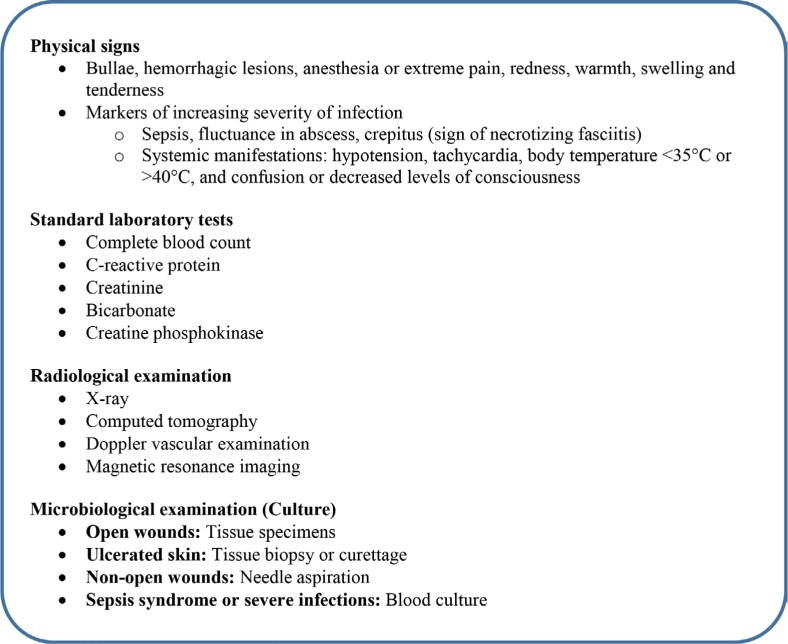
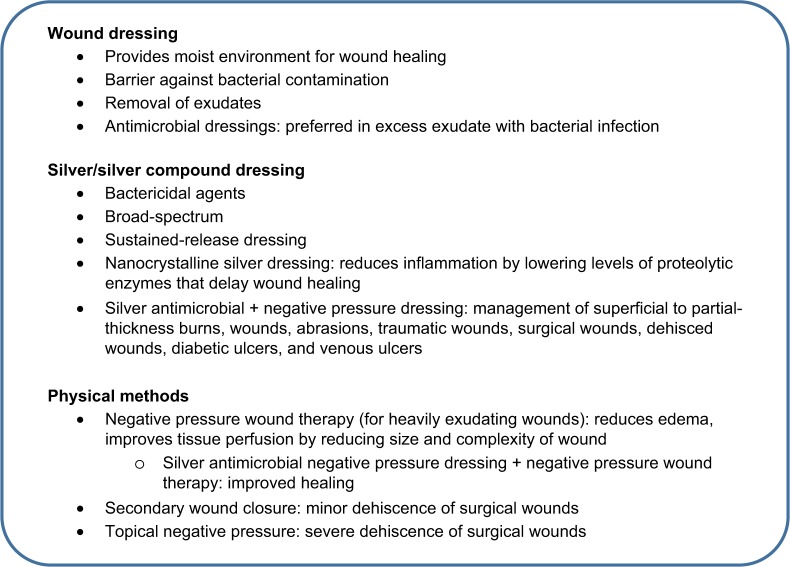
Complicated skin and soft tissue infections (cSSTIs) represent the severe form of infectious disease that involves deeper soft tissues. Involvement of methicillin-resistant (MRSA) further complicates cSSTI with increased hospitalization, health care costs, and overall mortality. Various international guidelines provide recommendations on the management of cSSTIs, with the inclusion of newer antibiotics. This literature-based review discusses the overall management of cSSTI, including appropriate use of antibiotics in clinical practice. Successful treatment of cSSTIs starts with early and precise diagnosis, including identification of causative pathogen and its load, determination of infection severity, associated complications, and risk factors. The current standard-of-care for cSSTIs involves incision, drainage, surgical debridement, broad-spectrum antibiotic therapy, and supportive care. In recent years, the emergence of newer antibiotics (eg, ceftaroline, tigecycline, daptomycin, linezolid, etc) has provided clinicians wider options of antimicrobial therapy. Selection of antibiotics should be based on the drug characteristics, effectiveness, safety, and treatment costs, alongside other aspects such as host factors and local multidrug resistance rates. However, larger studies on newer antibiotics are warranted to refine the decision making on the appropriate antimicrobial therapy. Local Antimicrobial Stewardship Program strategies in health care settings could guide clinicians for early initiation of specific treatments to combat region-specific antimicrobial resistance, minimize adverse effects, and to improve outcomes such as reduction in infections. These strategies involving iv-to-oral switch, de-escalation to narrow-spectrum antibiotics, and dose optimization have an impact on the overall improvement of cSSTI therapy outcomes, especially in countries like Singapore that has a high disease burden.
复杂皮肤及软组织感染(cSSTIs)是一种涉及深层软组织的严重感染性疾病。耐甲氧西林金黄色葡萄球菌(MRSA)的感染会使cSSTIs进一步复杂化,导致住院时间延长、医疗费用增加以及总体死亡率上升。各种国际指南针对cSSTIs的管理提供了建议,包括使用新型抗生素。这篇基于文献的综述讨论了cSSTIs的整体管理,包括在临床实践中合理使用抗生素。成功治疗cSSTIs始于早期准确诊断,包括确定致病病原体及其载量、评估感染严重程度、相关并发症和风险因素。目前cSSTIs的标准治疗方法包括切开引流、手术清创、广谱抗生素治疗和支持治疗。近年来,新型抗生素(如头孢洛林、替加环素、达托霉素、利奈唑胺等)的出现为临床医生提供了更广泛的抗菌治疗选择。抗生素的选择应基于药物特性、有效性、安全性和治疗成本,以及宿主因素和当地多重耐药率等其他方面。然而,需要开展更多关于新型抗生素的大型研究,以完善抗菌治疗的合理决策。医疗机构中的局部抗菌药物管理计划策略可以指导临床医生尽早开始特定治疗,以应对地区性抗菌药物耐药性,将不良反应降至最低,并改善感染减少等治疗效果。这些涉及静脉转口服、降阶梯使用窄谱抗生素和剂量优化的策略对cSSTI治疗效果的整体改善具有影响,尤其是在像新加坡这样疾病负担较高的国家。