Takahashi Masahiko, Kitaura Hiroki, Kakita Akiyoshi, Kakihana Taichi, Katsuragi Yoshinori, Nameta Masaaki, Zhang Lu, Iwakura Yuriko, Nawa Hiroyuki, Higuchi Masaya, Komatsu Masaaki, Fujii Masahiro
Division of Virology, Niigata University Graduate School of Medical and Dental Sciences, Niigata 951-8510, Japan.
Department of Pathology, Brain Research Institute, Niigata University, Niigata 951-8585, Japan.
iScience. 2018 Nov 30;9:433-450. doi: 10.1016/j.isci.2018.11.006. Epub 2018 Nov 5.
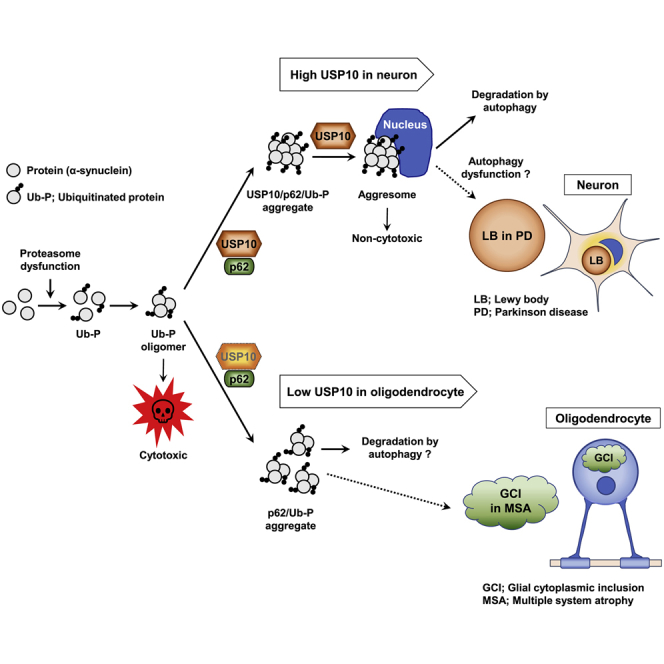
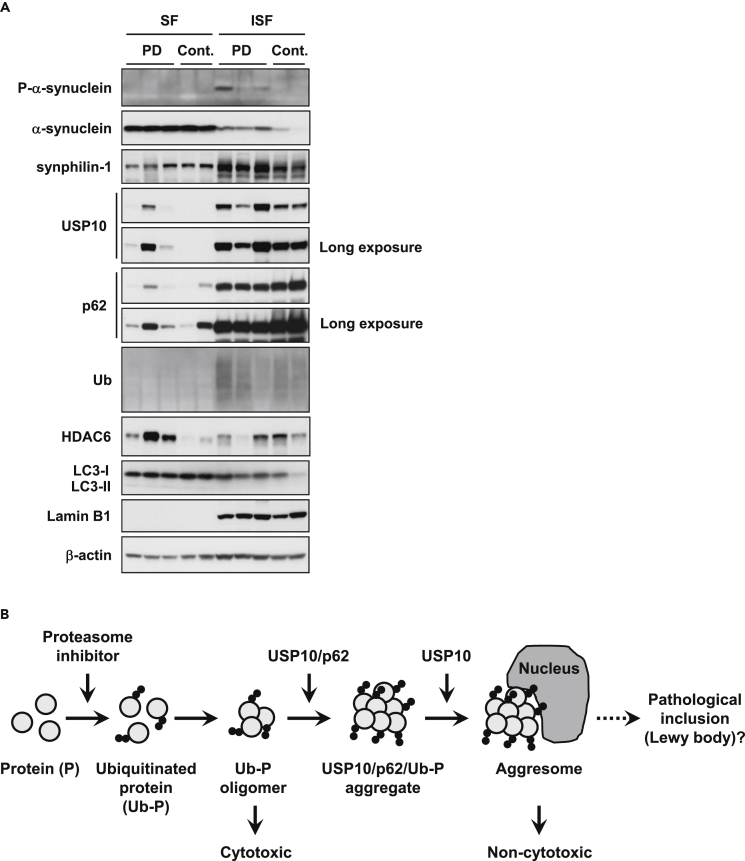
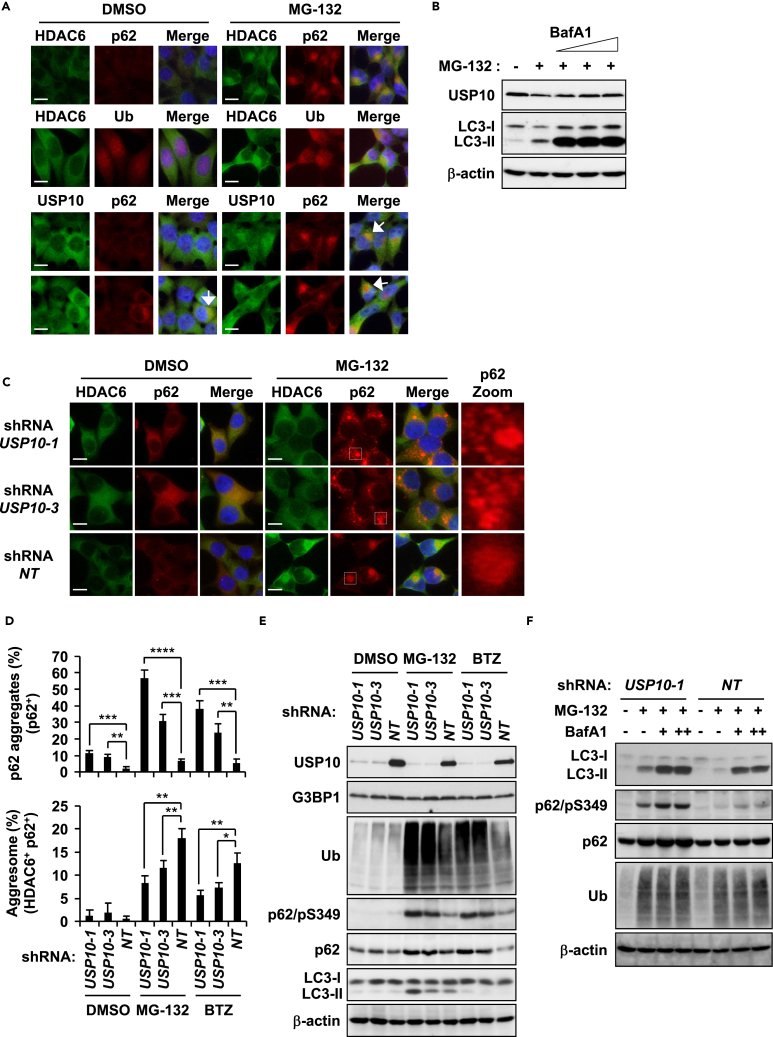
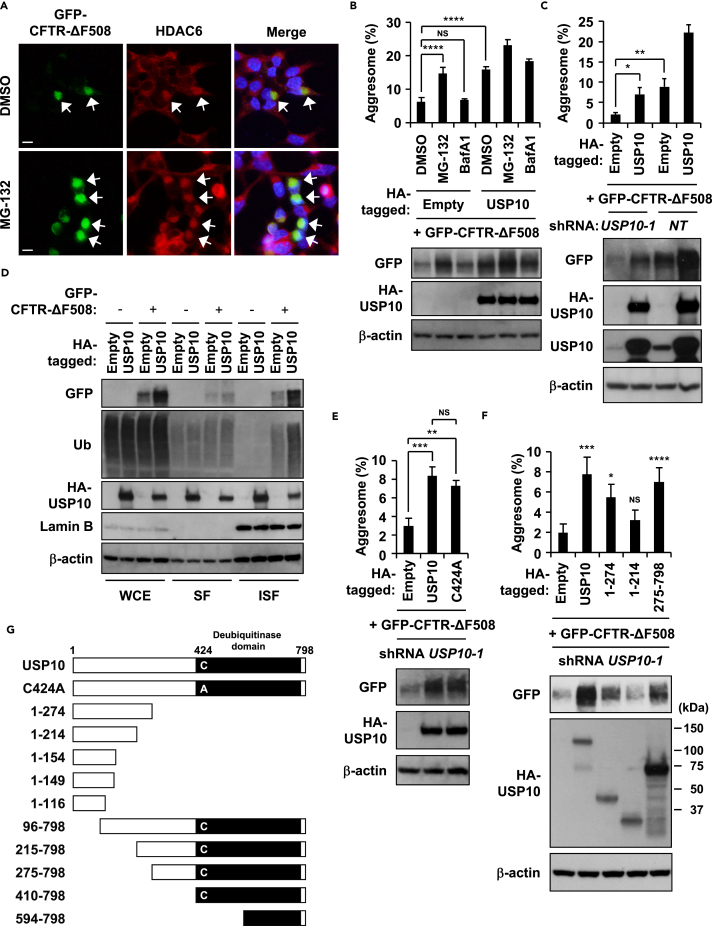
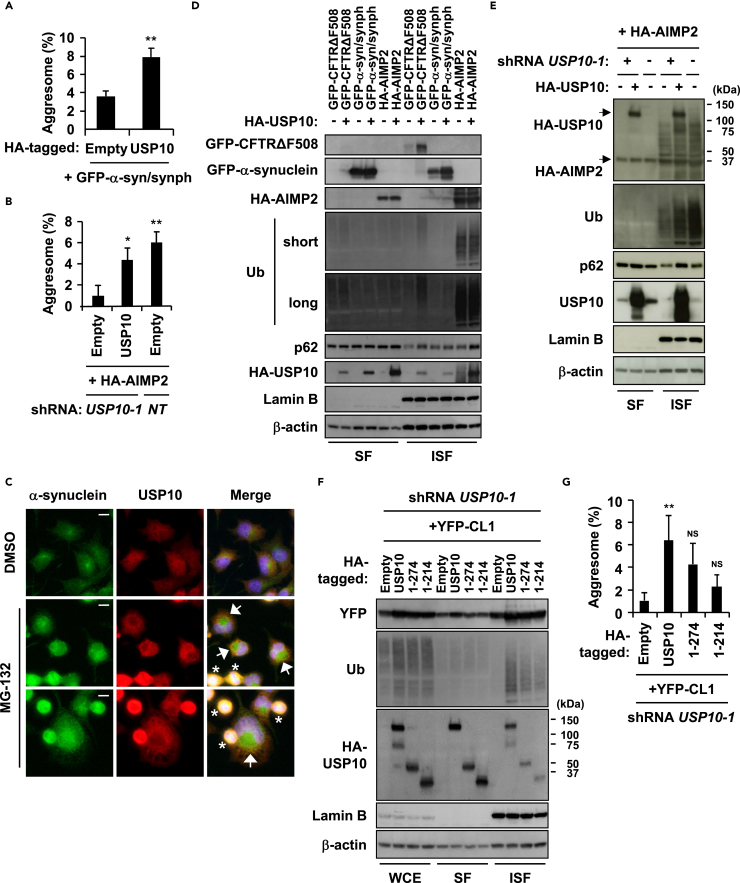
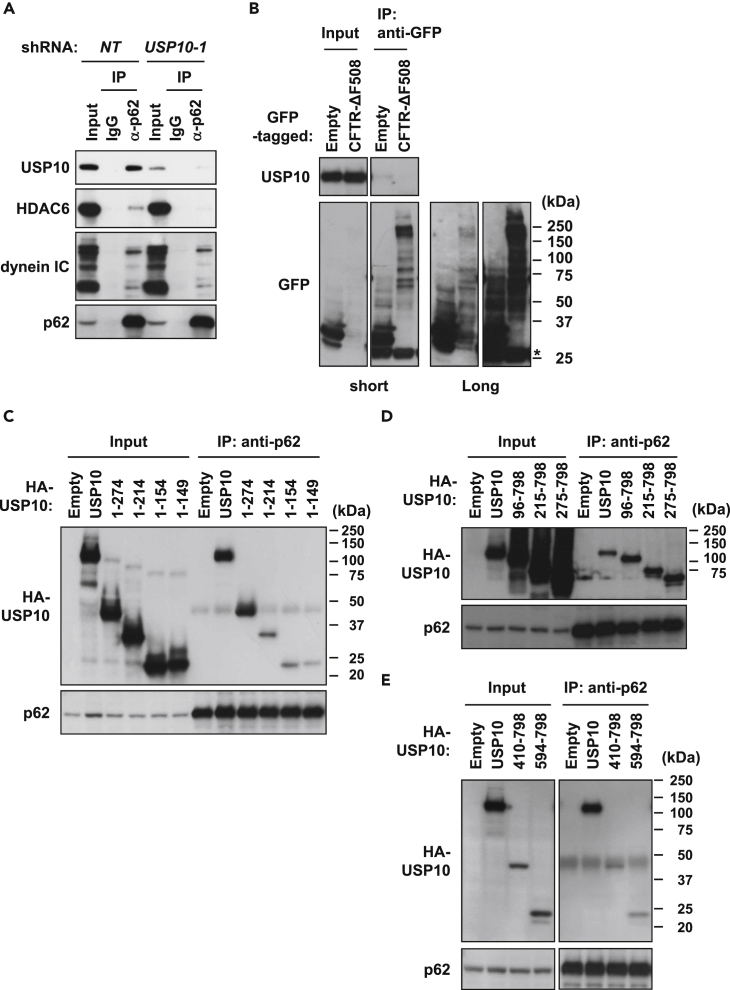
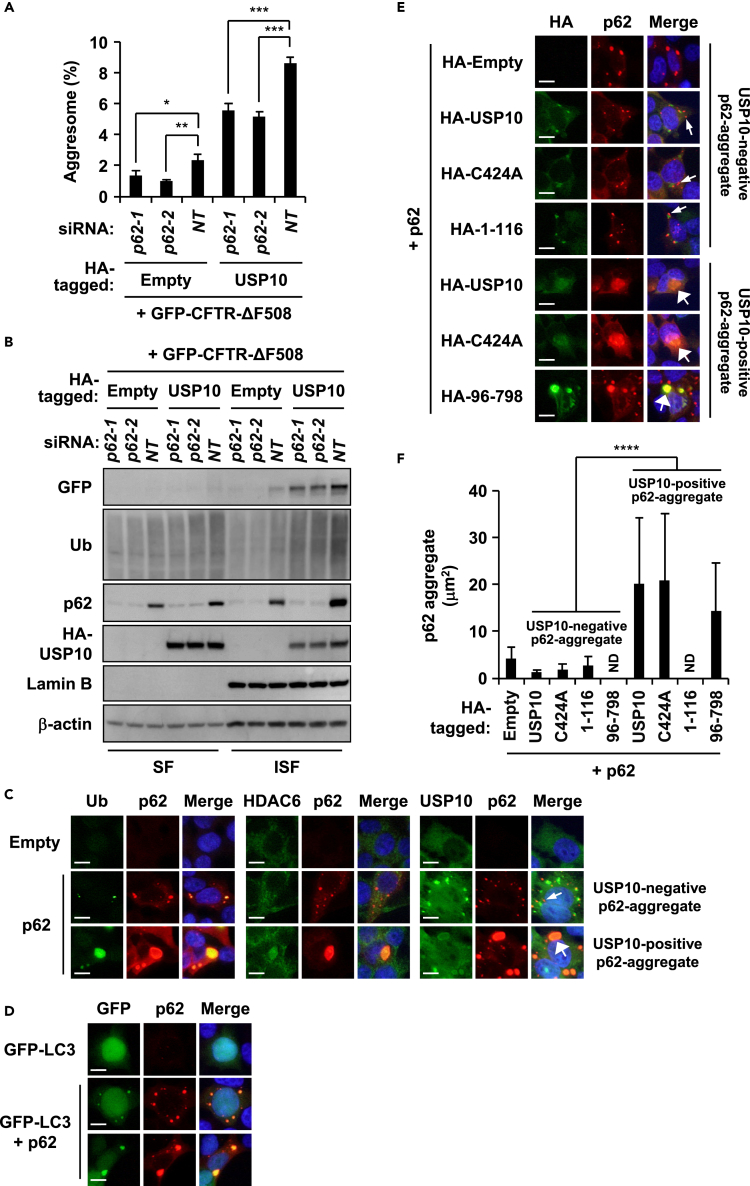
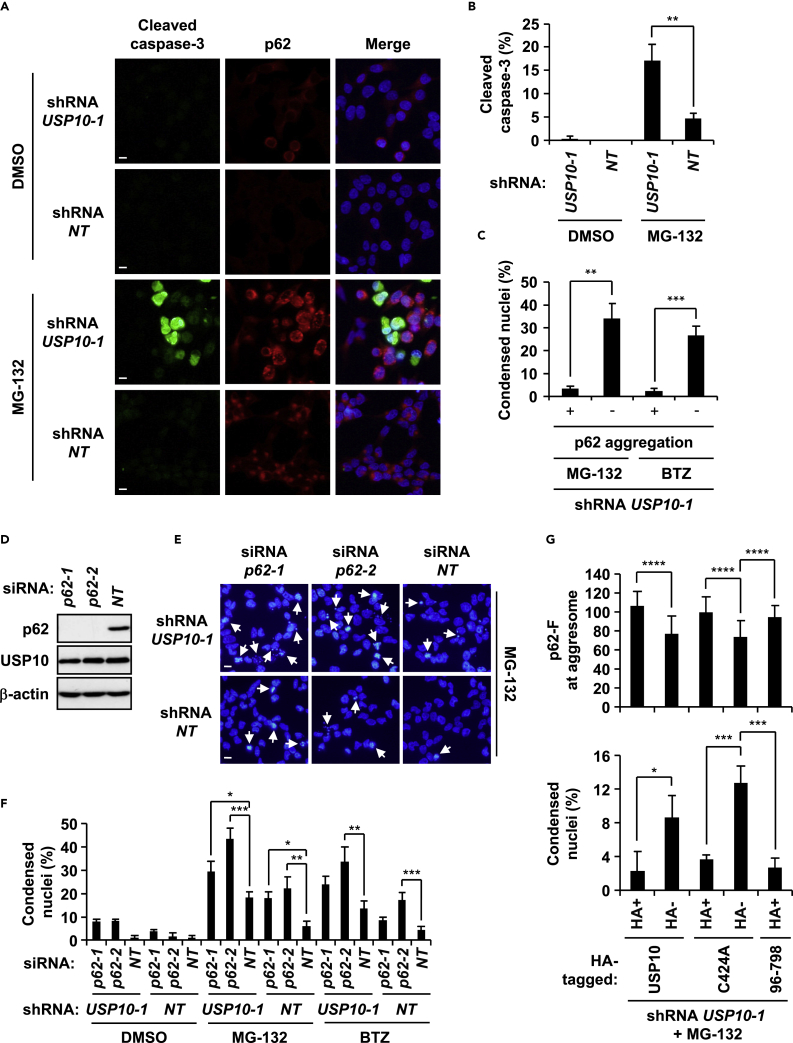
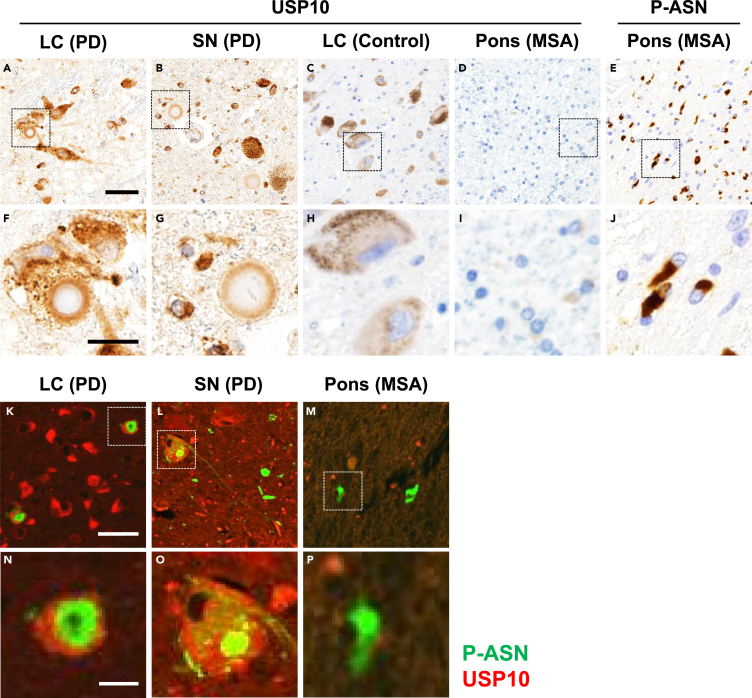
Accumulation of ubiquitinated proteins is cytotoxic, but cells inactivate these cytotoxicities by inducing aggresome formation. We found that ubiquitin-specific protease 10 (USP10) inhibits ubiquitinated protein-induced apoptosis by inducing aggresome formation. USP10 interacted with the ubiquitin receptor p62 and the interaction augmented p62-dependent ubiquitinated protein aggregation and aggresome formation, thereby cooperatively inhibiting apoptosis. We provide evidence that USP10/p62-induced protein aggregates inhibit proteasome activity, which increases the amount of ubiquitinated proteins and promotes aggresome formation. USP10 induced aggresomes containing α-synuclein, a pathogenic protein in Parkinson disease, in cultured cells. In Parkinson disease brains, USP10 was colocalized with α-synuclein in the disease-linked aggresome-like inclusion Lewy bodies, suggesting that USP10 inhibits α-synuclein-induced neurotoxicity by promoting Lewy body formation. Collectively, these findings suggest that USP10 is a critical factor to control protein aggregation, aggresome formation, and cytotoxicity in protein-aggregation-related diseases.
泛素化蛋白的积累具有细胞毒性,但细胞可通过诱导聚集体形成来消除这些细胞毒性。我们发现泛素特异性蛋白酶10(USP10)通过诱导聚集体形成来抑制泛素化蛋白诱导的细胞凋亡。USP10与泛素受体p62相互作用,这种相互作用增强了p62依赖性泛素化蛋白的聚集和聚集体形成,从而协同抑制细胞凋亡。我们提供的证据表明,USP10/p62诱导的蛋白聚集体会抑制蛋白酶体活性,这会增加泛素化蛋白的数量并促进聚集体形成。USP10在培养细胞中诱导形成含有α-突触核蛋白(帕金森病中的一种致病蛋白)的聚集体。在帕金森病患者的大脑中,USP10与α-突触核蛋白在与疾病相关的聚集体样包涵体路易小体中共定位,这表明USP10通过促进路易小体形成来抑制α-突触核蛋白诱导的神经毒性。总的来说,这些发现表明USP10是控制蛋白聚集、聚集体形成以及蛋白聚集相关疾病中细胞毒性的关键因素。