Division of Virology, Niigata University Graduate School of Medical and Dental Sciences, Niigata, 951-8510, Japan.
Department of Pathology, Brain Research Institute, Niigata University, Niigata, 951-8585, Japan.
Sci Rep. 2019 Jul 22;9(1):10591. doi: 10.1038/s41598-019-47033-7.
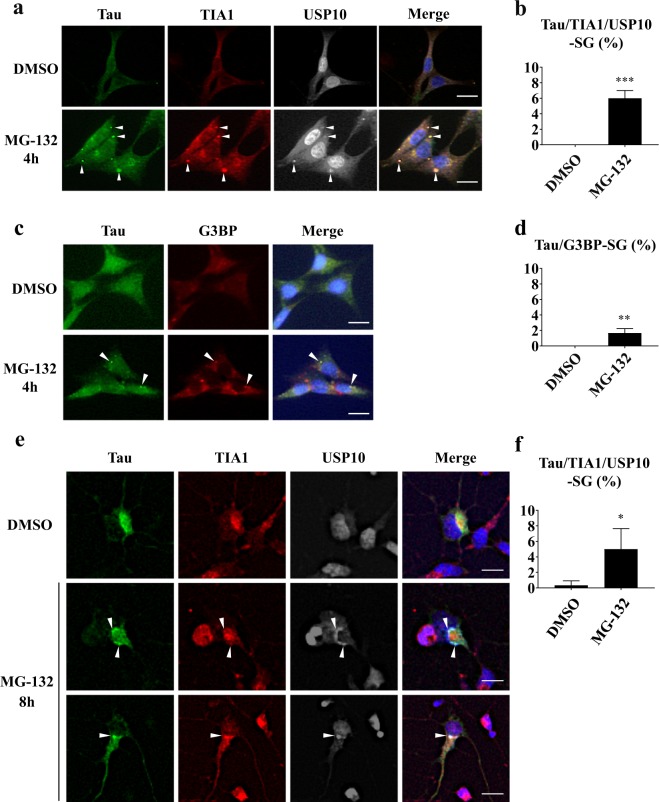
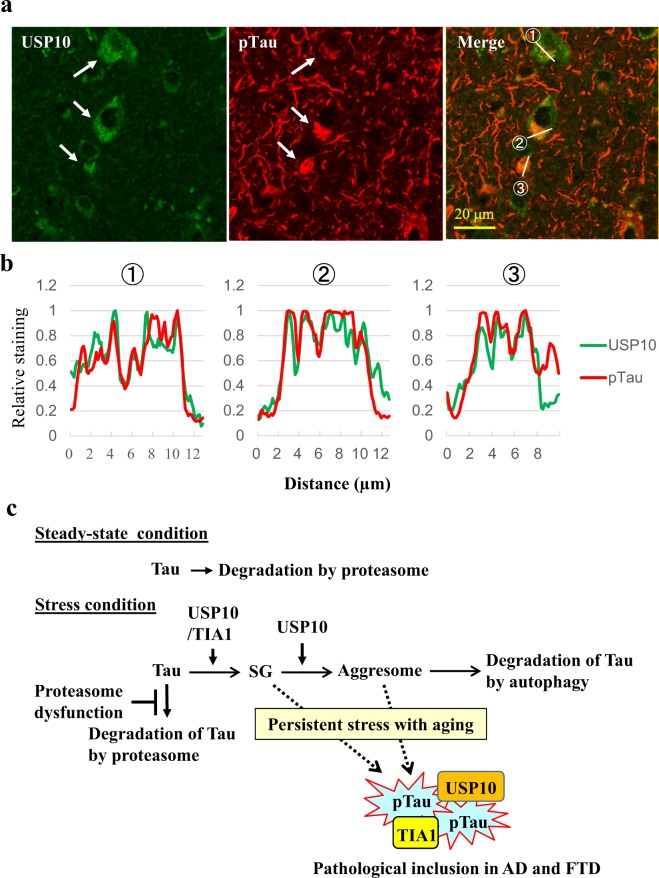
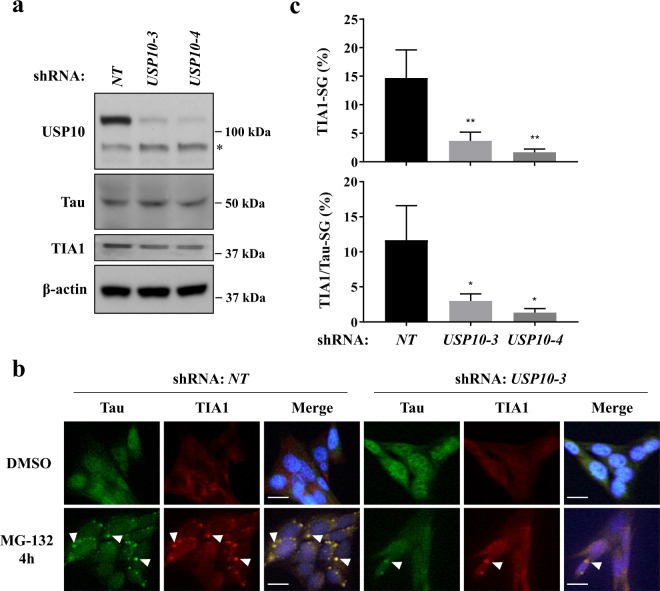
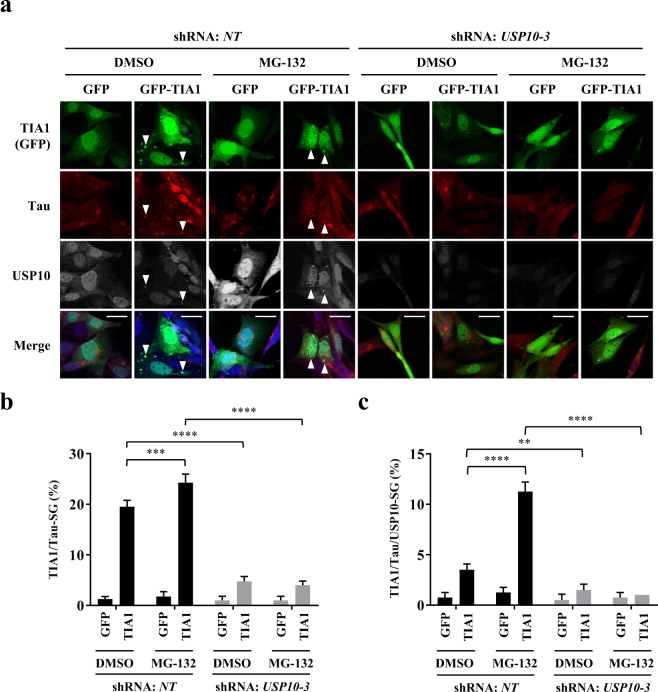
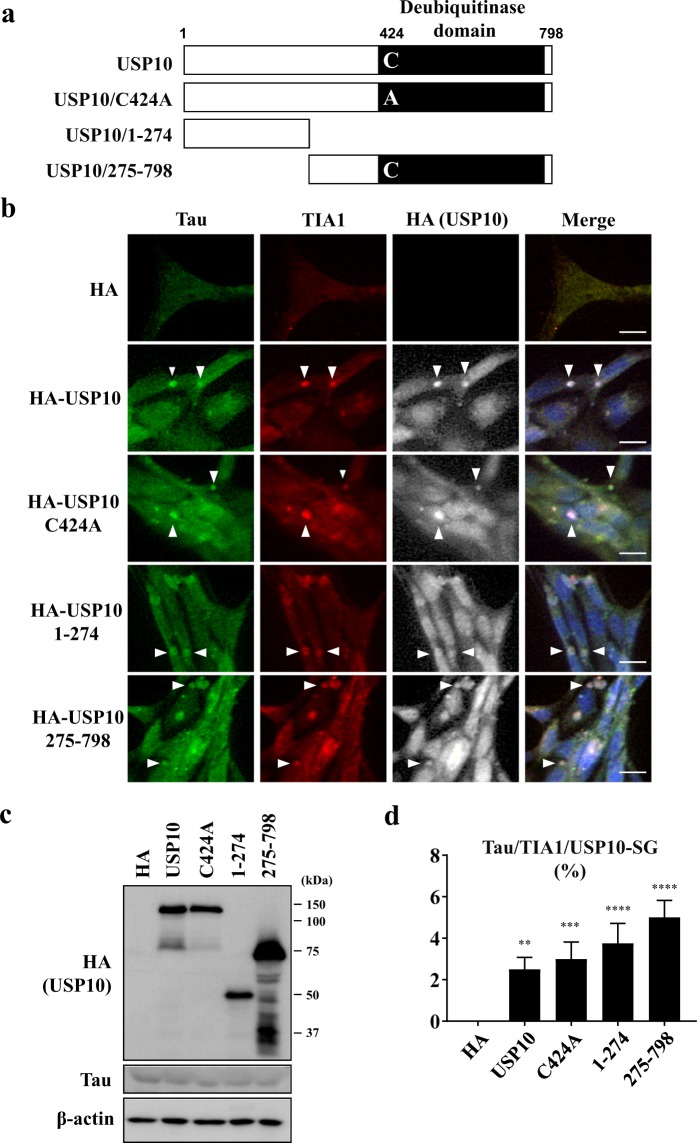
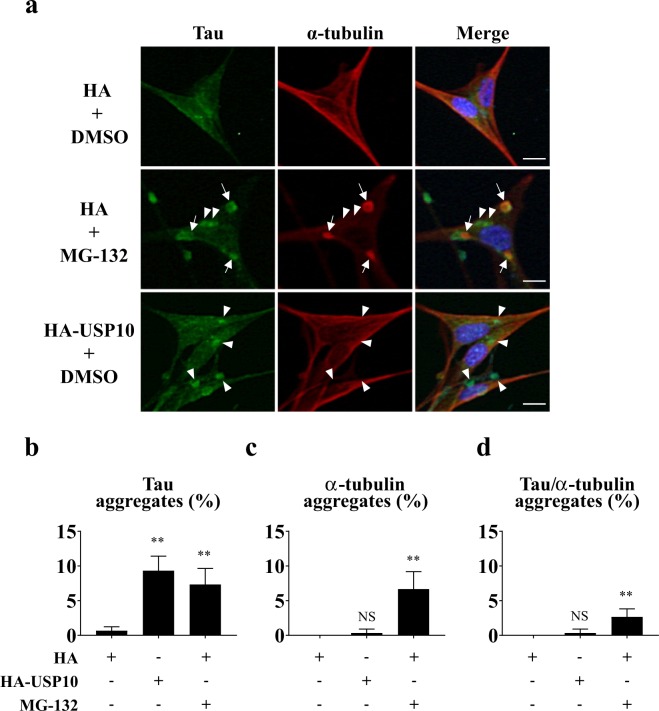
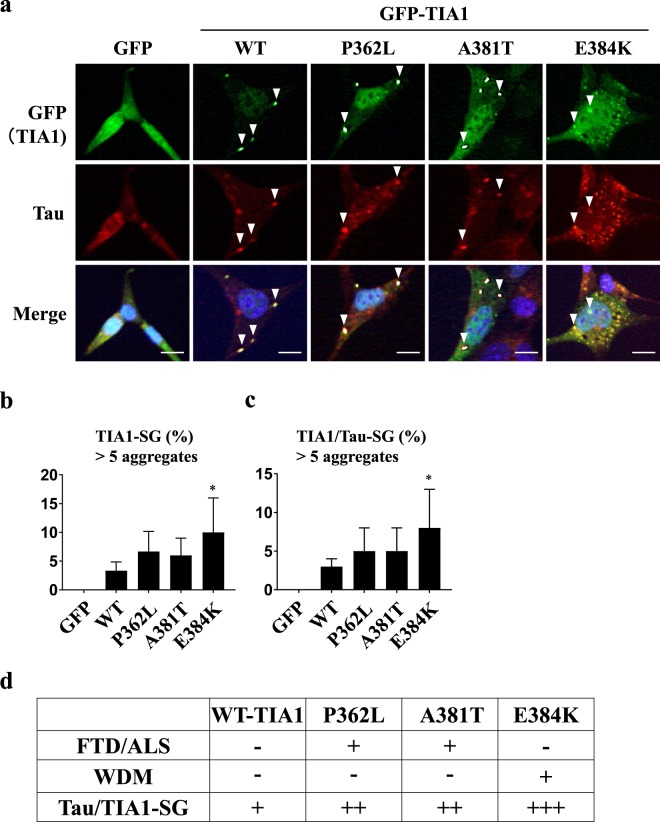
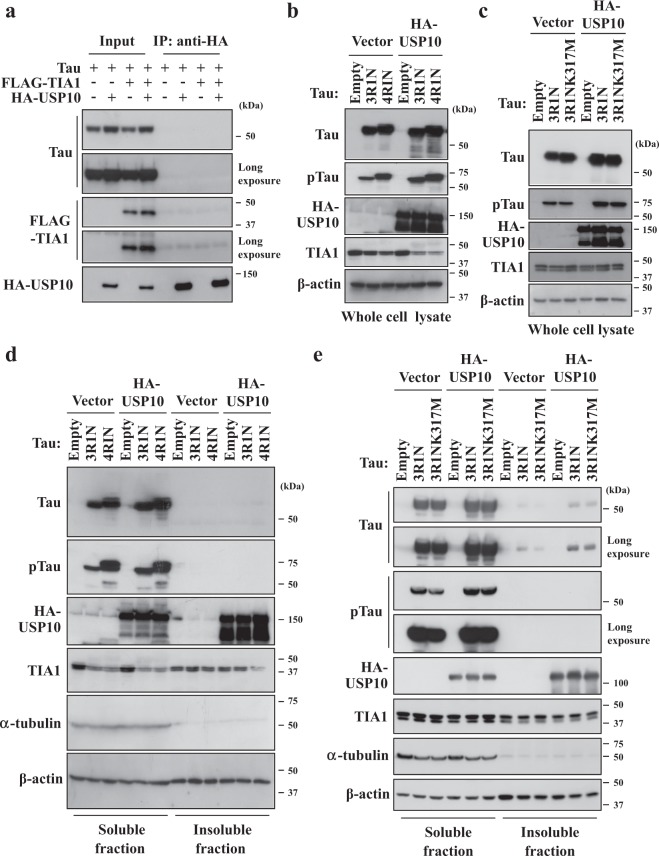
Tau aggregates in neurons of brain lesions is a hallmark pathology of tauopathies, including Alzheimer's disease (AD). Recent studies suggest that the RNA-binding protein TIA1 initiates Tau aggregation by inducing the formation of stress granules (SGs) containing Tau. SGs are stress-inducible cytoplasmic protein aggregates containing many RNA-binding proteins that has been implicated as an initial site of multiple pathogenic protein aggregates in several neurodegenerative diseases. In this study, we found that ubiquitin-specific protease 10 (USP10) is a critical factor for the formation of Tau/TIA1/USP10-positive SGs. Proteasome inhibition or TIA1-overexpression in HT22 neuronal cells induced the formation of TIA1/Tau-positive SGs, and the formations were severely attenuated by depletion of USP10. In addition, the overexpression of USP10 without stress stimuli in HT22 cells induced TIA1/Tau/USP10-positive SGs in a deubiquitinase-independent manner. In AD brain lesions, USP10 was colocalized with Tau aggregates in the cell body of neurons. The present findings suggest that USP10 plays a key role in the initiation of pathogenic Tau aggregation in AD through SG formation.
神经元中 Tau 的聚集是包括阿尔茨海默病(AD)在内的 Tau 病的标志性病理学特征。最近的研究表明,RNA 结合蛋白 TIA1 通过诱导包含 Tau 的应激颗粒(SG)的形成来引发 Tau 聚集。SG 是应激诱导的细胞质蛋白聚集体,其中包含许多 RNA 结合蛋白,这些蛋白已被牵连为多种神经退行性疾病中多个致病蛋白聚集体的初始部位。在这项研究中,我们发现泛素特异性蛋白酶 10(USP10)是形成 Tau/TIA1/USP10 阳性 SG 的关键因素。蛋白酶体抑制或 TIA1 在 HT22 神经元细胞中的过表达诱导了 TIA1/Tau 阳性 SG 的形成,而 USP10 的耗竭严重减弱了其形成。此外,即使在 HT22 细胞中没有应激刺激的情况下过表达 USP10,也会以去泛素化酶非依赖性的方式诱导形成 TIA1/Tau/USP10 阳性 SG。在 AD 脑病变中,USP10 与神经元胞体内的 Tau 聚集物共定位。这些发现表明,USP10 通过 SG 形成在 AD 中致病性 Tau 聚集的起始中发挥关键作用。