Department of Biological Sciences, Korea Advanced Institute of Science and Technology, Daejeon, 34141, Republic of Korea.
Department of Chemical Engineering, Konkuk University, Seoul, 05029, Republic of Korea.
BMC Genomics. 2018 Nov 23;19(1):837. doi: 10.1186/s12864-018-5238-0.
Acetogenic bacteria constitute promising biocatalysts for the conversion of CO/H or synthesis gas (H/CO/CO) into biofuels and value-added biochemicals. These microorganisms are naturally capable of autotrophic growth via unique acetogenesis metabolism. Despite their biosynthetic potential for commercial applications, a systemic understanding of the transcriptional and translational regulation of the acetogenesis metabolism remains unclear.
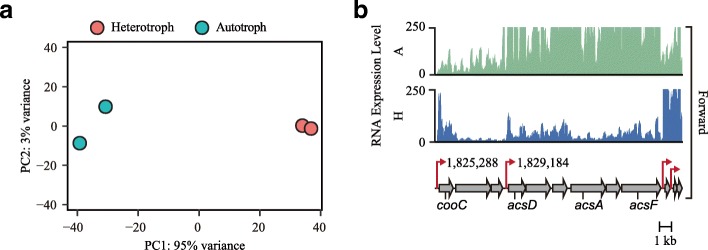
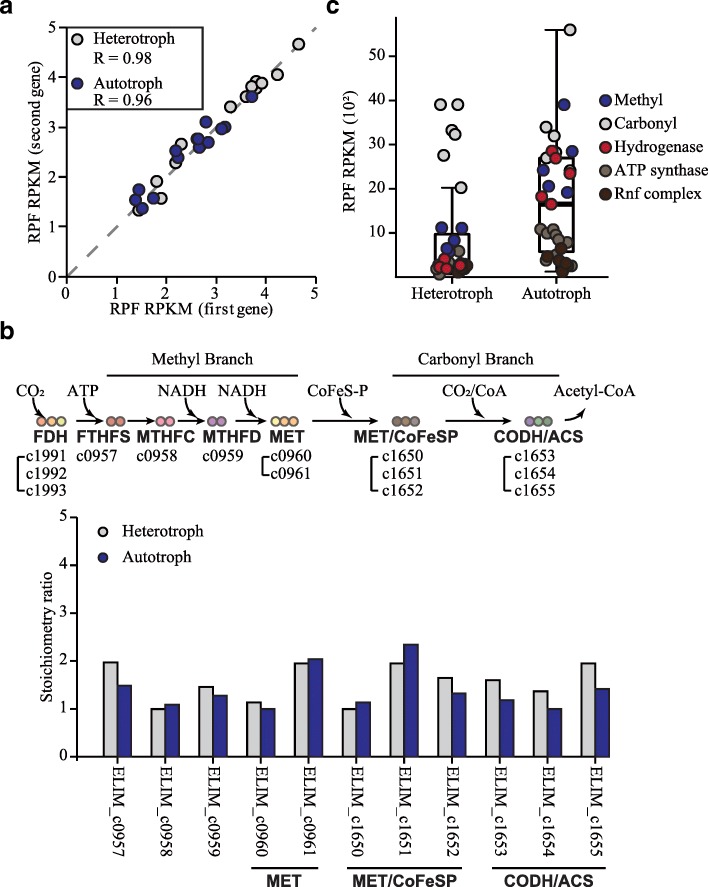
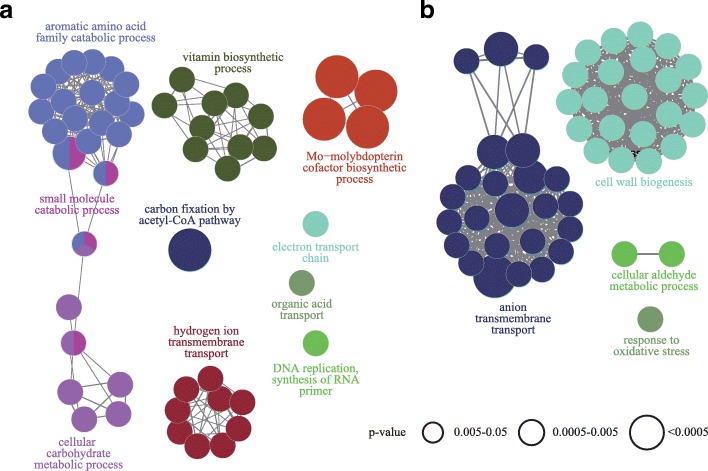
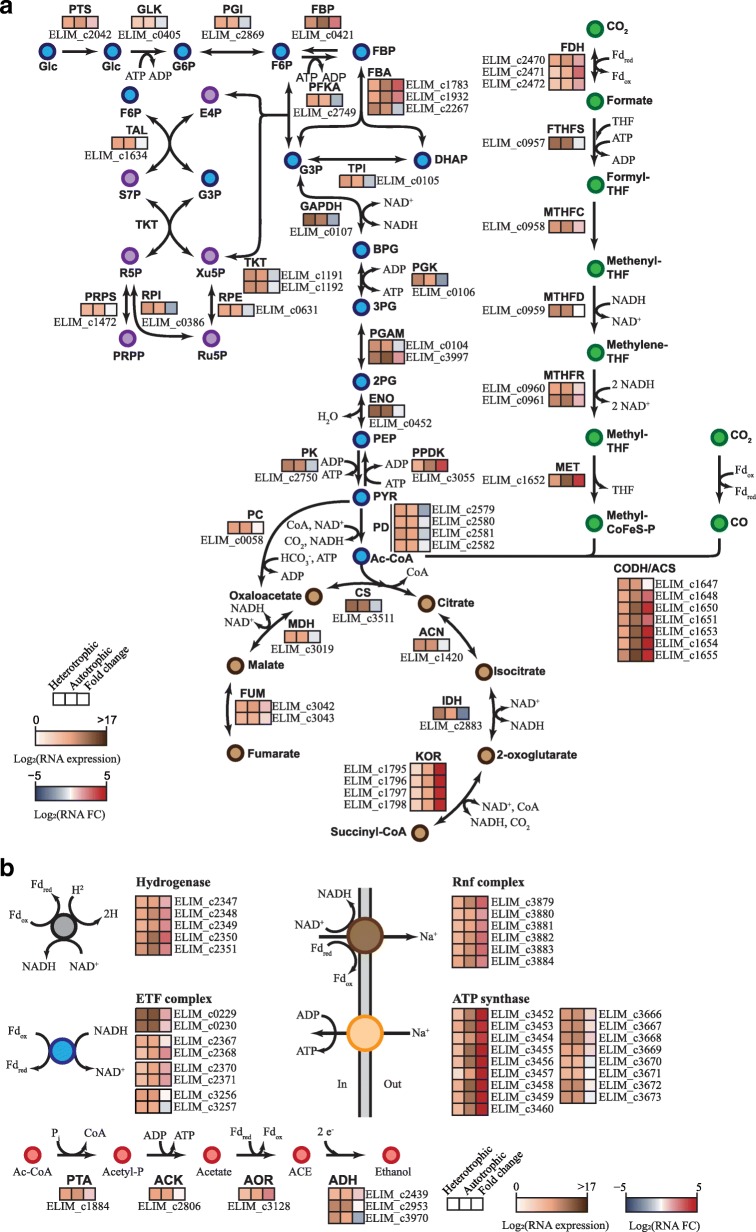
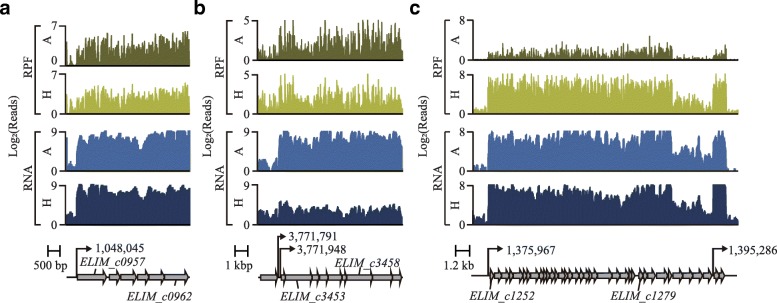
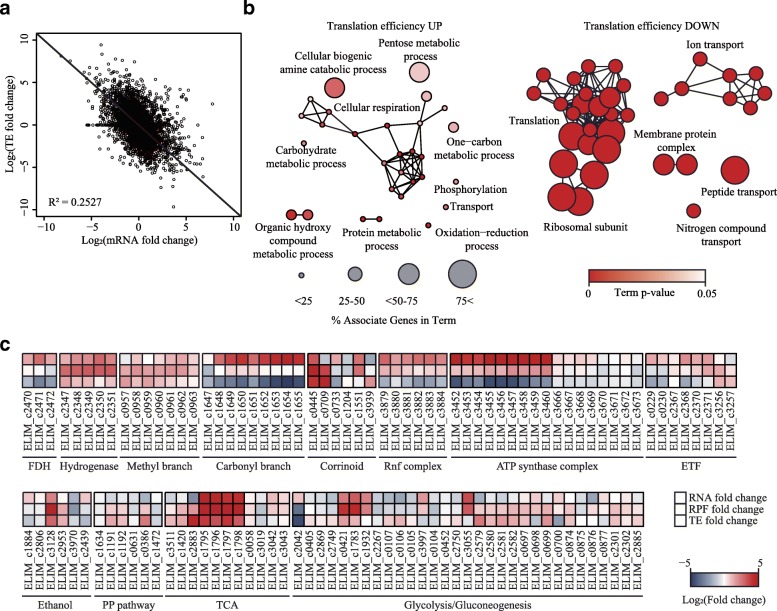
By integrating genome-scale transcriptomic and translatomic data, we explored the regulatory logic of the acetogenesis to convert CO into biomass and metabolites in Eubacterium limosum. The results indicate that majority of genes associated with autotrophic growth including the Wood-Ljungdahl pathway, the reduction of electron carriers, the energy conservation system, and gluconeogenesis were transcriptionally upregulated. The translation efficiency of genes in cellular respiration and electron bifurcation was also highly enhanced. In contrast, the transcriptionally abundant genes involved in the carbonyl branch of the Wood-Ljungdahl pathway, as well as the ion-translocating complex and ATP synthase complex in the energy conservation system, showed decreased translation efficiency. The translation efficiencies of genes were regulated by 5'UTR secondary structure under the autotrophic growth condition.
The results illustrated that the acetogenic bacteria reallocate protein synthesis, focusing more on the translation of genes for the generation of reduced electron carriers via electron bifurcation, rather than on those for carbon metabolism under autotrophic growth.
产乙酸菌是将 CO/H 或合成气(H/CO/CO)转化为生物燃料和高附加值生化物质的有前途的生物催化剂。这些微生物通过独特的产乙酸代谢途径自然能够进行自养生长。尽管它们在商业应用方面具有生物合成潜力,但对于产乙酸代谢的转录和翻译调控的系统理解仍不清楚。
通过整合基因组规模的转录组和转译组数据,我们探索了产乙酸菌将 CO 转化为生物质和代谢物的产乙酸作用的调控逻辑。结果表明,与自养生长相关的大多数基因,包括 Wood-Ljungdahl 途径、电子载体的还原、能量守恒系统和糖异生,在转录水平上被上调。细胞呼吸和电子分叉相关基因的翻译效率也得到了显著提高。相比之下,Wood-Ljungdahl 途径羰基分支中转录丰度较高的基因,以及能量守恒系统中的离子转运复合物和 ATP 合酶复合物,其翻译效率降低。在自养生长条件下,基因的翻译效率受到 5'UTR 二级结构的调节。
结果表明,产乙酸菌重新分配了蛋白质合成,更注重通过电子分叉产生还原电子载体的基因的翻译,而不是自养生长条件下碳代谢的基因翻译。