Ain Quratul, Schmeer Christian, Penndorf Diane, Fischer Mike, Bondeva Tzvetanka, Förster Martin, Haenold Ronny, Witte Otto W, Kretz Alexandra
Hans Berger Department of Neurology, Jena University Hospital, Jena, Thuringia 07747, Germany.
Department of Internal Medicine II, Jena University Hospital, Jena, Thuringia 07747, Germany.
Aging (Albany NY). 2018 Nov 20;10(11):3397-3420. doi: 10.18632/aging.101655.
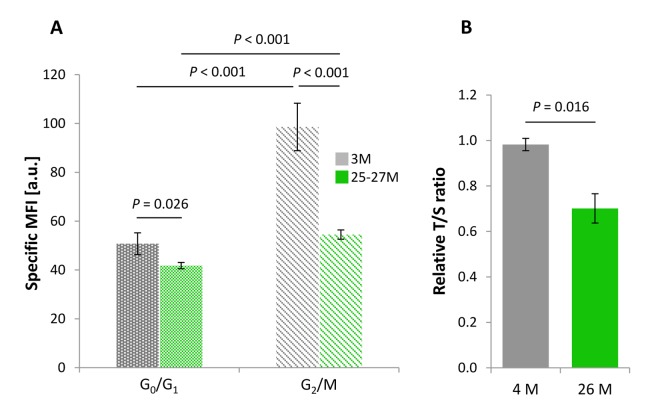
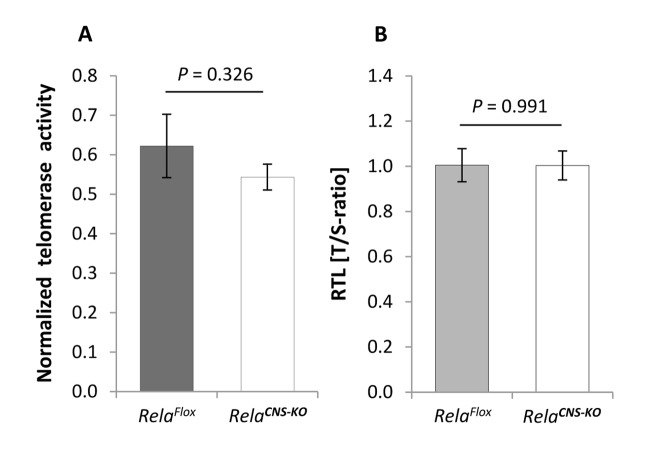
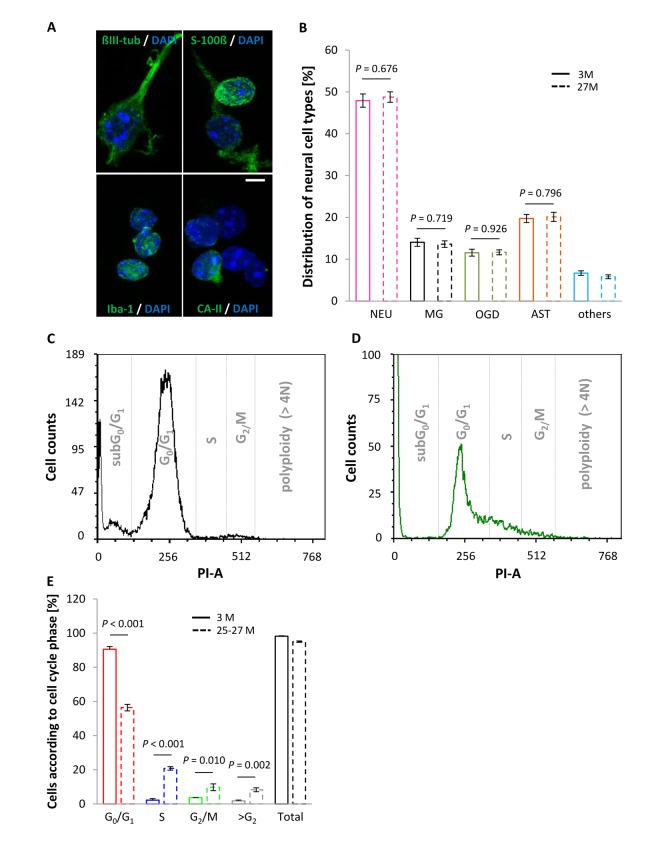
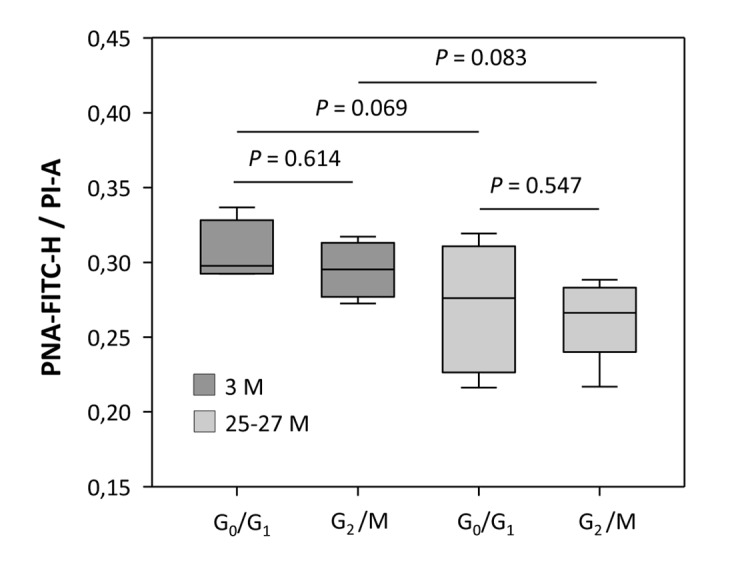
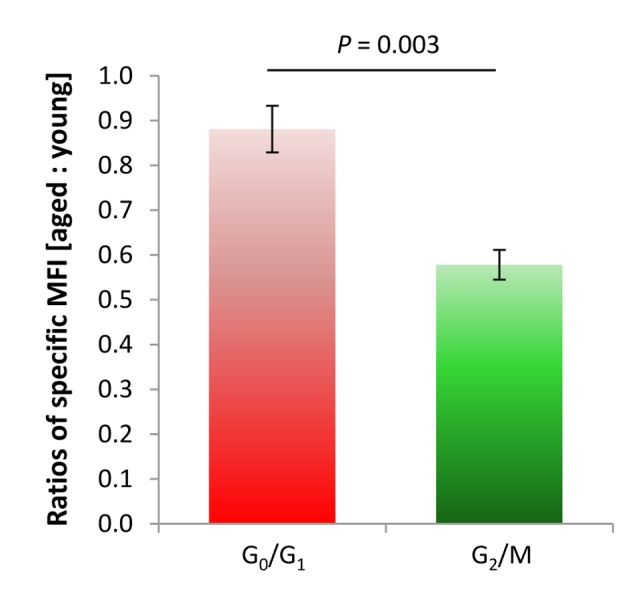
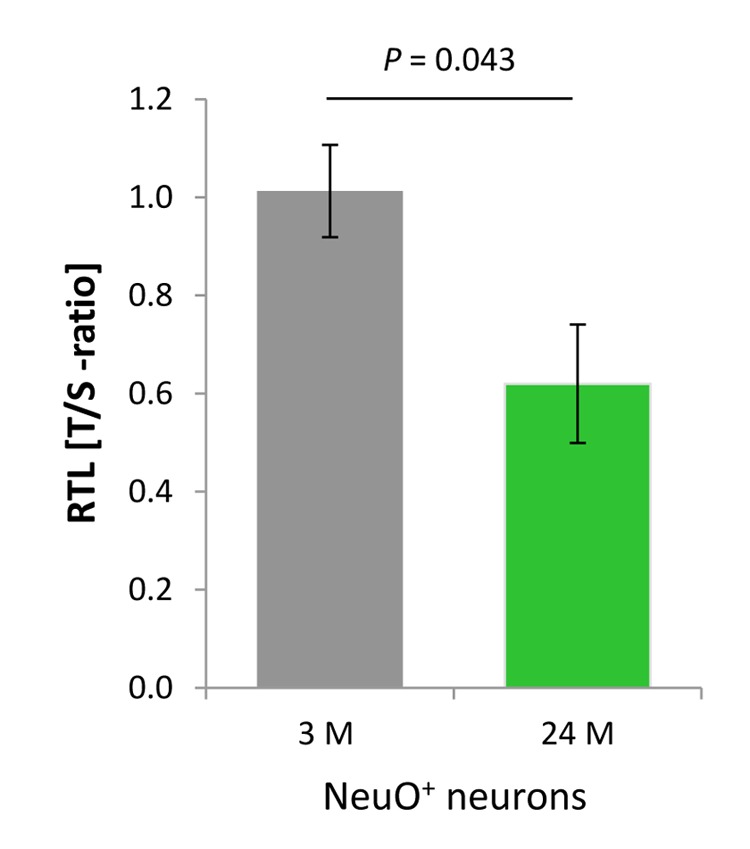
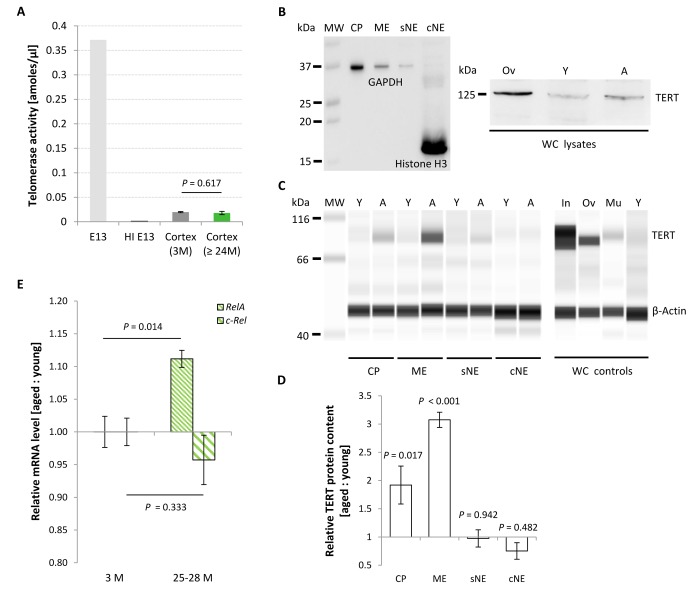
Replication-based telomere shortening during lifetime is species- and tissue-specific, however, its impact on healthy aging is unclear. In particular, the contribution of telomere truncation to the aging process of the CNS, where replicative senescence alone fails to explain organ aging due to low to absent mitotic activity of intrinsic populations, is undefined. Here, we assessed changes in relative telomere length in non-replicative and replicative neural brain populations and telomerase activity as a function of aging in C57BL/6 mice. Telomeres in neural cells and sub-selected neurons shortened with aging in a cell cycle-dependent and -independent manner, with preponderance in replicative moieties, implying that proliferation accelerates, but is not prerequisite for telomere shortening. Consistent with this telomere erosion, telomerase activity and nuclear TERT protein were not induced with aging. Knockdown of the subunit of NF-κB, which controls both telomerase enzyme and subcellular TERT protein allocation, did also not influence telomerase activity or telomere length, in spite of its naive up-regulation selectively under aging conditions. We conclude that telomere instability is intrinsic to physiological brain aging beyond cell replication, and appears to occur independently of a functional interplay with NF-κB, but rather as a failure to induce or relocate telomerase.
一生中基于复制的端粒缩短具有物种和组织特异性,然而,其对健康衰老的影响尚不清楚。特别是,端粒缩短对中枢神经系统衰老过程的贡献尚不明确,在中枢神经系统中,由于内在细胞群的有丝分裂活性低或不存在,仅复制性衰老无法解释器官衰老。在这里,我们评估了C57BL/6小鼠中,非复制性和复制性神经脑群体中端粒相对长度的变化以及端粒酶活性随衰老的变化。神经细胞和亚选神经元中的端粒随着衰老以细胞周期依赖性和非依赖性方式缩短,在复制部分中更为明显,这意味着增殖加速,但不是端粒缩短的先决条件。与这种端粒侵蚀一致,端粒酶活性和核TERT蛋白不会随着衰老而被诱导。尽管在衰老条件下NF-κB的 亚基会选择性上调,但敲低控制端粒酶和亚细胞TERT蛋白分配的NF-κB的 亚基,也不会影响端粒酶活性或端粒长度。我们得出结论,端粒不稳定性是生理性脑衰老的固有特征,超出了细胞复制的范畴,并且似乎独立于与NF-κB的功能性相互作用而发生,而是由于未能诱导或重新定位端粒酶所致。