Faculty of Medicine and Graduate School of Medicine, Hokkaido University, Sapporo, Japan.
J Infect Dis. 2018 Nov 22;218(suppl_5):S388-S396. doi: 10.1093/infdis/jiy460.
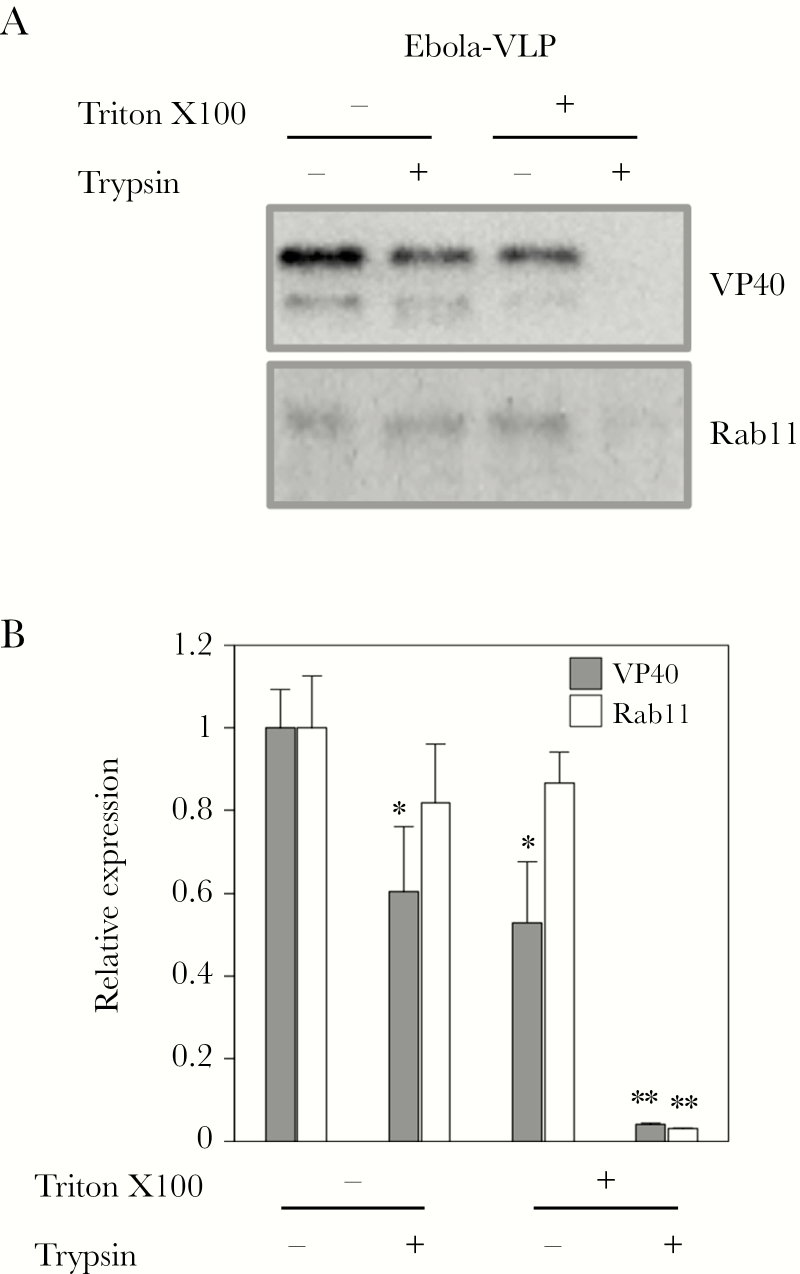
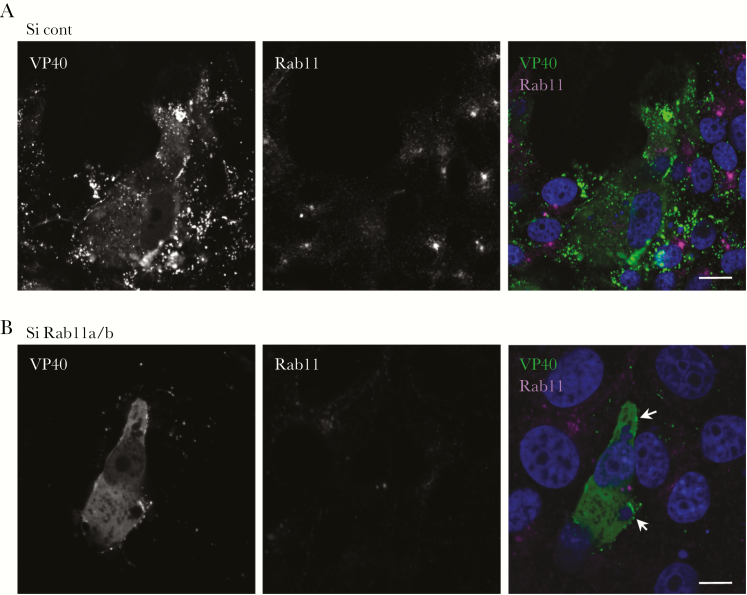
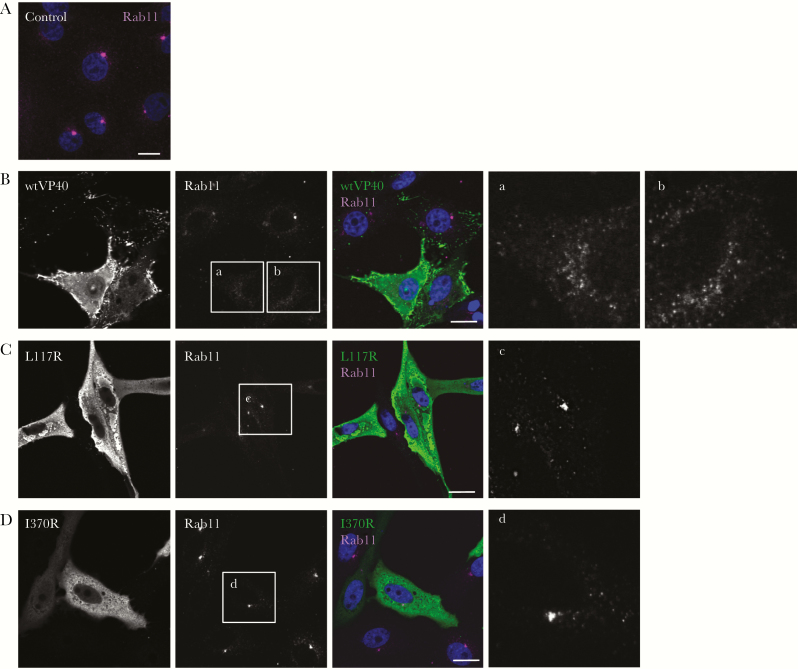
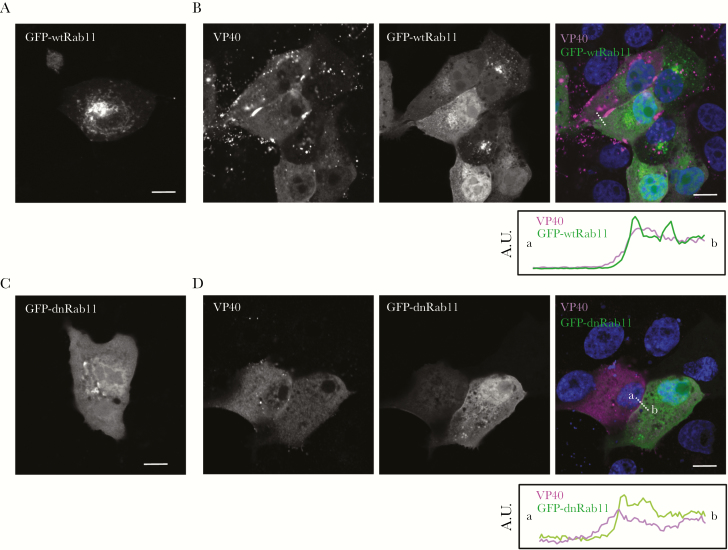
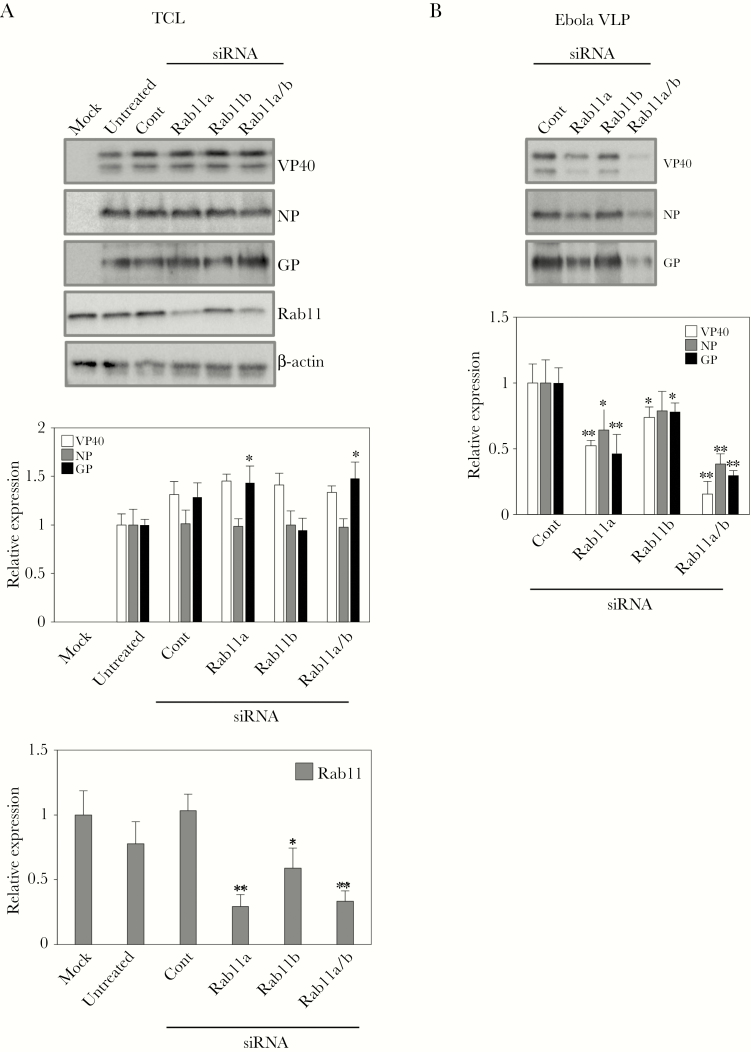
The Ebola virus-encoded major matrix protein VP40 traffics to the plasma membrane, which leads to the formation of filamentous viral particles and subsequent viral egress. However, the cellular machineries underlying this process are not fully understood. In the present study, we have assessed the role of host endocytic recycling in Ebola virus particle formation. We found that a small GTPase Rab11, which regulates recycling of molecules among the trans-Golgi network, recycling endosomes, and the plasma membrane, was incorporated in Ebola virus-like particles. Although Rab11 predominantly localized in the perinuclear region, it distributed diffusely in the cytoplasm and partly localized in the periphery of the cells transiently expressing VP40. In contrast, Rab11 exhibited a perinuclear distribution when 2 VP40 derivatives that lack ability to traffic to the plasma membrane were expressed. Finally, expression of a dominant-negative form of Rab11 or knockdown of Rab11 inhibited both VP40-induced clusters at the plasma membrane and release of viral-like particles. Taken together, our findings demonstrate that Ebola virus exploits host endocytic recycling machinery to facilitate the trafficking of VP40 to the cell surface and the subsequent release of viral-like particles for its establishment of efficient viral egress.
埃博拉病毒编码的主要基质蛋白 VP40 靶向质膜,导致丝状病毒颗粒的形成和随后的病毒出芽。然而,这一过程的细胞机制尚不完全清楚。在本研究中,我们评估了宿主内吞体再循环在埃博拉病毒粒子形成中的作用。我们发现,一种小 GTP 酶 Rab11 参与了埃博拉病毒样颗粒的形成,Rab11 调节跨高尔基网络、再循环内体和质膜之间的分子循环。虽然 Rab11 主要定位于核周区域,但在瞬时表达 VP40 的细胞质中分布弥散,并部分定位于细胞周围。相比之下,当表达两种缺乏向质膜运输能力的 VP40 衍生物时,Rab11 表现出核周分布。最后,表达显性失活形式的 Rab11 或敲低 Rab11 均抑制 VP40 诱导的质膜聚集和病毒样颗粒的释放。综上所述,我们的研究结果表明,埃博拉病毒利用宿主内吞体再循环机制促进 VP40 向细胞膜的运输,并随后释放病毒样颗粒,从而有效地实现病毒出芽。