Bureau of Communicable Disease, Department of Health and Mental Hygiene, New York, NY, United States of America.
Department of Bioinformatics and Genomics, University of North Carolina, Charlotte, NC, United States of America.
PLoS One. 2018 Nov 28;13(11):e0202615. doi: 10.1371/journal.pone.0202615. eCollection 2018.
While overall rates of meningococcal disease have been declining in the United States for the past several decades, New York City (NYC) has experienced two serogroup C meningococcal disease outbreaks in 2005-2006 and in 2010-2013. The outbreaks were centered within drug use and sexual networks, were difficult to control, and required vaccine campaigns.
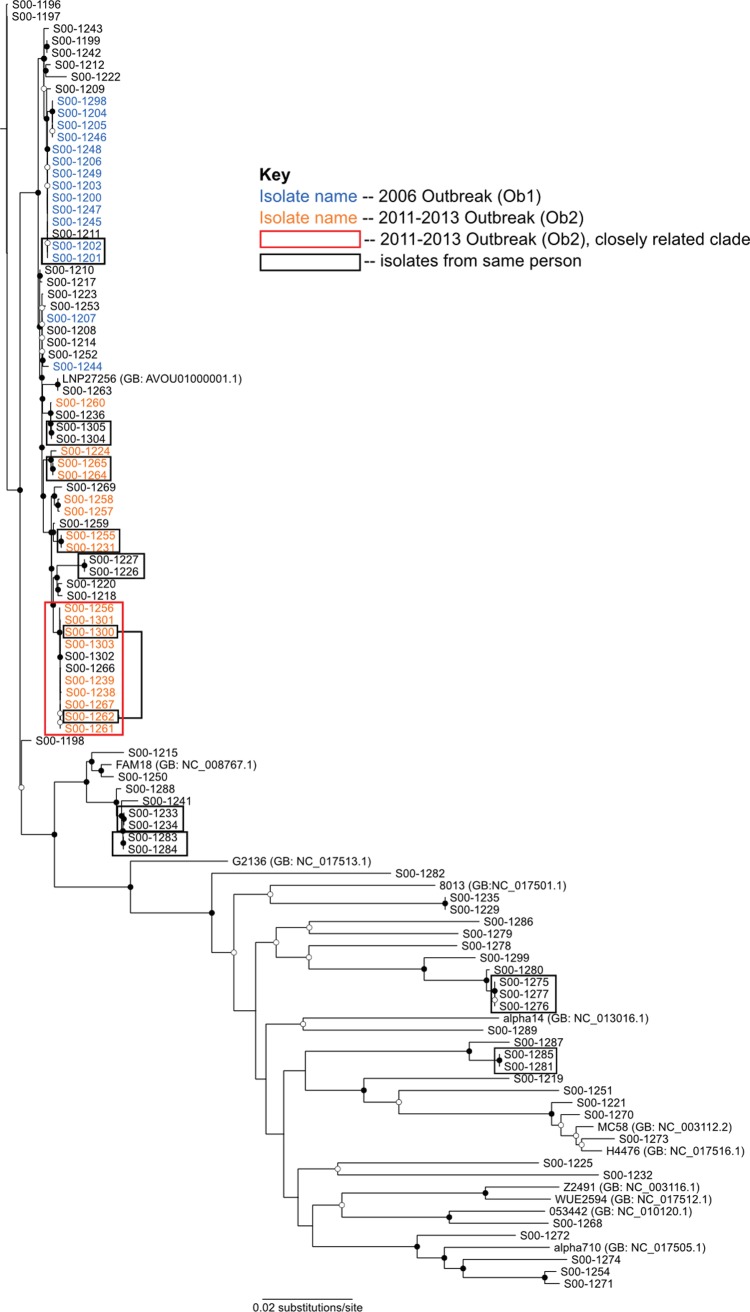
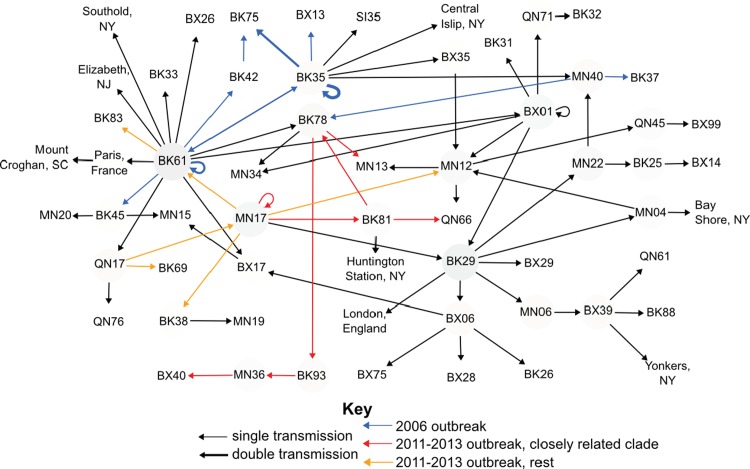
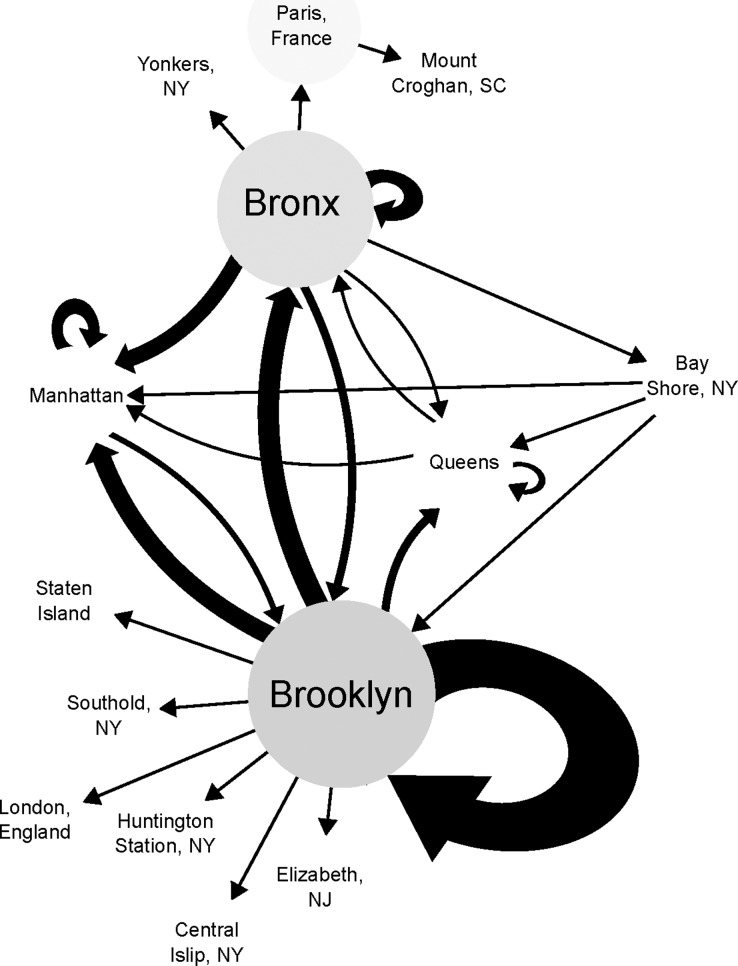
Whole Genome Sequencing (WGS) was used to analyze preserved meningococcal isolates collected before and during the two outbreaks. We integrated and analyzed epidemiologic, geographic, and genomic data to better understand transmission networks among patients. Betweenness centrality was used as a metric to understand the most important geographic nodes in the transmission networks. Comparative genomics was used to identify genes associated with the outbreaks.
Neisseria meningitidis serogroup C (ST11/ET-37) was responsible for both outbreaks with each outbreak having distinct phylogenetic clusters. WGS did identify some misclassifications of isolates that were more distant from the outbreak strains, as well as those that should have been included based on high genomic similarity. Genomes for the second outbreak were more similar than the first and no polymorphism was found to either be unique or specific to either outbreak lineage. Betweenness centrality as applied to transmission networks based on phylogenetic analysis demonstrated that the outbreaks were transmitted within focal communities in NYC with few transmission events to other locations.
Neisseria meningitidis is an ever changing pathogen and comparative genomic analyses can help elucidate how it spreads geographically to facilitate targeted interventions to interrupt transmission.
尽管过去几十年美国的脑膜炎球菌病总体发病率一直在下降,但纽约市(NYC)在 2005-2006 年和 2010-2013 年经历了两次 C 群脑膜炎球菌病暴发。这些暴发集中在药物使用和性网络中,难以控制,需要疫苗接种运动。
全基因组测序(WGS)用于分析在两次暴发之前和期间收集的保存的脑膜炎奈瑟菌分离株。我们整合和分析了流行病学、地理和基因组数据,以更好地了解患者之间的传播网络。介数中心性被用作衡量传播网络中最重要地理节点的指标。比较基因组学用于鉴定与暴发相关的基因。
C 群脑膜炎奈瑟菌(ST11/ET-37)是两次暴发的病原体,每次暴发都有不同的进化簇。WGS 确实发现了一些分离株的错误分类,这些分离株与暴发株的距离更远,而那些根据高基因组相似性本应包括的分离株。第二波暴发的基因组比第一波更相似,并且没有发现任何多态性是独特的或特定于任何暴发谱系的。基于系统发育分析的传播网络中的介数中心性表明,暴发是在纽约市的焦点社区内传播的,与其他地方的传播事件很少。
脑膜炎奈瑟菌是一种不断变化的病原体,比较基因组分析可以帮助阐明其如何在地理上传播,以便有针对性地干预以中断传播。