School of Medicine, Croatian Institute for Brain Research, University of Zagreb, Zagreb, Croatia.
Division of Clinical Geriatrics, Department of Neurobiology, Care Sciences and Society, Karolinska Institutet, Stockholm, Sweden.
J Cell Mol Med. 2019 Feb;23(2):1602-1607. doi: 10.1111/jcmm.13998. Epub 2018 Nov 28.
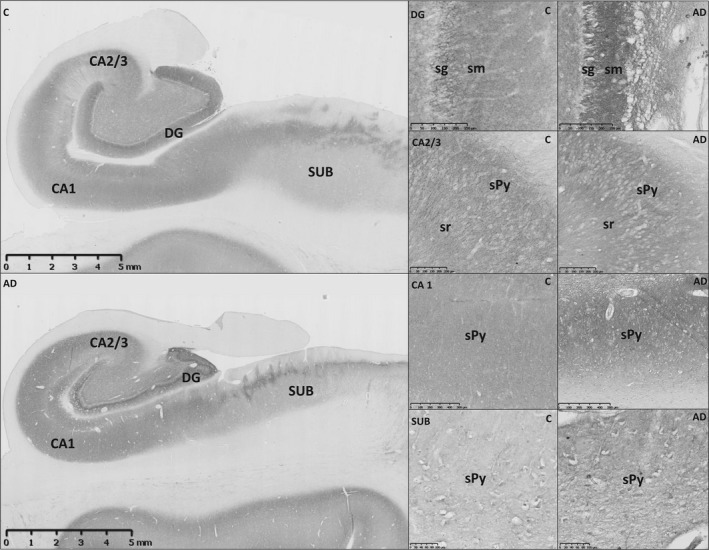
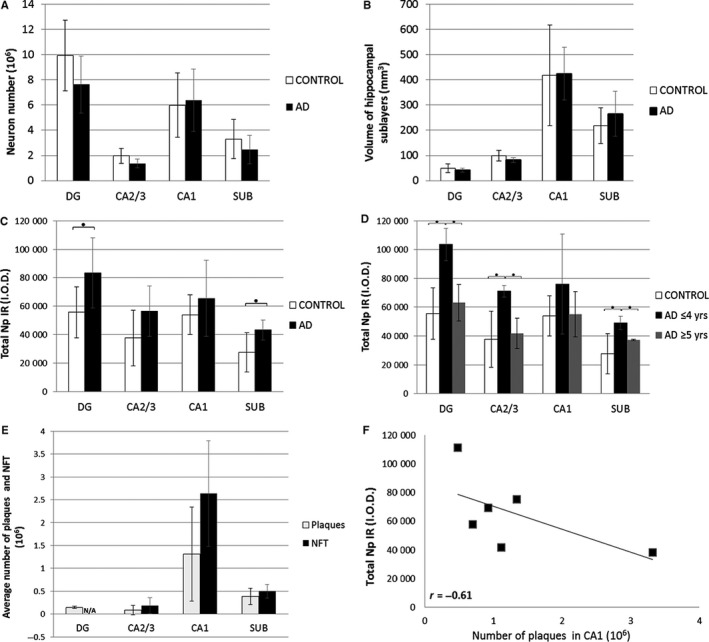
Cell-adhesion glycoprotein neuroplastin (Np) is involved in the regulation of synaptic plasticity and balancing hippocampal excitatory/inhibitory inputs which aids in the process of associative memory formation and learning. Our recent findings show that neuroplastin expression in the adult human hippocampus is specifically associated with major hippocampal excitatory pathways and is related to neuronal calcium regulation. Here, we investigated the hippocampal expression of brain-specific neuroplastin isoform (Np65), its relationship with amyloid and tau pathology in Alzheimer's disease (AD), and potential involvement of neuroplastin in tissue response during the disease progression. Np65 expression and localization was analysed in six human hippocampi with confirmed AD neuropathology, and six age-/gender-matched control hippocampi by imunohistochemistry. In AD cases with shorter disease duration, the Np65 immunoreactivity was significantly increased in the dentate gyrus (DG), Cornu Ammonis 2/3 (CA2/3), and subiculum, with the highest level of Np expression being located on the dendrites of granule cells and subicular pyramidal neurons. Changes in the expression of neuroplastin in AD hippocampal areas seem to be related to the progression of disease. Our study suggests that cell-adhesion protein neuroplastin is involved in tissue reorganization and is a potential molecular marker of plasticity response in the early neurodegeneration process of AD.
神经细胞黏附糖蛋白神经可塑性蛋白(Np)参与调节突触可塑性和平衡海马兴奋性/抑制性输入,有助于联想记忆形成和学习过程。我们最近的研究结果表明,成年人大脑海马中的神经可塑性蛋白表达与主要的海马兴奋性通路特异性相关,并与神经元钙调节有关。在这里,我们研究了大脑特异性神经可塑性蛋白同工型(Np65)在阿尔茨海默病(AD)中的海马表达及其与淀粉样蛋白和tau 病理学的关系,以及神经可塑性蛋白在疾病进展过程中组织反应中的潜在作用。通过免疫组织化学分析了 6 例经证实的 AD 神经病理学人类海马体和 6 例年龄/性别匹配的对照海马体中的 Np65 表达和定位。在疾病持续时间较短的 AD 病例中,Np65 免疫反应性在齿状回(DG)、CA2/3 和下托明显增加,Np 表达水平最高的位置位于颗粒细胞和下托锥体神经元的树突上。AD 海马区神经可塑性蛋白表达的变化似乎与疾病的进展有关。我们的研究表明,细胞黏附蛋白神经可塑性蛋白参与组织重构,是 AD 早期神经退行性过程中可塑性反应的潜在分子标志物。