Department of Chemistry and Biochemistry, University of South Carolina, Columbia, South Carolina, United States of America.
Department of Allergology and Internal Medicine, Medical University of Bialystok, Bialystok, Poland.
PLoS One. 2018 Nov 29;13(11):e0208276. doi: 10.1371/journal.pone.0208276. eCollection 2018.
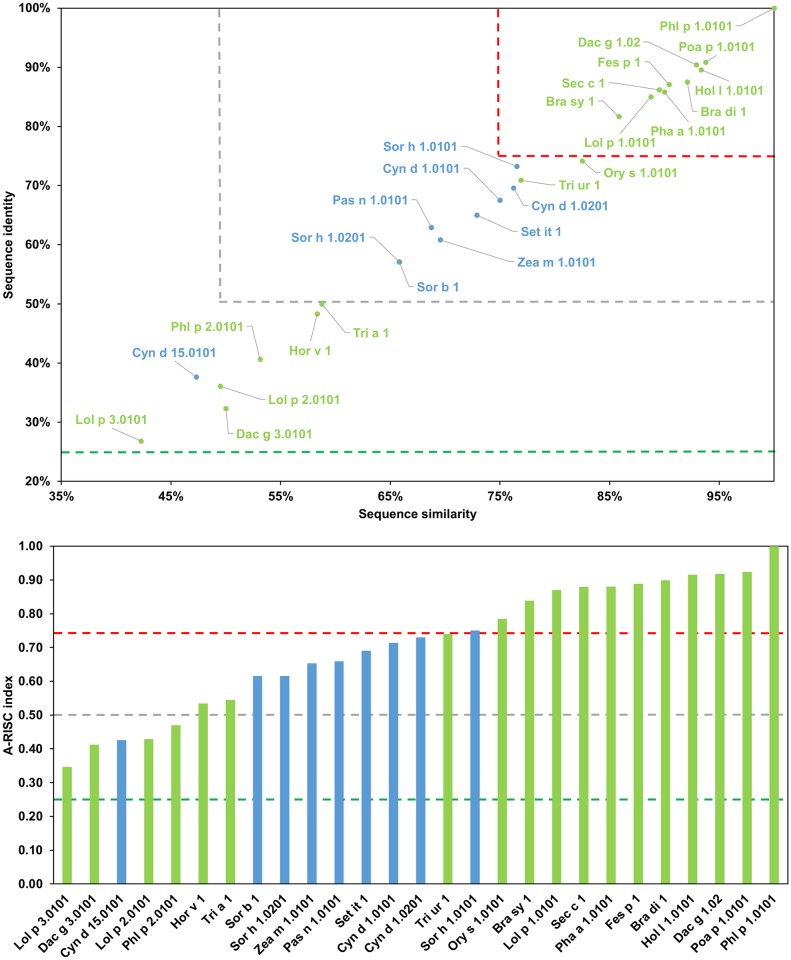
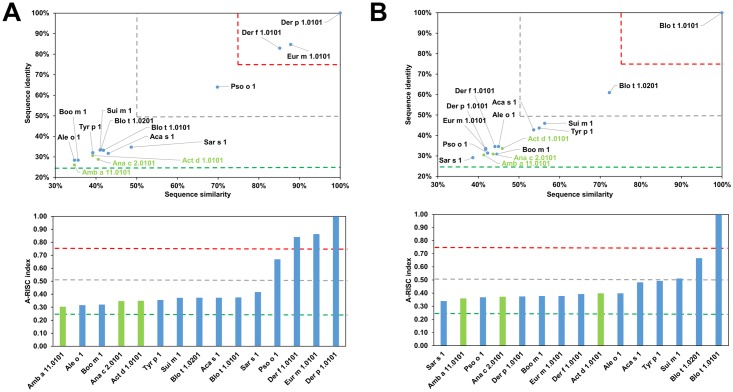
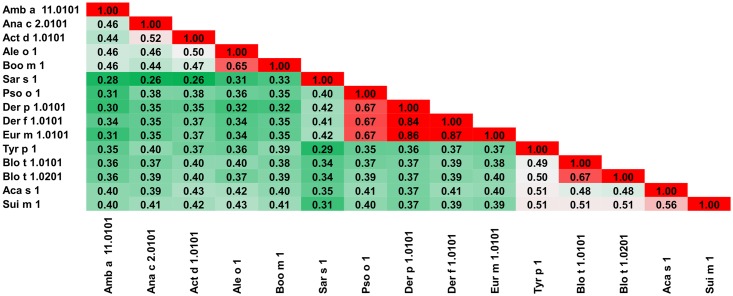
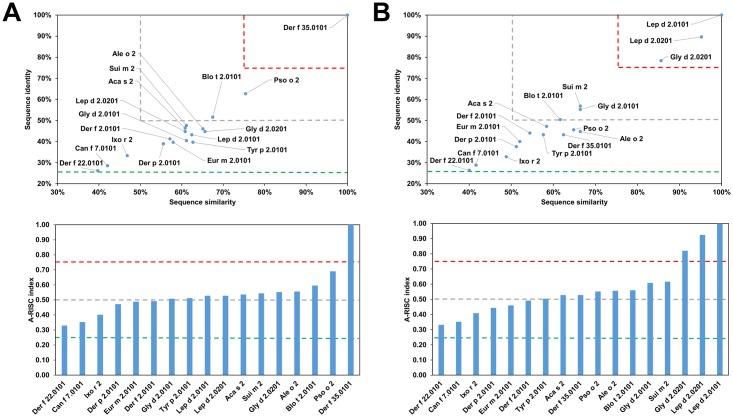
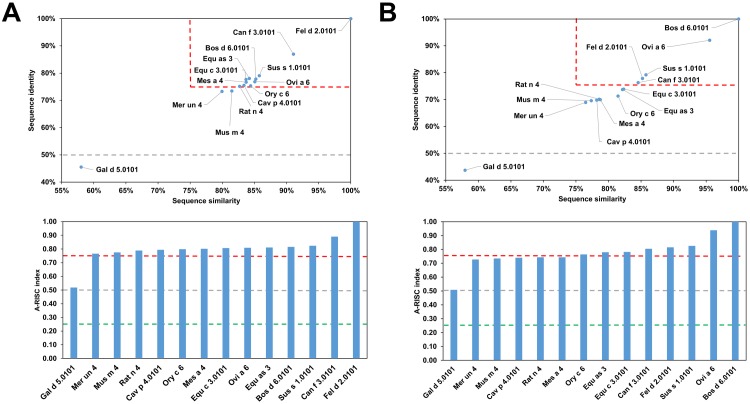
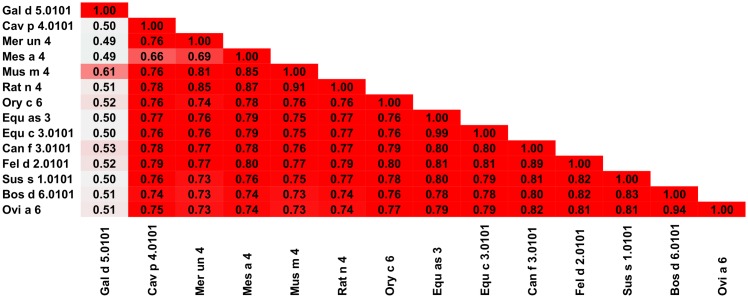
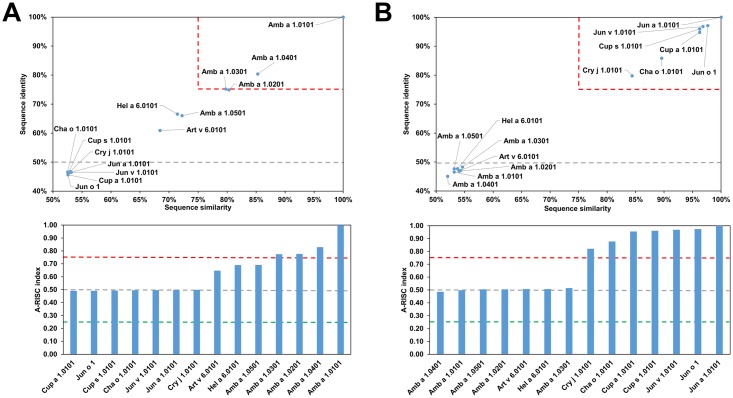
Among the vast number of identified protein families, allergens emanate from relatively few families which translates to only a small fraction of identified protein families. In allergy diagnostics and immunotherapy, interactions between immunoglobulin E and allergens are crucial because the formation of an allergen-antibody complex is necessary for triggering an allergic reaction. In allergic diseases, there is a phenomenon known as cross-reactivity. Cross-reactivity describes a situation where an individual has produced antibodies against a particular allergenic protein, but said antibodies fail to discriminate between the original sensitizer and other similar proteins that usually belong to the same family. To expound the concept of cross-reactivity, this study examines ten protein families that include allergens selected specifically for the analysis of cross-reactivity. The selected allergen families had at least 13 representative proteins, overall folds that differ significantly between families, and include relevant allergens with various potencies. The selected allergens were analyzed using information on sequence similarities and identities between members of the families as well as reports on clinically relevant cross-reactivities. Based on our analysis, we propose to introduce a new A-RISC index (Allergens'-Relative Identity, Similarity and Cross-reactivity) which describes homology between two allergens belonging to the same protein family and is used to predict the likelihood of cross-reactivity between them. Information on sequence similarities and identities, as well as on the values of the proposed A-RISC index is used to introduce four categories describing a risk of a cross-reactive reaction, namely: high, medium-high, medium-low and low. The proposed approach can facilitate analysis in component-resolved allergy diagnostics, generation of avoidance guidelines for allergic individuals, and help with the design of immunotherapy.
在已鉴定的大量蛋白质家族中,过敏原仅来自相对较少的家族,这意味着仅占已鉴定蛋白质家族的一小部分。在过敏诊断和免疫治疗中,免疫球蛋白 E 与过敏原之间的相互作用至关重要,因为过敏原-抗体复合物的形成是触发过敏反应的必要条件。在过敏性疾病中,存在一种称为交叉反应的现象。交叉反应描述了这样一种情况,即个体产生了针对特定过敏原蛋白的抗体,但这些抗体无法区分原始致敏原和其他通常属于同一家族的类似蛋白。为了阐述交叉反应的概念,本研究检查了包括专门用于分析交叉反应的过敏原在内的十个蛋白质家族。所选的过敏原家族至少有 13 种代表性蛋白,家族之间的总体折叠结构差异显著,并包括具有不同效力的相关过敏原。使用家族成员之间的序列相似性和同一性以及关于临床相关交叉反应的报告来分析所选过敏原。基于我们的分析,我们建议引入一个新的 A-RISC 指数(过敏原相对同一性、相似性和交叉反应性),该指数描述了属于同一蛋白质家族的两个过敏原之间的同源性,并用于预测它们之间发生交叉反应的可能性。序列相似性和同一性以及所提出的 A-RISC 指数的值用于引入四个描述交叉反应风险的类别,即:高、中高、中低和低。所提出的方法可以促进成分解析过敏诊断中的分析、为过敏个体生成回避指南以及帮助设计免疫治疗。