Dipartimento di Biologia, Complesso di Monte Sant'Angelo, Università Federico II, VIA Cinthia, 80126, Napoli, Italy.
Istituto di Chimica Biomolecolare, Consiglio Nazionale delle Ricerche, Pozzuoli, Italy.
BMC Bioinformatics. 2018 Nov 30;19(Suppl 15):433. doi: 10.1186/s12859-018-2416-7.
Severity gradation of missense mutations is a big challenge for exome annotation. Predictors of deleteriousness that are most frequently used to filter variants found by next generation sequencing, produce qualitative predictions, but also numerical scores. It has never been tested if these scores correlate with disease severity.
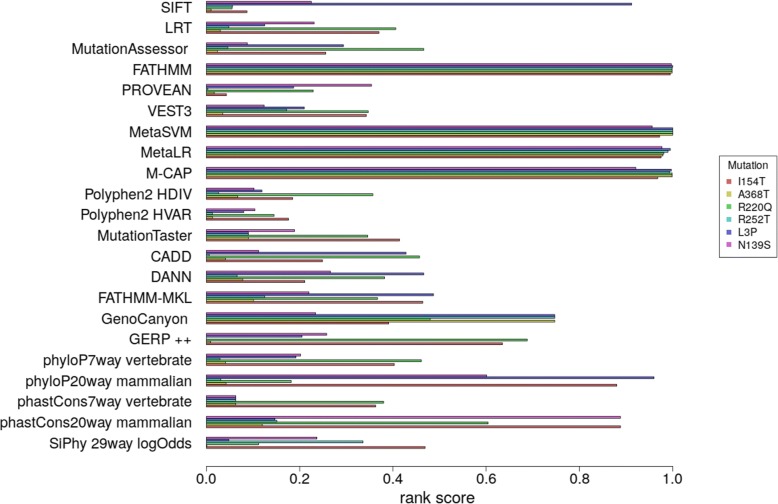
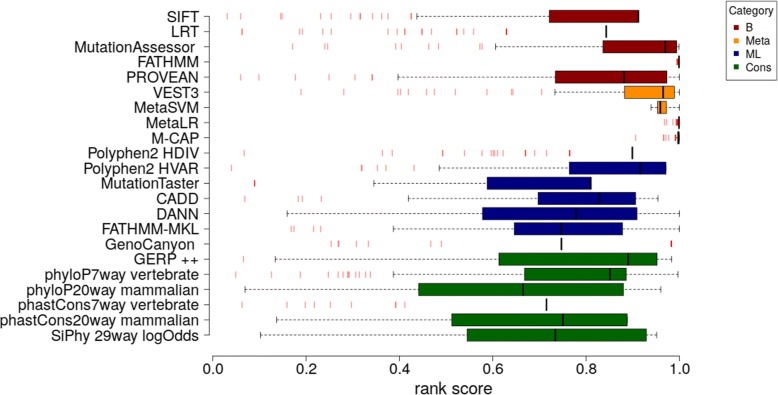
wANNOVAR, a popular tool that can generate several different types of deleteriousness-prediction scores, was tested on Fabry disease. This pathology, which is caused by a deficit of lysosomal alpha-galactosidase, has a very large genotypic and phenotypic spectrum and offers the possibility of associating a quantitative measure of the damage caused by mutations to the functioning of the enzyme in the cells. Some predictors, and in particular VEST3 and PolyPhen2 provide scores that correlate with the severity of lysosomal alpha-galactosidase mutations in a statistically significant way.
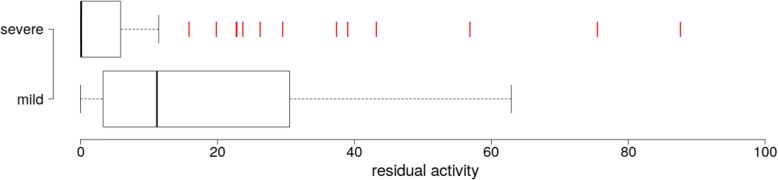
Sorting disease mutations by severity is possible and offers advantages over binary classification. Dataset for testing and training in silico predictors can be obtained by transient transfection and evaluation of residual activity of mutants in cell extracts. This approach consents to quantitative data for severe, mild and non pathological variants.
错义突变严重程度分级是外显子组注释的一大挑战。最常用于筛选下一代测序发现的变体的有害性预测因子是产生定性预测的,但也有数值评分。这些评分是否与疾病严重程度相关从未得到过验证。
wANNOVAR 是一种常用的工具,可以生成几种不同类型的有害性预测评分,在法布里病中进行了测试。这种由溶酶体α-半乳糖苷酶缺乏引起的疾病具有非常大的基因型和表型谱,并提供了将突变引起的酶功能损伤的定量测量与细胞中突变的严重程度相关联的可能性。一些预测因子,特别是 VEST3 和 PolyPhen2,提供的评分与溶酶体α-半乳糖苷酶突变的严重程度呈统计学显著相关。
通过严重程度对疾病突变进行分类是可行的,并且优于二进制分类。用于测试和训练计算预测因子的数据集可以通过瞬时转染和细胞提取物中突变体残余活性的评估获得。这种方法允许对严重、轻度和非病理性变体进行定量数据处理。