Uni Research Environment, LFI - Freshwater Biology, Nygårdsporten 112, 5006, Bergen, Norway.
Norwegian Veterinary Institute, P.O. Box 750, Sentrum, N-0106, Oslo, Norway.
Parasit Vectors. 2018 Nov 29;11(1):609. doi: 10.1186/s13071-018-3189-6.
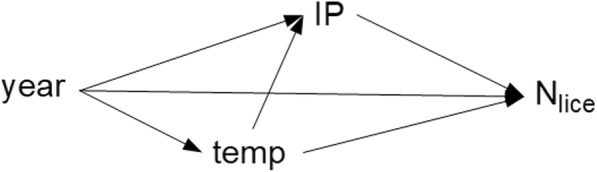
The causal relation between parasitic sea lice on fish farms and sea lice on wild fish is a controversial subject. A specific scientific debate has been whether the statistical association between infestation pressure (IP) from fish farms and the number of parasites observed on wild sea trout emerges purely because of a confounding and direct effect of temperature (T).
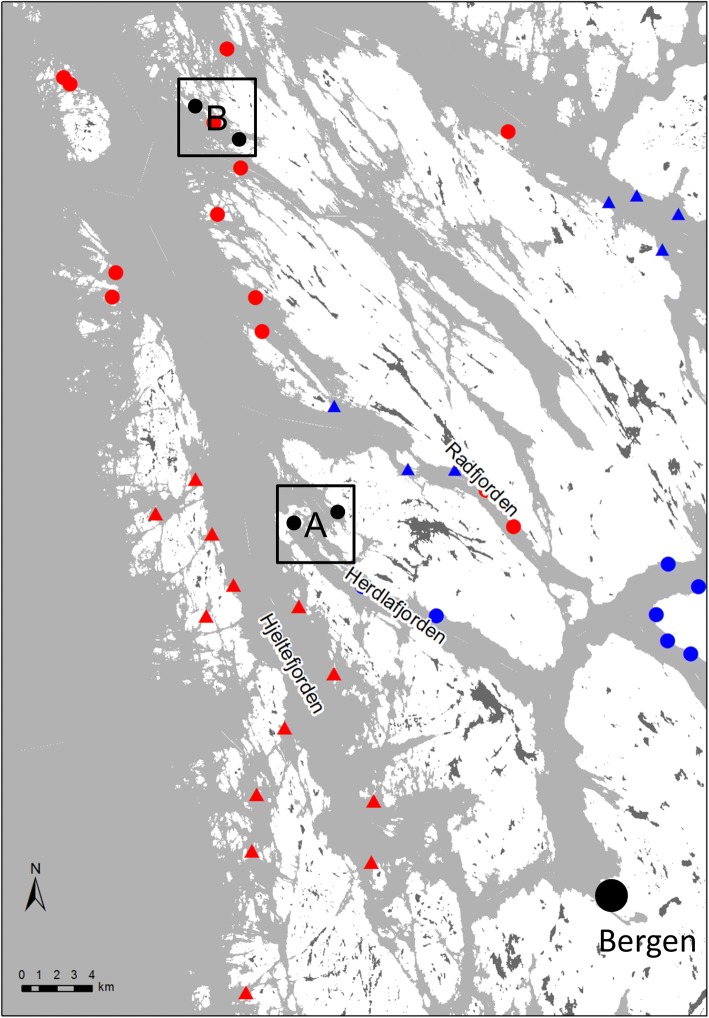
We studied the associations between louse infestation on wild sea trout, fish farm activity and temperature in an area that practices coordinated fallowing in Nordhordland, Norway. The data were sampled between 2009 and 2016. We used negative binomial models and mediation analysis to determine to what degree the effect of T is mediated through the IP from fish farms.
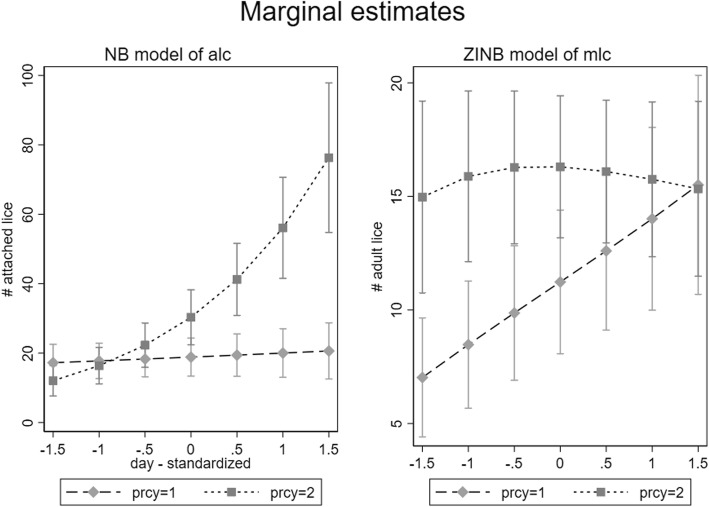
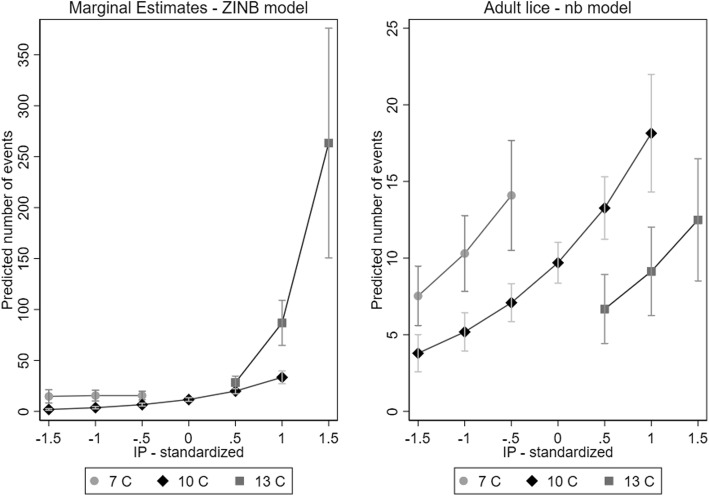
The number of attached lice on sea trout increased with the T when the IP from fish farms was high but not when the IP was low. In addition, nearly all of the effect of rising T was indirect and mediated through the IP. Attached lice remained low when neighbouring farms were in the first year of the production cycle but rose substantially during the second year. In contrast to attached lice, mobile lice were generally seen in higher numbers at lower water temperatures. Temperature had an indirect positive effect on mobile louse counts by increasing the IP which, in turn, raised the sea trout louse counts. Mobile louse counts rose steadily during the year when neighbouring farms were in the first year of the production cycle and stayed high throughout the second year.
The estimates of the IP effect on louse counts along with the clear biennial pattern emerging due to the production cycle of fish farms clearly indicate that fish farms play an important role in the epidemiology of sea lice on wild sea trout. Furthermore, the mediation analysis demonstrates that a large proportion of the effect of T on louse counts is mediated through IP.
养殖场寄生虫和野生鱼类寄生虫之间的因果关系是一个有争议的话题。一个具体的科学争论是,养殖场的寄生压力(IP)与在野生三文鱼中观察到的寄生虫数量之间的统计关联是否纯粹是由于温度(T)的混杂和直接影响而产生的。
我们在挪威 Nordhordland 地区研究了野生三文鱼上的虱子感染、养殖场活动和温度之间的关联。该地区实行协调轮作。数据于 2009 年至 2016 年进行采样。我们使用负二项模型和中介分析来确定 T 的影响在多大程度上通过养殖场的 IP 来介导。
当养殖场的 IP 较高时,三文鱼上附着的虱子数量随 T 的升高而增加,但当 IP 较低时则不会。此外,几乎所有 T 升高的影响都是间接的,通过 IP 来介导。当相邻农场处于生产周期的第一年时,附着的虱子数量仍然很低,但在第二年则大幅上升。与附着的虱子相反,移动的虱子通常在较低的水温下数量更多。温度通过增加 IP 对移动虱子数量产生间接的正向影响,而 IP 又反过来提高了三文鱼上的虱子数量。当相邻农场处于生产周期的第一年时,移动虱子的数量在一年中稳步上升,并在第二年一直保持高位。
养殖场对虱子数量的影响估计以及由于养殖场的生产周期而出现的明显两年期模式清楚地表明,养殖场在野生三文鱼上的虱子流行病学中起着重要作用。此外,中介分析表明,T 对虱子数量的影响有很大一部分是通过 IP 来介导的。