Department of Molecular Physiology and Biophysics, Iowa Neuroscience Institute, University of Iowa, Iowa City, IA, 52242, USA.
Program in Chemical Biology, Department of Physiology and Pharmacology, Oregon Health Sciences University, Portland, 97239, OR, USA.
Nat Commun. 2018 Nov 29;9(1):5055. doi: 10.1038/s41467-018-07477-3.
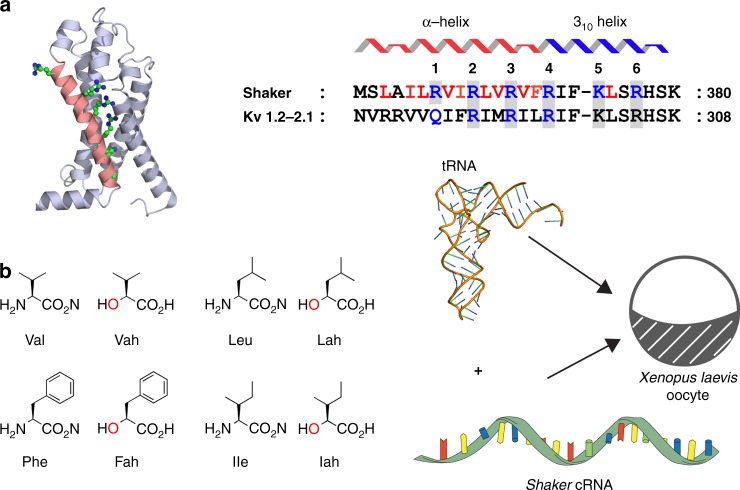
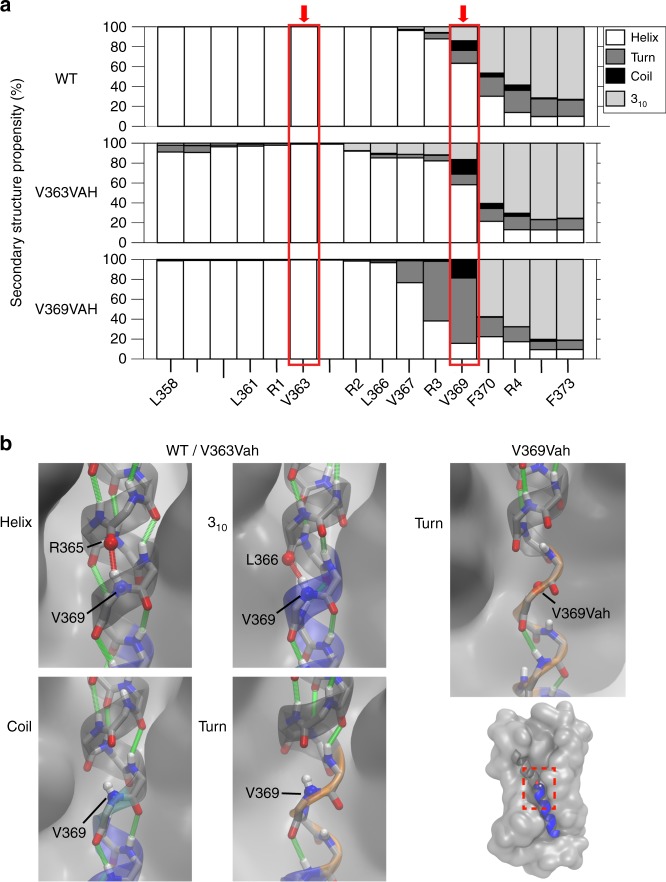
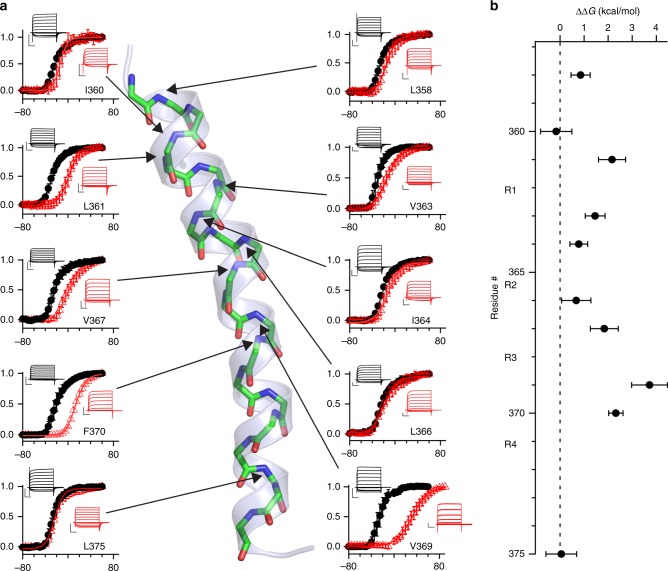
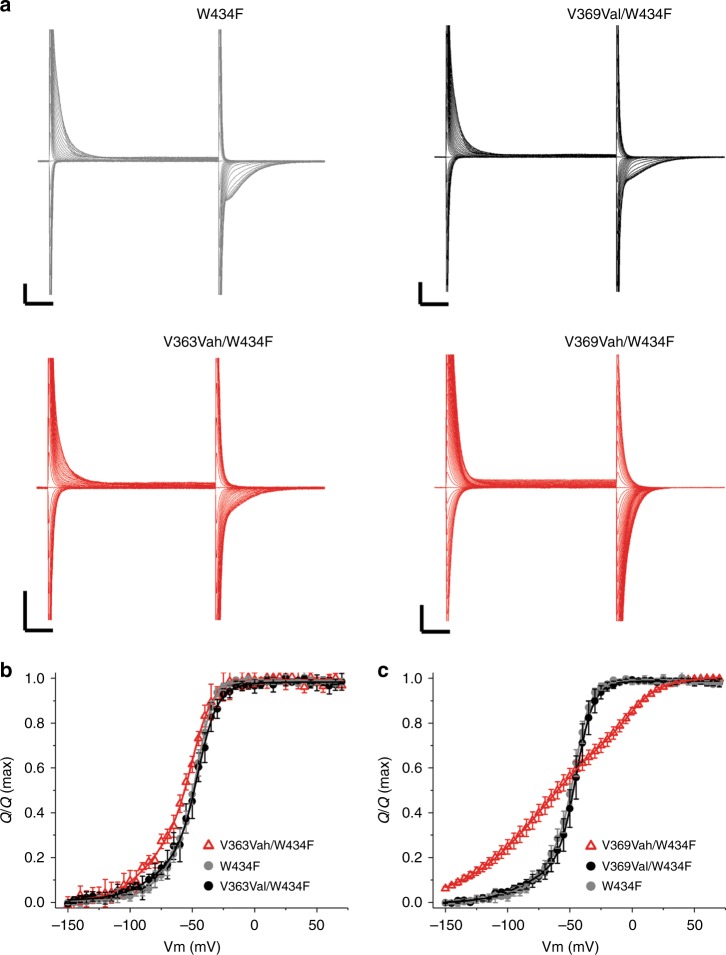
Membrane proteins are universal signal decoders. The helical transmembrane segments of these proteins play central roles in sensory transduction, yet the mechanistic contributions of secondary structure remain unresolved. To investigate the role of main-chain hydrogen bonding on transmembrane function, we encoded amide-to-ester substitutions at sites throughout the S4 voltage-sensing segment of Shaker potassium channels, a region that undergoes rapid, voltage-driven movement during channel gating. Functional measurements of ester-harboring channels highlight a transitional region between α-helical and 3 segments where hydrogen bond removal is particularly disruptive to voltage-gating. Simulations of an active voltage sensor reveal that this region features a dynamic hydrogen bonding pattern and that its helical structure is reliant upon amide support. Overall, the data highlight the specialized role of main-chain chemistry in the mechanism of voltage-sensing; other catalytic transmembrane segments may enlist similar strategies in signal transduction mechanisms.
膜蛋白是通用的信号解码器。这些蛋白质的螺旋跨膜片段在感应转导中起着核心作用,但二级结构的机械贡献仍未得到解决。为了研究主链氢键对跨膜功能的作用,我们在 Shaker 钾通道的 S4 电压传感段的各个部位编码酰胺到酯的取代,该区域在通道门控过程中经历快速的电压驱动运动。酯基通道的功能测量突出了α-螺旋和 3 个片段之间的过渡区域,其中氢键的去除对电压门控特别具有破坏性。活性电压传感器的模拟表明,该区域具有动态氢键模式,其螺旋结构依赖于酰胺的支撑。总的来说,这些数据突出了主链化学在电压感应机制中的特殊作用;其他催化跨膜片段可能在信号转导机制中采用类似的策略。