Division of Biology, University of California, San Diego (USCD), La Jolla, CA 92093-0349, USA.
Division of Biology, University of California, San Diego (USCD), La Jolla, CA 92093-0349, USA.
Trends Cell Biol. 2019 Mar;29(3):191-200. doi: 10.1016/j.tcb.2018.11.002. Epub 2018 Nov 29.
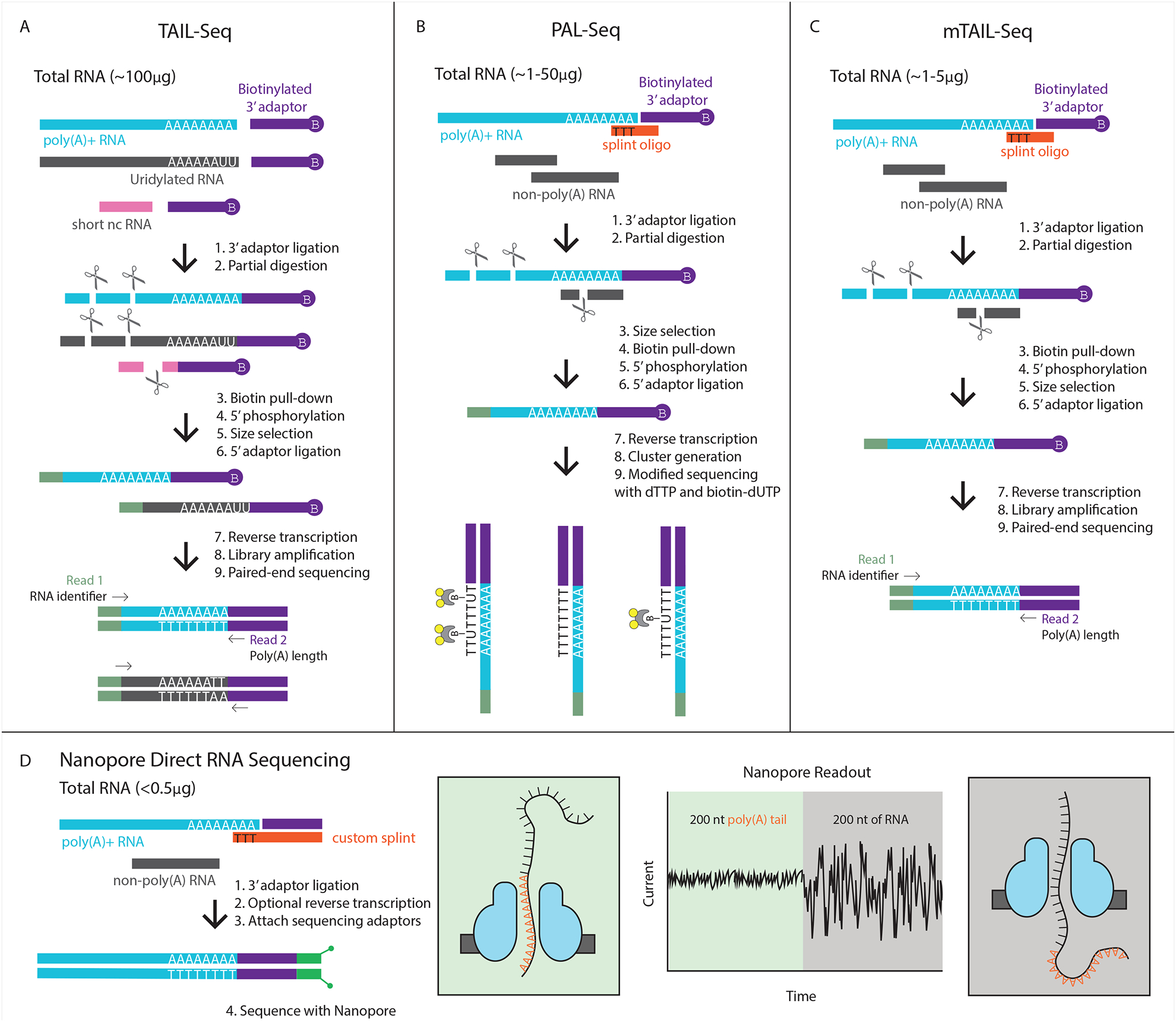
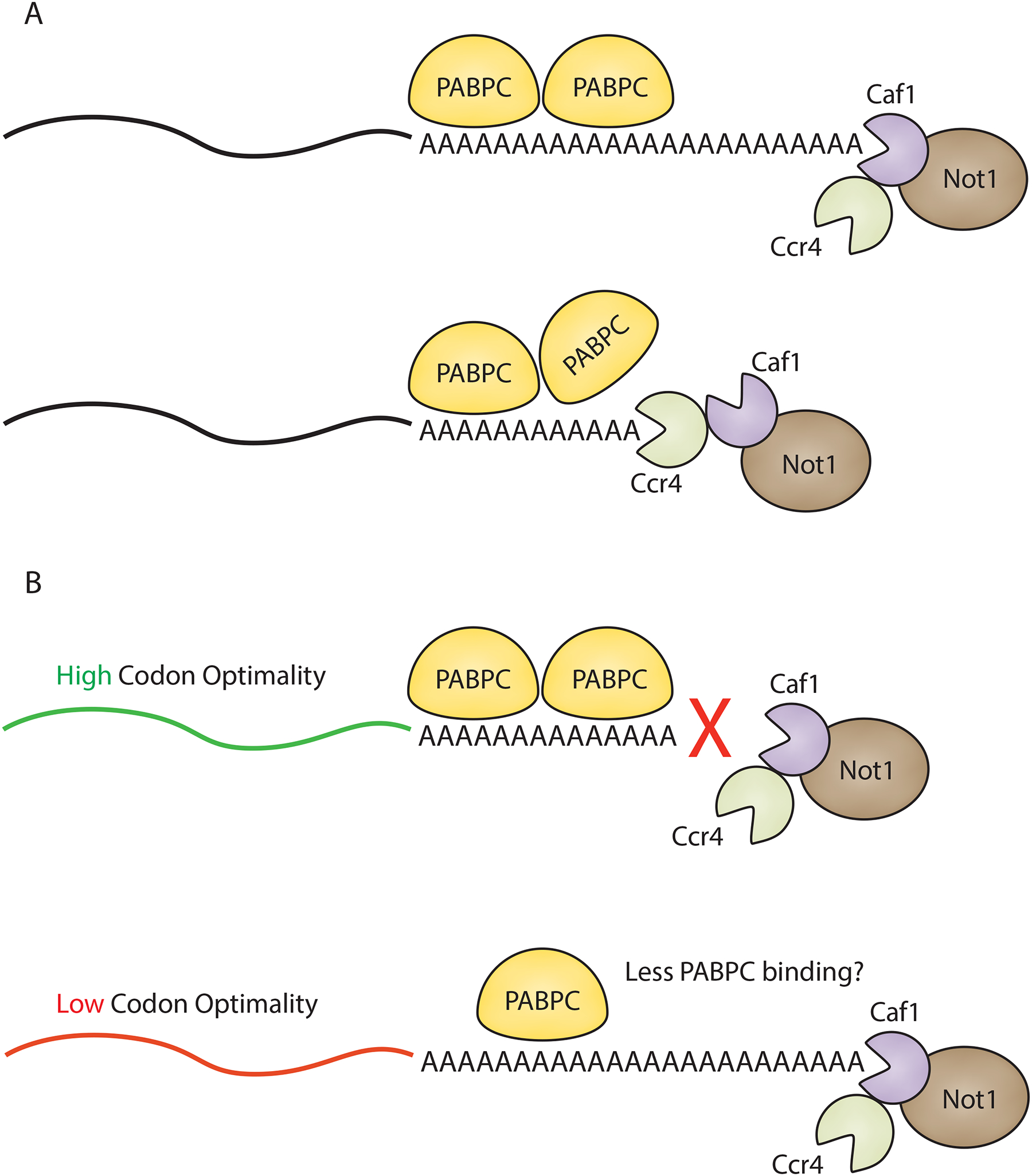
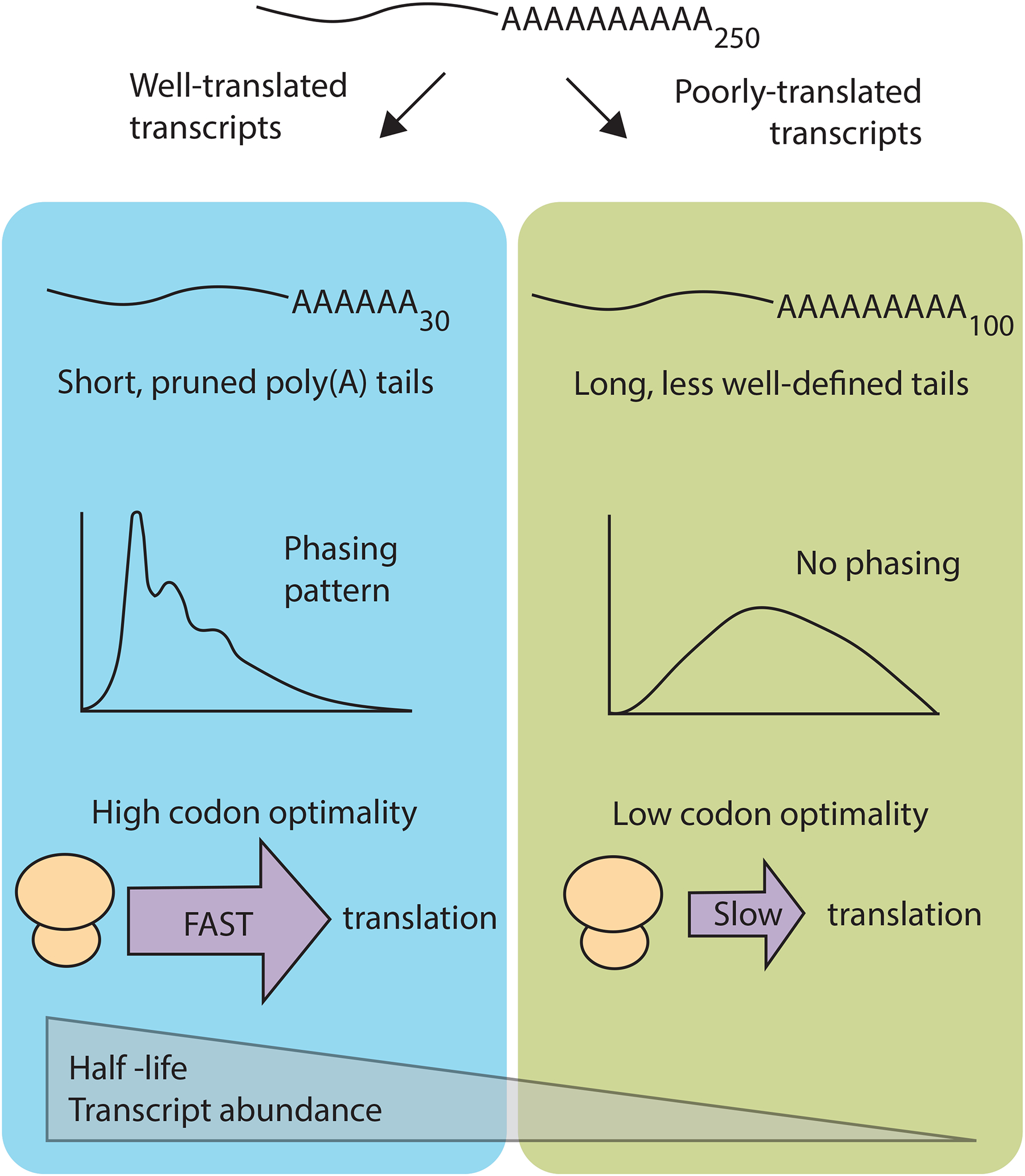
Poly(A) tails are non-templated additions of adenosines at the 3' ends of most eukaryotic mRNAs. In the nucleus, these RNAs are co-transcriptionally cleaved at a poly(A) site and then polyadenylated before being exported to the cytoplasm. In the cytoplasm, poly(A) tails play pivotal roles in the translation and stability of the mRNA. One challenge in studying poly(A) tails is that they are difficult to sequence and accurately measure. However, recent advances in sequencing technology, computational algorithms, and other assays have enabled a more detailed look at poly(A) tail length genome-wide throughout many developmental stages and organisms. With the help of these advances, our understanding of poly(A) tail length has evolved over the past 5 years with the recognition that highly expressed genes can have short poly(A) tails and the elucidation of the seemingly contradictory roles for poly(A)-binding protein (PABP) in facilitating both protection and deadenylation.
聚(A)尾是大多数真核 mRNA 3' 端非模板添加的腺嘌呤核苷酸。在细胞核中,这些 RNA 在聚(A)位点被共转录切割,然后在被输出到细胞质之前进行多聚腺苷酸化。在细胞质中,聚(A)尾在 mRNA 的翻译和稳定性中发挥关键作用。研究聚(A)尾的一个挑战是它们很难进行测序和准确测量。然而,最近测序技术、计算算法和其他检测方法的进步,使我们能够更详细地观察许多发育阶段和生物体的全基因组聚(A)尾长度。在这些进展的帮助下,我们对聚(A)尾长度的理解在过去 5 年中不断发展,人们认识到高度表达的基因可以具有短的聚(A)尾,并阐明了聚(A)结合蛋白(PABP)在促进保护和去腺苷酸化方面看似矛盾的作用。