University of Groningen, University Medical Center Groningen, Department of Biomedical Engineering (FB40) , W.J. Kolff Institute for Biomedical Engineering and Materials Science (FB41) , Antonius Deusinglaan 1 , 9713 AV Groningen , The Netherlands.
University of Groningen, Zernike Institute for Advanced Materials , Nijenborgh 4 , 9747 AG Groningen , The Netherlands.
Biomacromolecules. 2019 Jan 14;20(1):243-253. doi: 10.1021/acs.biomac.8b01378. Epub 2018 Dec 19.
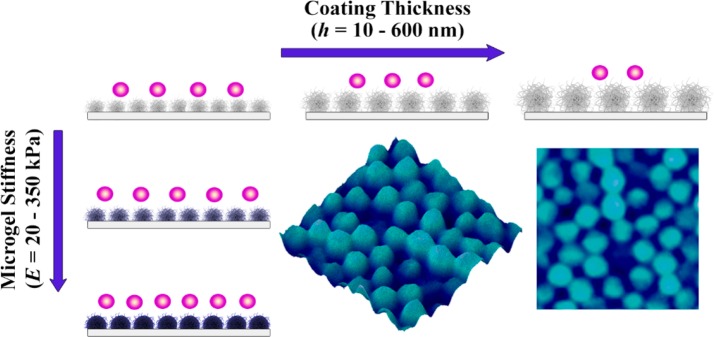
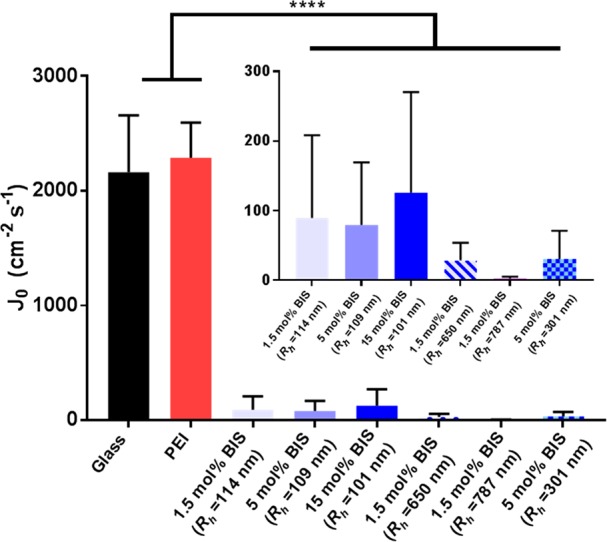
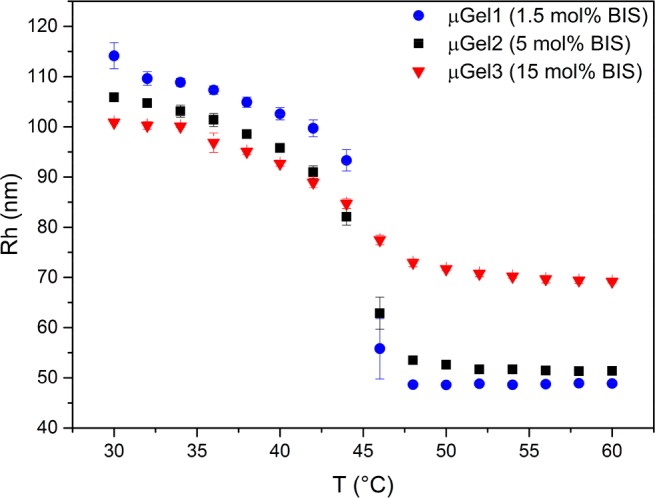
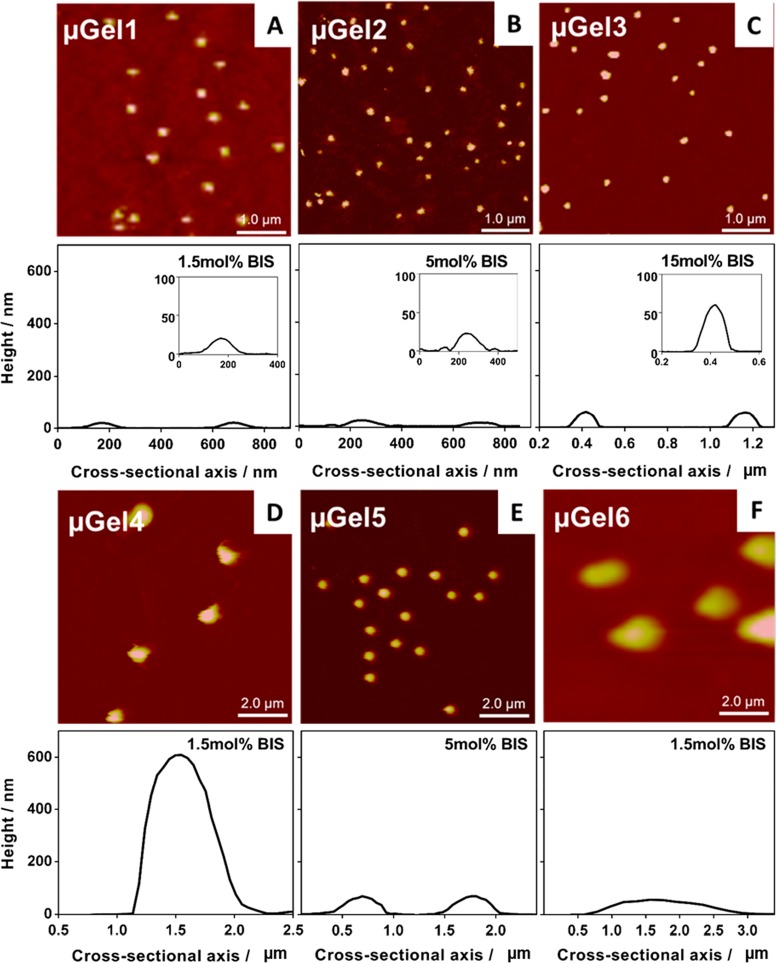
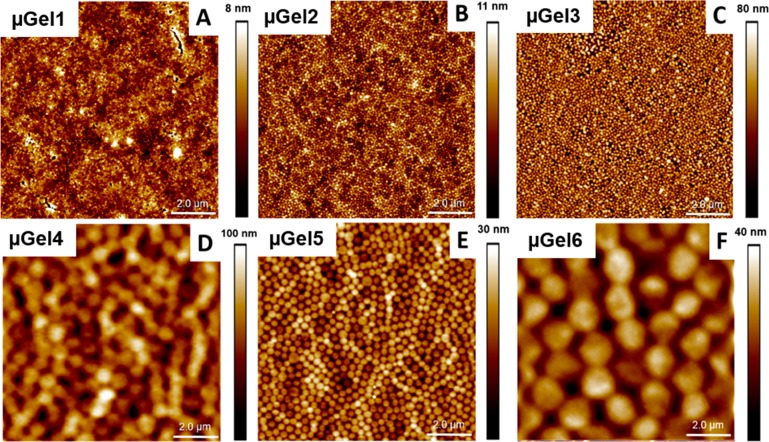
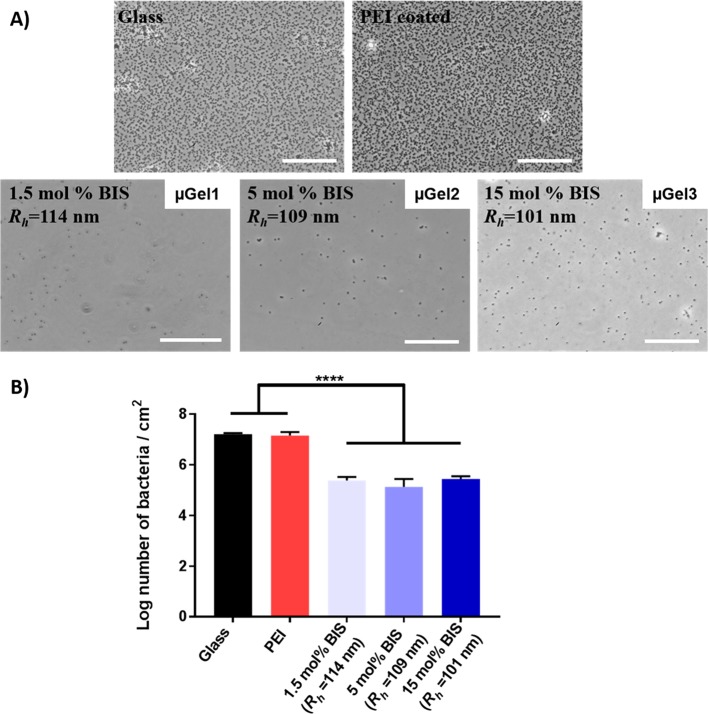
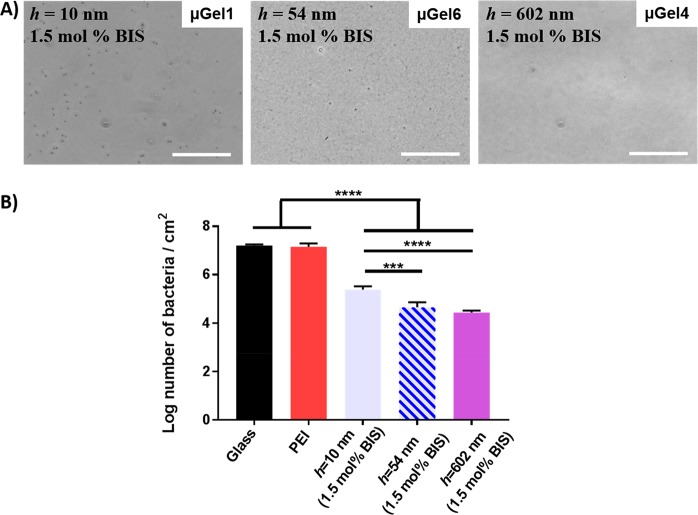
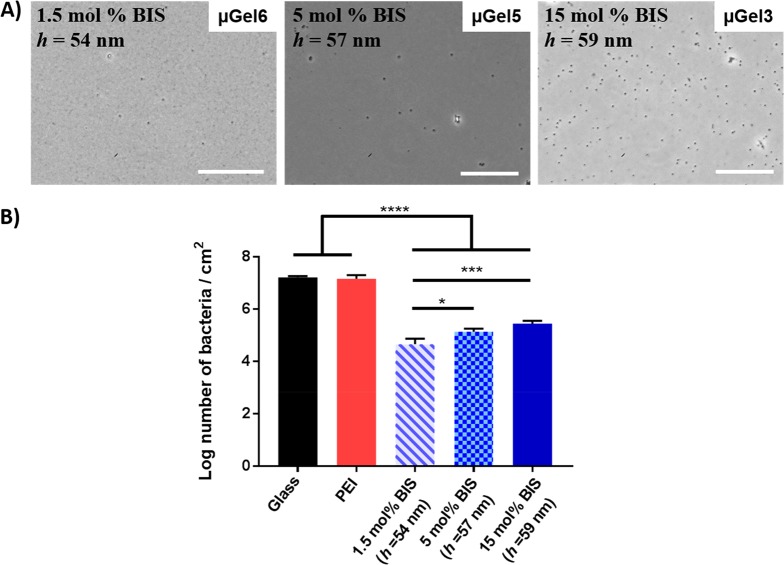
Bacterial infection is a severe problem especially when associated with biomedical applications. This study effectively demonstrates that poly- N-isopropylmethacrylamide based microgel coatings prevent bacterial adhesion. The coating preparation via a spraying approach proved to be simple and both cost and time efficient creating a homogeneous dense microgel monolayer. In particular, the influence of cross-linking density, microgel size, and coating thickness was investigated on the initial bacterial adhesion. Adhesion of Staphylococcus aureus ATCC 12600 was imaged using a parallel plate flow chamber setup, which gave insights in the number of the total bacteria adhering per unit area onto the surface and the initial bacterial deposition rates. All microgel coatings successfully yielded more than 98% reduction in bacterial adhesion. Bacterial adhesion depends both on the cross-linking density/stiffness of the microgels and on the thickness of the microgel coating. Bacterial adhesion decreased when a lower cross-linking density was used at equal coating thickness and at equal cross-linking density with a thicker microgel coating. The highest reduction in the number of bacterial adhesion was achieved with the microgel that produced the thickest coating ( h = 602 nm) and had the lowest cross-linking density. The results provided in this paper indicate that microgel coatings serve as an interesting and easy applicable approach and that it can be fine-tuned by manipulating the microgel layer thickness and stiffness.
细菌感染是一个严重的问题,特别是当它与生物医学应用相关时。本研究有效地证明了基于聚 N-异丙基丙烯酰胺的微凝胶涂层可以防止细菌黏附。通过喷涂方法制备涂层被证明是简单的,既节省成本又节省时间,可形成均匀致密的微凝胶单层。特别是,研究了交联密度、微凝胶粒径和涂层厚度对初始细菌黏附的影响。使用平行板流动室装置对金黄色葡萄球菌 ATCC 12600 的黏附进行了成像,这使我们可以了解单位面积表面上黏附的总细菌数量和初始细菌沉积速率。所有的微凝胶涂层都成功地将细菌黏附减少了 98%以上。细菌黏附既取决于微凝胶的交联密度/刚性,也取决于微凝胶涂层的厚度。当使用相同的涂层厚度但交联密度较低,或者当使用相同的交联密度但较厚的微凝胶涂层时,细菌黏附会减少。在涂层最厚(h = 602nm)且交联密度最低的微凝胶中,细菌黏附数量的减少最多。本文提供的结果表明,微凝胶涂层是一种有趣且易于应用的方法,可以通过控制微凝胶层厚度和刚性进行微调。