Navarro Guadalupe, Sharma Anukriti, Dugas Lara R, Forrester Terrence, Gilbert Jack A, Layden Brian T
Department of Medicine, Division of Endocrinology, Diabetes, and Metabolism, University of Illinois at Chicago, Chicago, IL.
Department of Surgery, University of Chicago, Chicago, Illinois.
Physiol Rep. 2018 Dec;6(23):e13932. doi: 10.14814/phy2.13932.
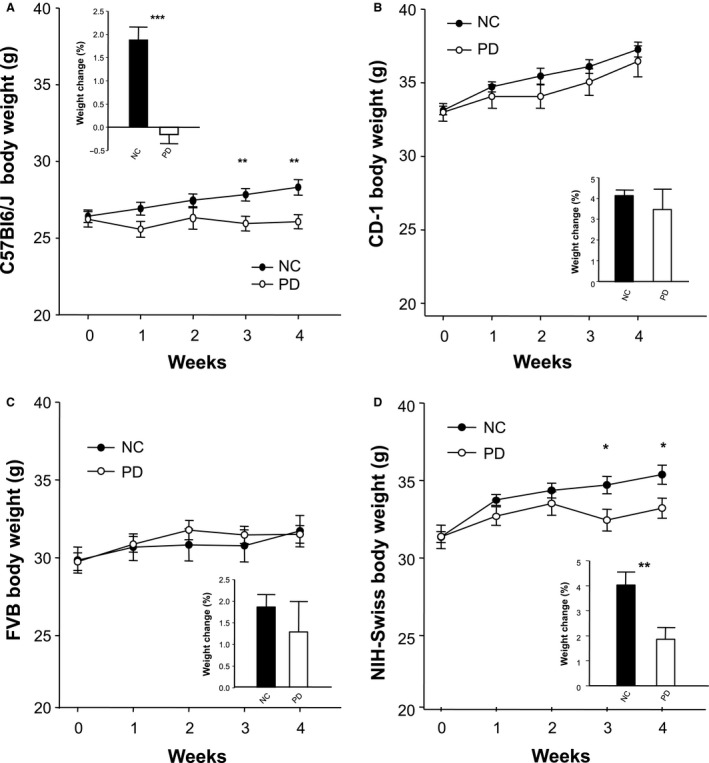
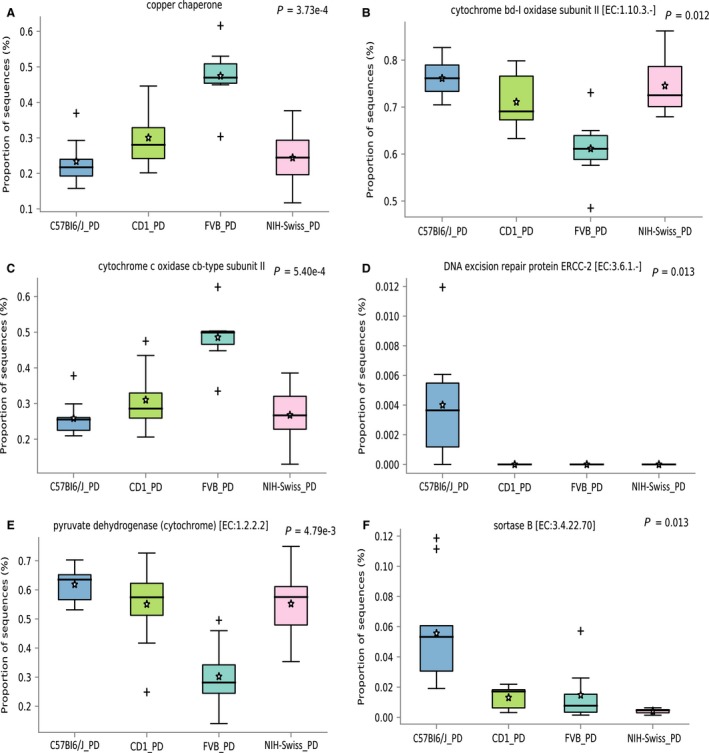
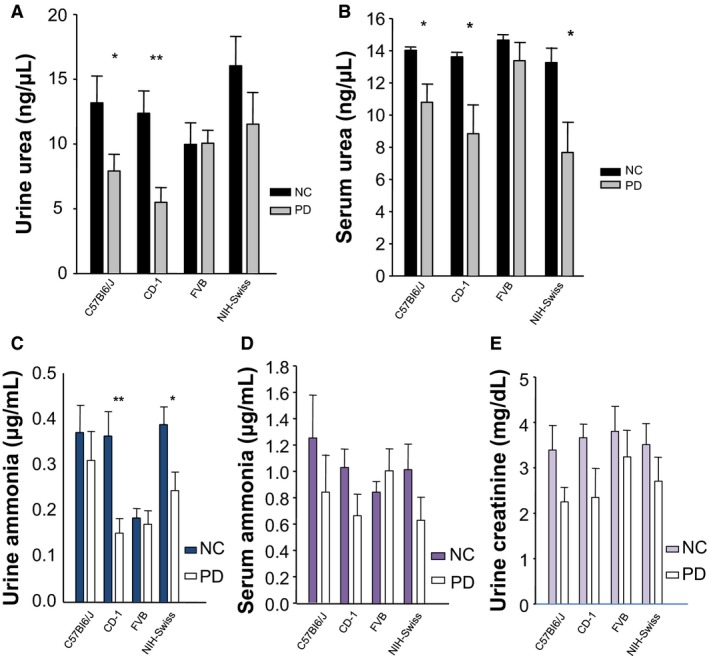
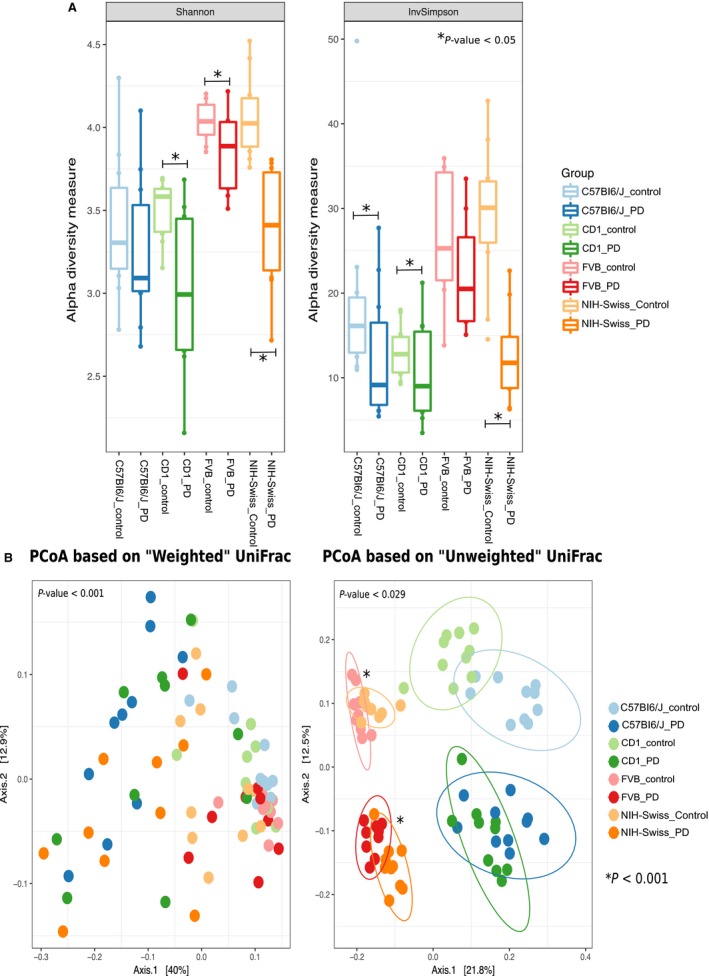
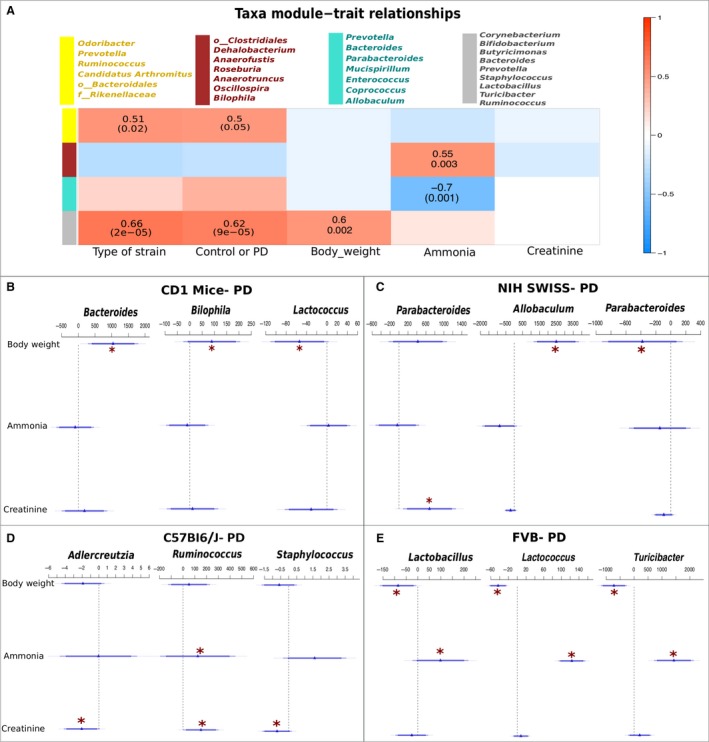
Malnutrition remains a major health problem in low- and middle-income countries. During low protein intake, <0.67 g/kg/day, there is a loss of nitrogen (N ) balance, due to the unavailability of amino acid for metabolism and unbalanced protein catabolism results. However, there are individuals, who consume the same low protein intake, and preserve N balance for unknown reasons. A novel factor, the gut microbiota, may account for these N balance differences. To investigate this, we correlated gut microbial profiles with the growth of four murine strains (C57Bl6/J, CD-1, FVB, and NIH-Swiss) on protein deficient (PD) diet. Results show that a PD diet exerts a strain-dependent impact on growth and N balance as determined through analysis of urinary urea, ammonia and creatinine excretion. Bacterial alpha diversity was significantly (P < 0.05, FDR) lower across all strains on a PD diet compared to normal chow (NC). Multi-group analyses of the composition of microbiomes (ANCOM) revealed significantly differential microbial signatures between the four strains independent of diet. However, mice on a PD diet demonstrated differential enrichment of bacterial genera including, Allobaculum (C57Bl6/J), Parabacteroides (CD-1), Turicibacter (FVB), and Mucispirillum (NIH-Swiss) relative to NC. For instance, selective comparison of the CD-1 (gained weight) and C57Bl6/J (did not gain weight) strains on PD diet also demonstrated significant pathway enrichment of dihydroorodate dehydrogenase, rRNA methyltransferases, and RNA splicing ligase in the CD-1 strains compared to C57Bl6/J strains; which might account in their ability to retain growth despite a protein deficient diet. Taken together, these results suggest a potential relationship between the specific gut microbiota, N balance and animal response to malnutrition.
营养不良仍然是低收入和中等收入国家的一个主要健康问题。在蛋白质摄入量低(<0.67克/千克/天)时,由于缺乏用于代谢的氨基酸且蛋白质分解代谢失衡,会出现氮(N)平衡丧失。然而,有一些人摄入相同的低蛋白量,但出于未知原因保持了氮平衡。一个新的因素,即肠道微生物群,可能解释了这些氮平衡差异。为了对此进行研究,我们将肠道微生物谱与四种小鼠品系(C57Bl6/J、CD-1、FVB和NIH-Swiss)在蛋白质缺乏(PD)饮食上的生长情况进行了关联。结果表明,通过分析尿尿素、氨和肌酐排泄量确定,PD饮食对生长和氮平衡有品系依赖性影响。与正常饲料(NC)相比,所有品系在PD饮食下的细菌α多样性均显著降低(P<0.05,FDR)。微生物群落组成的多组分析(ANCOM)显示,四种品系之间存在显著不同的微生物特征,与饮食无关。然而,与NC相比,PD饮食下的小鼠显示出不同细菌属的富集,包括C57Bl6/J的Allobaculum、CD-1的副拟杆菌属、FVB的Turicibacter和NIH-Swiss的黏液螺旋菌。例如,对PD饮食下CD-1(体重增加)和C57Bl6/J(体重未增加)品系的选择性比较还表明,与C57Bl6/J品系相比,CD-1品系中二氢乳清酸脱氢酶、rRNA甲基转移酶和RNA剪接连接酶的通路显著富集;这可能解释了它们在蛋白质缺乏饮食下仍能保持生长的能力。综上所述,这些结果表明特定肠道微生物群、氮平衡和动物对营养不良的反应之间存在潜在关系。