Department of Anesthesiology and Intensive Therapy, Semmelweis University, 1082 Üllői út 78B, Budapest, Hungary.
BMC Pulm Med. 2018 Dec 6;18(1):190. doi: 10.1186/s12890-018-0754-x.
Home mechanical ventilation is an established treatment for chronic respiratory failure resulting in improved survival and quality of life. Technological advancement, evolving health care reimbursement systems and newly implemented national guidelines result in increased utilization worldwide. Prevalence shows great geographical variations and data on East-Central European practice has been scarce to date. The aim of the current study was to evaluate prevalence and characteristics of home mechanical ventilation in Hungary.
We conducted a nationwide study using an online survey focusing on patients receiving ventilatory support at home. The survey focused on characterization of the site (affiliation, type), experience with home mechanical ventilation, number of patients treated, indication for home mechanical ventilation (disease type), description of home mechanical ventilation (invasive/noninvasive, ventilation hours, duration of ventilation) and description of the care provided (type of follow up visits, hospitalization need, reimbursement).
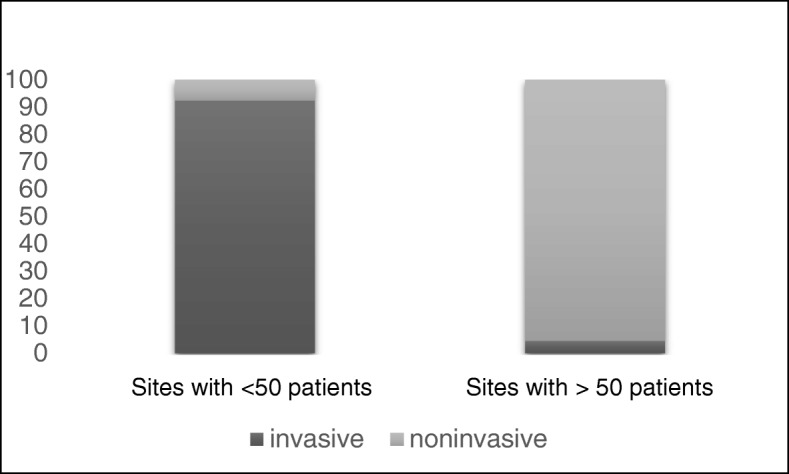
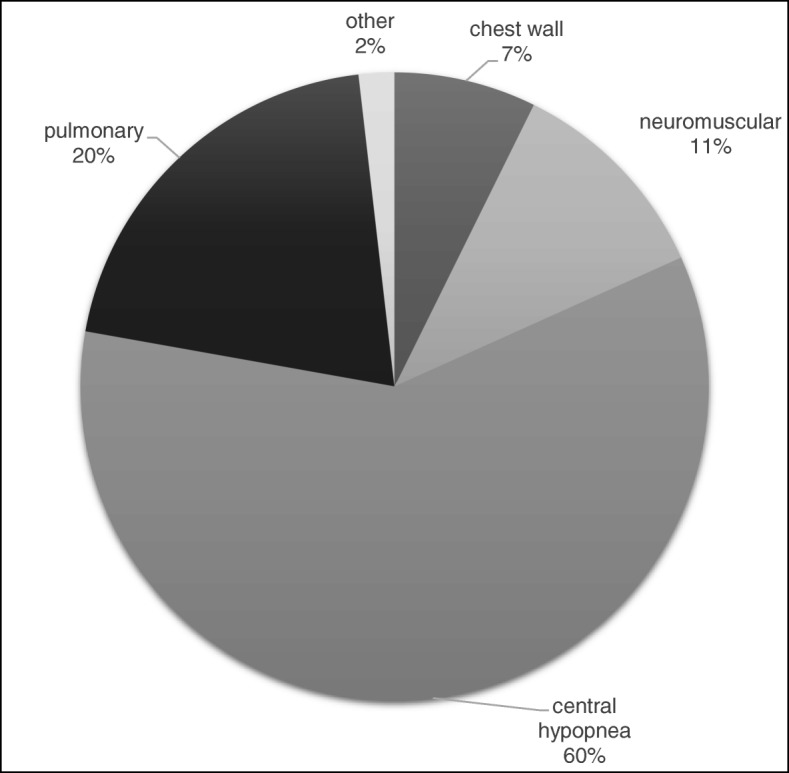
Our survey uncovered a total of 384 patients amounting to a prevalence of 3.9/100,000 in Hungary. 10.4% of patients received invasive, while 89.6% received noninvasive ventilation. The most frequent diagnosis was central hypopnea syndromes (60%), while pulmonary (20%), neuromuscular (11%) and chest wall disorders (7%) were less frequent indications. Daily ventilation need was less than 8 h in 74.2%, between 8 and 16 h in 15.4% and more than 16 h in 10.4% of patients reported. When comparing sites with a limited (< 50 patients) versus substantial (> 50 patients) case number, we found the former had significantly higher ratio of neuromuscular conditions, were more likely to ventilate invasively, with more than 16 h/day ventilation need and were more likely to provide home visits and readmit patients (p < 0,001).
Our results show a reasonable current estimate and characterization of home mechanical ventilation practice in Hungary. Although a growing practice can be assumed, current prevalence is still markedly reduced compared to international data reported, the duality of current data hinting to a possible gap in diagnosis and care for more dependent patients. This points to the importance of establishing home mechanical ventilation centers, where increased experience will enable state of the art care to more dependent patients as well, increasing overall prevalence.
家庭机械通气是治疗慢性呼吸衰竭的一种成熟方法,可以提高生存率和生活质量。技术进步、不断演变的医疗保健报销系统以及新实施的国家指南导致全球使用率的增加。患病率存在很大的地域差异,迄今为止,有关中东欧实践的数据一直很少。本研究的目的是评估匈牙利家庭机械通气的流行率和特征。
我们使用一项在线调查进行了一项全国性研究,该调查侧重于在家中接受通气支持的患者。该调查侧重于场所(隶属关系、类型)的特征、家庭机械通气的经验、治疗的患者人数、家庭机械通气的适应证(疾病类型)、家庭机械通气的描述(有创/无创、通气时间、通气持续时间)和所提供护理的描述(随访访问类型、住院需求、报销)。
我们的调查共发现 384 名患者,匈牙利的患病率为 3.9/100,000。10.4%的患者接受有创通气,89.6%的患者接受无创通气。最常见的诊断是中枢性睡眠呼吸暂停综合征(60%),而肺部疾病(20%)、神经肌肉疾病(11%)和胸壁疾病(7%)则较少见。74.2%的患者每天通气时间少于 8 小时,15.4%的患者每天通气时间在 8 至 16 小时之间,10.4%的患者每天通气时间超过 16 小时。比较病例数有限(<50 例)和病例数较多(>50 例)的场所,我们发现前者神经肌肉疾病的比例明显较高,更有可能进行有创通气,每天通气时间超过 16 小时,更有可能提供家访并重新收治患者(p<0.001)。
我们的研究结果显示了匈牙利家庭机械通气实践的合理当前估计和特征。尽管可以假设这是一种不断增长的实践,但与国际报道的数据相比,目前的患病率仍然明显降低,目前数据的双重性表明,对于更依赖的患者,在诊断和护理方面可能存在差距。这表明建立家庭机械通气中心的重要性,在这些中心,更多的经验将能够为更依赖的患者提供最先进的护理,从而提高整体患病率。