School of Medicine, University of California, San Diego, 9500 Gilman Drive 0760, La Jolla, CA 92093, USA.
Harvard T. H. Chan School of Public Health, 665 Huntington Avenue, Boston, MA 02115, USA.
Science. 2018 Dec 7;362(6419). doi: 10.1126/science.aat9446.
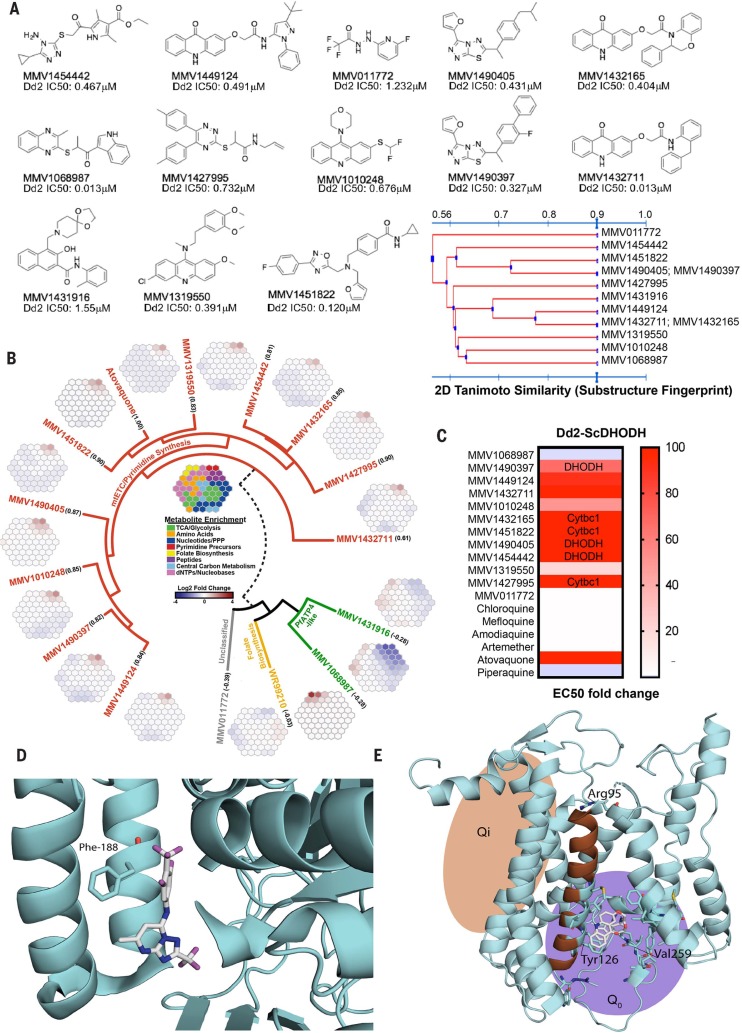
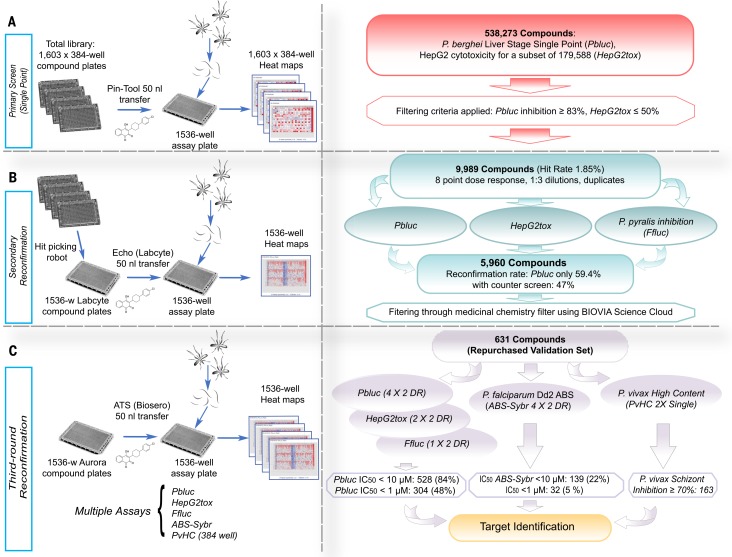
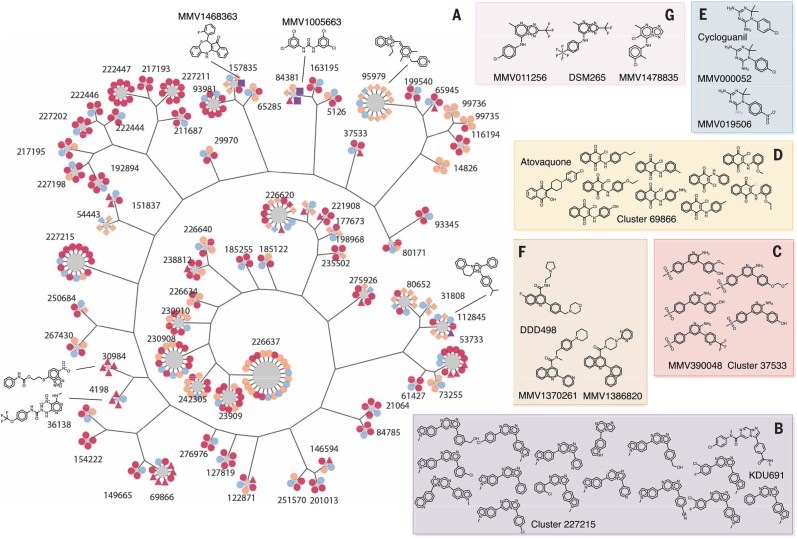
To discover leads for next-generation chemoprotective antimalarial drugs, we tested more than 500,000 compounds for their ability to inhibit liver-stage development of luciferase-expressing spp. parasites (681 compounds showed a half-maximal inhibitory concentration of less than 1 micromolar). Cluster analysis identified potent and previously unreported scaffold families as well as other series previously associated with chemoprophylaxis. Further testing through multiple phenotypic assays that predict stage-specific and multispecies antimalarial activity distinguished compound classes that are likely to provide symptomatic relief by reducing asexual blood-stage parasitemia from those which are likely to only prevent malaria. Target identification by using functional assays, in vitro evolution, or metabolic profiling revealed 58 mitochondrial inhibitors but also many chemotypes possibly with previously unidentified mechanisms of action.
为了发现新一代化学保护抗疟药物的先导化合物,我们测试了超过 50 万种化合物抑制表达荧光素的 spp. 寄生虫肝脏阶段发育的能力(681 种化合物的半最大抑制浓度低于 1 微摩尔)。聚类分析确定了强效的、以前未报道的骨架家族,以及其他以前与化学预防相关的系列。通过多个预测阶段特异性和多物种抗疟活性的表型测定进一步测试,区分了可能通过减少无性血期寄生虫血症提供症状缓解的化合物类别,与那些可能仅预防疟疾的化合物类别区分开来。通过功能测定、体外进化或代谢谱分析进行的靶标鉴定揭示了 58 种线粒体抑制剂,但也有许多化学型可能具有以前未识别的作用机制。