• 文献检索
  • 文档翻译
  • 深度研究
  • 学术资讯
  • Suppr Zotero 插件Zotero 插件
  • 邀请有礼
  • 套餐&价格
  • 历史记录
应用&插件
Suppr Zotero 插件Zotero 插件浏览器插件Mac 客户端Windows 客户端微信小程序
定价
高级版会员购买积分包购买API积分包
服务
文献检索文档翻译深度研究API 文档MCP 服务
关于我们
关于 Suppr公司介绍联系我们用户协议隐私条款
关注我们

Suppr 超能文献

核心技术专利:CN118964589B侵权必究
粤ICP备2023148730 号-1Suppr @ 2026

文献检索

告别复杂PubMed语法,用中文像聊天一样搜索,搜遍4000万医学文献。AI智能推荐,让科研检索更轻松。

立即免费搜索

文件翻译

保留排版,准确专业,支持PDF/Word/PPT等文件格式,支持 12+语言互译。

免费翻译文档

深度研究

AI帮你快速写综述,25分钟生成高质量综述,智能提取关键信息,辅助科研写作。

立即免费体验

对自我和他人程序正义偏好的发展。

The Development of a Preference for Procedural Justice for Self and Others.

机构信息

Yale University, Department of Psychology, New Haven, USA.

Yale University, School of Law, New Haven, USA.

出版信息

Sci Rep. 2018 Dec 10;8(1):17740. doi: 10.1038/s41598-018-36072-1.

DOI:10.1038/s41598-018-36072-1
PMID:30531864
原文链接:https://pmc.ncbi.nlm.nih.gov/articles/PMC6288281/
Abstract

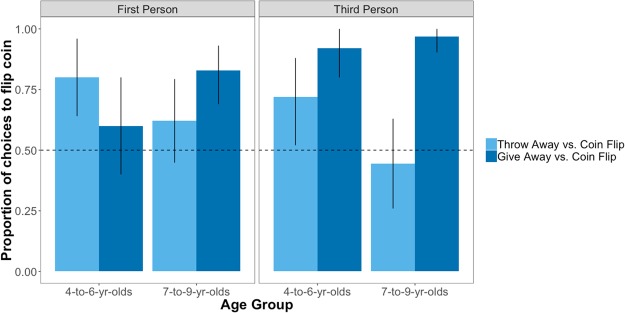
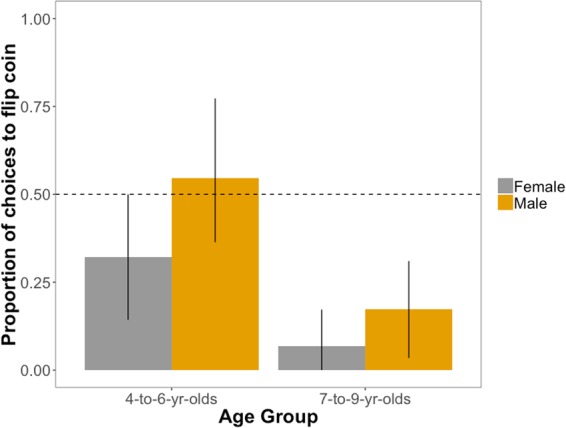
Adults prefer fair processes ("procedural justice") over equal outcomes ("distributive justice"). This preference impacts their judgments of others in addition to their willingness to cooperate, raising questions about whether similar preferences drive judgments and behavior in children. The present study examines the development of this preference for procedural justice by testing children's attitudes towards procedural justice using a resource allocation task in both first- and third-party contexts, and in contexts in which the procedurally just process does versus does not create distributional injustice. Results from children 4 to 8 years of age demonstrate that children robustly attend to and prefer procedural justice over distributive justice. However, younger children are less likely to prefer methods that are procedurally just or that create distributively just outcomes in first-party contexts, when distributive injustice might favor them. Results suggest an interplay between abstract justice concerns and the emerging ability to override selfishness.

摘要

成年人更喜欢公平的程序(“程序正义”)而不是平等的结果(“分配正义”)。这种偏好不仅影响他们对他人的判断,还影响他们的合作意愿,这引发了一个问题,即类似的偏好是否会影响儿童的判断和行为。本研究通过使用资源分配任务在第一方和第三方背景下以及在程序公正的过程是否会导致分配不公正的背景下,检验了儿童对程序正义的偏好的发展。来自 4 至 8 岁儿童的结果表明,儿童非常关注程序正义,并偏爱程序正义而不是分配正义。然而,当分配不公正可能对他们有利时,年幼的儿童不太可能更喜欢程序公正或创造分配公正结果的方法。研究结果表明,抽象正义问题和克服自私的新兴能力之间存在相互作用。

https://cdn.ncbi.nlm.nih.gov/pmc/blobs/854e/6288281/d34b4a14e94a/41598_2018_36072_Fig3_HTML.jpg
https://cdn.ncbi.nlm.nih.gov/pmc/blobs/854e/6288281/cc8d0f2bf571/41598_2018_36072_Fig1_HTML.jpg
https://cdn.ncbi.nlm.nih.gov/pmc/blobs/854e/6288281/2734f887dd2e/41598_2018_36072_Fig2_HTML.jpg
https://cdn.ncbi.nlm.nih.gov/pmc/blobs/854e/6288281/d34b4a14e94a/41598_2018_36072_Fig3_HTML.jpg
https://cdn.ncbi.nlm.nih.gov/pmc/blobs/854e/6288281/cc8d0f2bf571/41598_2018_36072_Fig1_HTML.jpg
https://cdn.ncbi.nlm.nih.gov/pmc/blobs/854e/6288281/2734f887dd2e/41598_2018_36072_Fig2_HTML.jpg
https://cdn.ncbi.nlm.nih.gov/pmc/blobs/854e/6288281/d34b4a14e94a/41598_2018_36072_Fig3_HTML.jpg

相似文献

1
The Development of a Preference for Procedural Justice for Self and Others.对自我和他人程序正义偏好的发展。
Sci Rep. 2018 Dec 10;8(1):17740. doi: 10.1038/s41598-018-36072-1.
2
Children's reasoning about distributive and retributive justice across development.儿童在成长过程中对分配正义和报应正义的推理。
Dev Psychol. 2016 Apr;52(4):613-28. doi: 10.1037/a0040069. Epub 2016 Feb 4.
3
Fair sharing is just caring: Links between justice sensitivity and distributive behavior in middle childhood.公平分享就是关爱:儿童中期正义感与分配行为之间的联系。
J Exp Child Psychol. 2023 Feb;226:105561. doi: 10.1016/j.jecp.2022.105561. Epub 2022 Oct 3.
4
"But the poor needed it more": Children's judgments on procedural justice to allocate resources between two candidates equal in merit, different in need.“但穷人更需要它”:儿童对程序正义的判断,即在两名功绩相当但需求不同的候选人之间分配资源。
J Exp Child Psychol. 2023 Aug;232:105679. doi: 10.1016/j.jecp.2023.105679. Epub 2023 Apr 14.
5
Fairness as partiality aversion: the development of procedural justice.公平即反感偏私:程序正义的发展。
J Exp Child Psychol. 2014 Mar;119:40-53. doi: 10.1016/j.jecp.2013.10.007. Epub 2013 Nov 28.
6
Procedural (in)justice in children: Children choose procedures that favor their ingroup.儿童的程序(不)公正:儿童选择有利于他们内群体的程序。
J Exp Child Psychol. 2022 Mar;215:105313. doi: 10.1016/j.jecp.2021.105313. Epub 2021 Dec 23.
7
Procedural justice in children: Preschoolers accept unequal resource distributions if the procedure provides equal opportunities.儿童的程序公平:如果程序提供了平等的机会,学龄前儿童会接受不平等的资源分配。
J Exp Child Psychol. 2015 Dec;140:197-210. doi: 10.1016/j.jecp.2015.07.008. Epub 2015 Aug 7.
8
Children's Sense of Fairness as Equal Respect.儿童公平感即平等尊重。
Trends Cogn Sci. 2019 Jun;23(6):454-463. doi: 10.1016/j.tics.2019.03.001. Epub 2019 Apr 2.
9
Wellness as fairness.健康公平。
Am J Community Psychol. 2012 Mar;49(1-2):1-21. doi: 10.1007/s10464-011-9448-8.
10
The lives of others: Third parties' responses to others' injustice.他人的生活:第三方对他人不公正的反应。
J Appl Psychol. 2016 Feb;101(2):171-89. doi: 10.1037/apl0000040. Epub 2015 Jul 27.

引用本文的文献

1
No one is going to recess: How children evaluate collective and targeted punishment.没人能去课间休息:儿童如何评估集体惩罚和针对性惩罚。
Soc Dev. 2024 May;33(2). doi: 10.1111/sode.12730. Epub 2024 Jan 4.
2
Interactive effects of participant and stimulus race on cognitive performance in youth: Insights from the ABCD study.参与者和刺激物种族对青少年认知表现的交互影响:来自 ABCD 研究的见解。
Dev Cogn Neurosci. 2024 Jun;67:101393. doi: 10.1016/j.dcn.2024.101393. Epub 2024 May 24.
3
A quantitative method for benchmarking fair income distribution.

本文引用的文献

1
The Development of Inequity Aversion.不公平厌恶感的发展。
Psychol Sci. 2016 Oct;27(10):1352-1359. doi: 10.1177/0956797616660548. Epub 2016 Aug 20.
2
Some Equalities Are More Equal Than Others: Quality Equality Emerges Later Than Numerical Equality.有些平等比其他平等更平等:质量平等比数量平等出现得更晚。
Child Dev. 2016 Sep;87(5):1520-8. doi: 10.1111/cdev.12544. Epub 2016 May 3.
3
The ontogeny of fairness in seven societies.七个社会中的公平的发生发展。
一种用于公平收入分配基准评估的定量方法。
Heliyon. 2022 Sep 3;8(9):e10511. doi: 10.1016/j.heliyon.2022.e10511. eCollection 2022 Sep.
4
The ontogeny of children's social emotions in response to (un)fairness.儿童对(不)公平做出反应时社会情绪的个体发生。
R Soc Open Sci. 2022 Aug 31;9(8):191456. doi: 10.1098/rsos.191456. eCollection 2022 Aug.
5
Children Consider Procedures, Outcomes, and Emotions When Judging the Fairness of Inequality.儿童在判断不平等的公平性时会考虑程序、结果和情感。
Front Psychol. 2022 Mar 3;13:815901. doi: 10.3389/fpsyg.2022.815901. eCollection 2022.
Nature. 2015 Dec 10;528(7581):258-61. doi: 10.1038/nature15703. Epub 2015 Nov 18.
4
Procedural justice in children: Preschoolers accept unequal resource distributions if the procedure provides equal opportunities.儿童的程序公平:如果程序提供了平等的机会,学龄前儿童会接受不平等的资源分配。
J Exp Child Psychol. 2015 Dec;140:197-210. doi: 10.1016/j.jecp.2015.07.008. Epub 2015 Aug 7.
5
Waste management: how reducing partiality can promote efficient resource allocation.废物管理:如何减少偏见以促进资源的有效配置。
J Pers Soc Psychol. 2015 Aug;109(2):210-31. doi: 10.1037/pspa0000028. Epub 2015 Jun 15.
6
Fairness as partiality aversion: the development of procedural justice.公平即反感偏私:程序正义的发展。
J Exp Child Psychol. 2014 Mar;119:40-53. doi: 10.1016/j.jecp.2013.10.007. Epub 2013 Nov 28.
7
Anti-equality: social comparison in young children.反平等:幼儿中的社会比较
Cognition. 2014 Feb;130(2):152-6. doi: 10.1016/j.cognition.2013.10.008. Epub 2013 Nov 28.
8
I should but I won't: why young children endorse norms of fair sharing but do not follow them.我本应但我没有:为什么年幼的孩子会认可公平分享的规范但却不遵守它们。
PLoS One. 2013;8(3):e59510. doi: 10.1371/journal.pone.0059510. Epub 2013 Mar 20.
9
Children develop a veil of fairness.儿童形成公平的面纱。
J Exp Psychol Gen. 2014 Feb;143(1):363-75. doi: 10.1037/a0031247. Epub 2013 Jan 14.
10
Do infants have a sense of fairness?婴儿有公平感吗?
Psychol Sci. 2012 Feb;23(2):196-204. doi: 10.1177/0956797611422072. Epub 2012 Jan 17.