Feng Qian, Wang Haojia, Pang Jiaying, Ji Liyan, Han Jiada, Wang Ying, Qi Xiaoxiao, Liu Zhongqiu, Lu Linlin
International Institute for Translational Chinese Medicine, Guangzhou University of Chinese Medicine, Guangzhou, China.
The Postdoctoral Research Station, Guangzhou University of Chinese Medicine, Guangzhou, China.
Front Pharmacol. 2018 Nov 23;9:1356. doi: 10.3389/fphar.2018.01356. eCollection 2018.
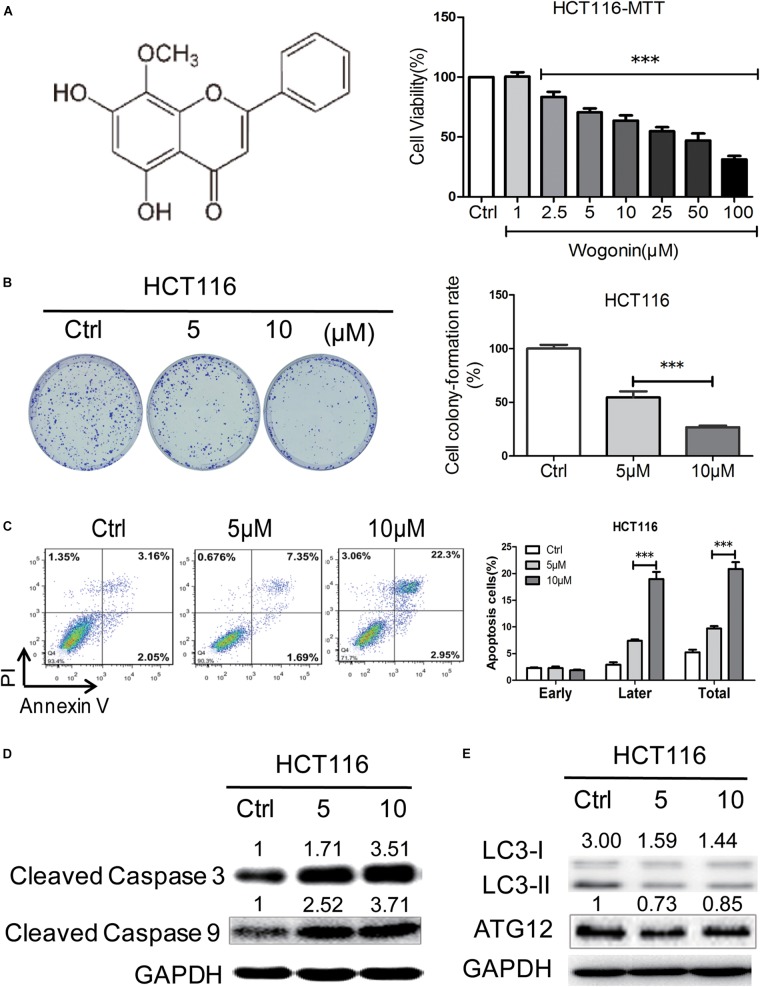
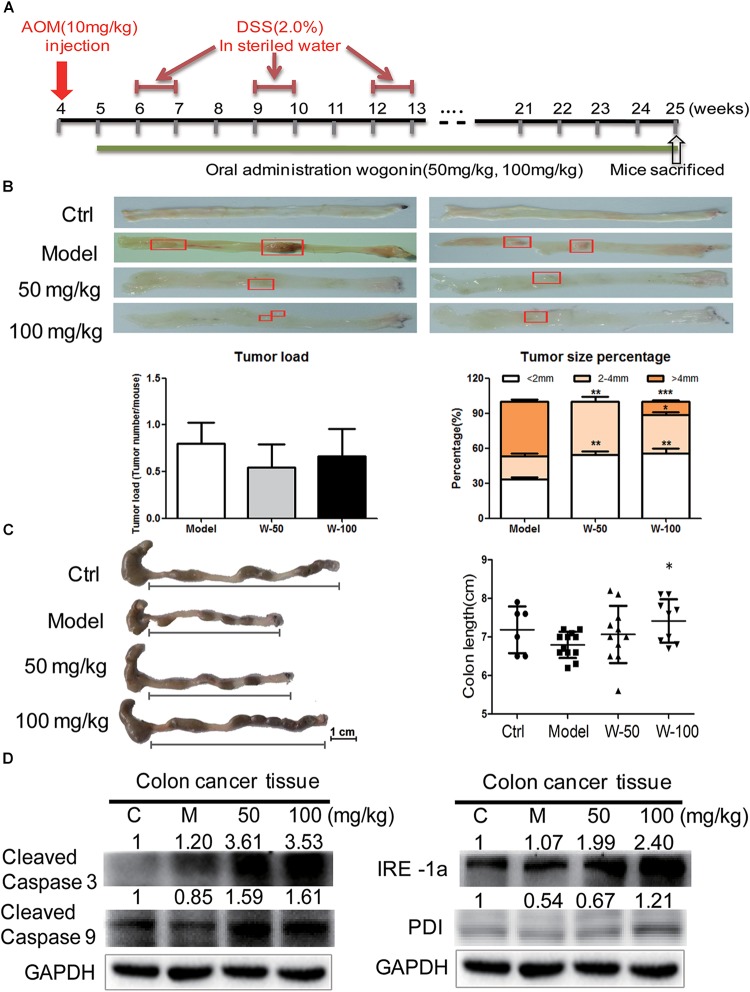
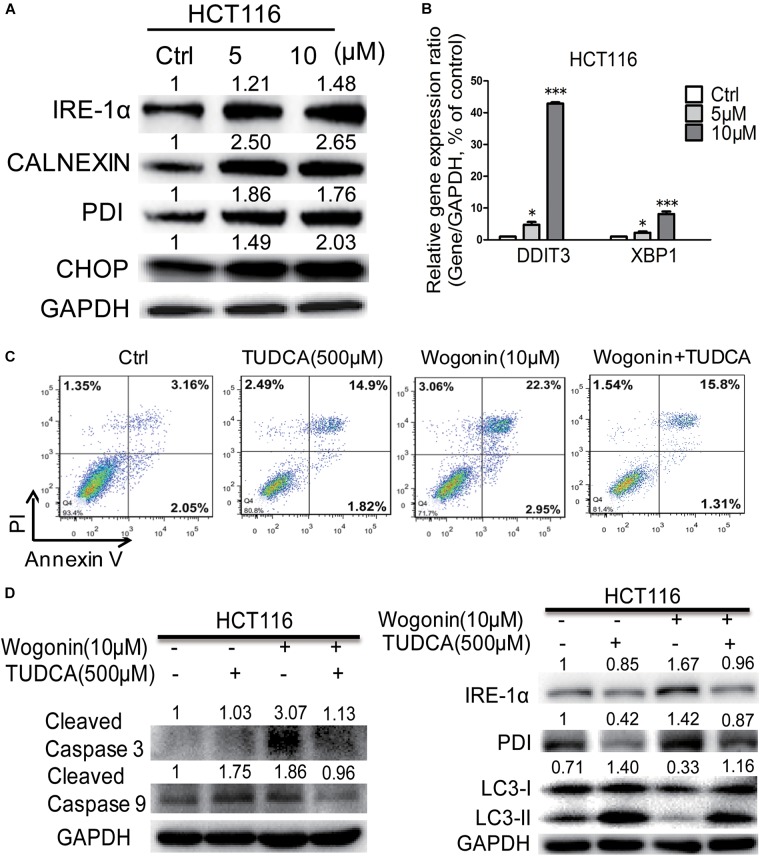
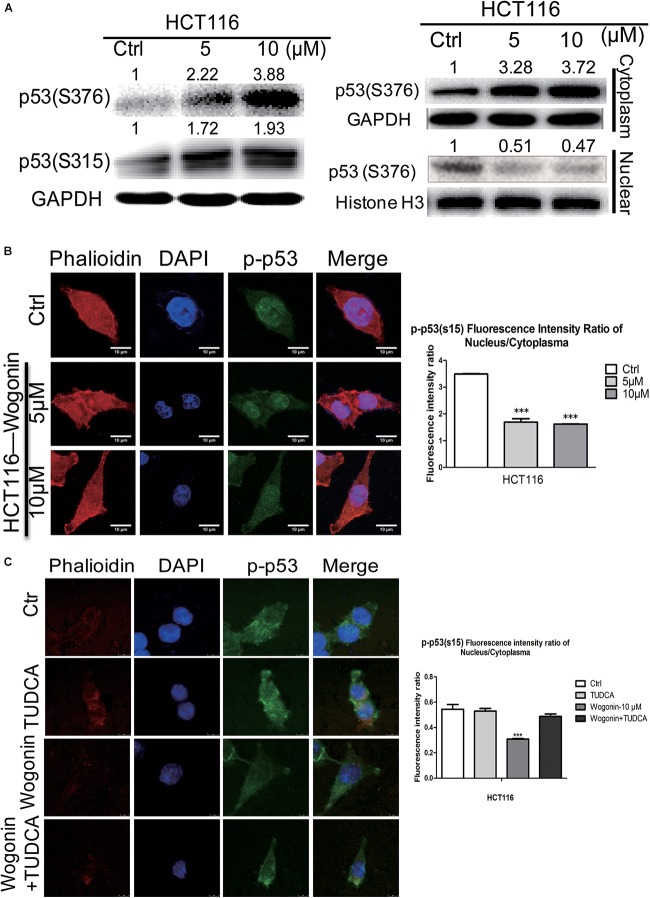
The tumor suppressor protein p53 plays an important role in the development and progression of colon cancer, and the subcellular organelle localization directly affects its function. Wogonin (5,7-dihydroxy-8-methoxyflavone), a mono-flavonoid extracted from root of , possesses acceptable toxicity and has been used in colorectal cancer (CRC) chemoprevention in pre-clinical trials by oncologist. However, the underlying anti-colon cancer mechanisms of wogonin are not yet fully understood. In the present study, the effect of wogonin on the initiation and development of colitis-associated cancer through p53 nuclear translocation was explored. AOM-DSS CRC animal model and human CRC HCT-116 cell model were used to evaluate the and anti-colon cancer action of wogonin. We observed that wogonin showed a dramaticlly preventive effect on colon cancer. Our results showed that wogonin caused apoptotic cell death in human CRC HCT-116 cell through increased endoplasmic reticulum (ER) stress. Meanwhile, excessive ER stress facilitated the cytoplasmic localization of p53 through increasing phosphor-p53 at S315 and S376 sites, induced caspase-dependent apoptosis and inhibited autophagy. Furthermore, we verified the chemoprevention effect and toxicity of wogonin by utilizing an AOM-DSS colon cancer animal model. We found that wogonin not only reduced tumor multiplicity, preserved colon length to normal (6.79 ± 0.34 to 7.41 ± 0.56, < 0.05) but also didn't induce side effects on various organs. In conclusion, these results explain the anti-tumor effect of wogonin in CRC and suggest wogonin as a potential therapeutic candidate for the therapeutic strategy in CRC treatment.
肿瘤抑制蛋白p53在结肠癌的发生和发展中起着重要作用,其亚细胞器定位直接影响其功能。汉黄芩素(5,7 - 二羟基 - 8 - 甲氧基黄酮)是从[植物名称缺失]根部提取的一种单黄酮类化合物,具有可接受的毒性,肿瘤学家已在临床前试验中将其用于结直肠癌(CRC)的化学预防。然而,汉黄芩素潜在的抗结肠癌机制尚未完全阐明。在本研究中,探讨了汉黄芩素通过p53核转位对结肠炎相关癌发生发展的影响。采用氧化偶氮甲烷 - 葡聚糖硫酸钠(AOM - DSS)诱导的CRC动物模型和人CRC HCT - 116细胞模型来评估汉黄芩素的抗结肠癌作用。我们观察到汉黄芩素对结肠癌具有显著的预防作用。我们的结果表明,汉黄芩素通过增加内质网(ER)应激导致人CRC HCT - 116细胞发生凋亡性细胞死亡。同时,过度的ER应激通过增加p53在S315和S376位点的磷酸化促进p53的细胞质定位,诱导半胱天冬酶依赖性凋亡并抑制自噬。此外,我们利用AOM - DSS结肠癌动物模型验证了汉黄芩素的化学预防作用和毒性。我们发现汉黄芩素不仅减少了肿瘤数量,使结肠长度保持正常(从6.79±0.34到7.41±0.56,P<0.05),而且对各个器官未诱导副作用。总之,这些结果解释了汉黄芩素在CRC中的抗肿瘤作用,并表明汉黄芩素作为CRC治疗策略中一种潜在的治疗候选药物。