Vemuri Gopi Nath, Pandian Rathiesh R, Spinello Brian J, Stopler Erika B, Kinney Zacharias J, Hartley C Scott
Department of Chemistry & Biochemistry , Miami University , Oxford , OH 45056 , USA . Email:
Chem Sci. 2018 Sep 5;9(43):8260-8270. doi: 10.1039/c8sc02821d. eCollection 2018 Nov 21.
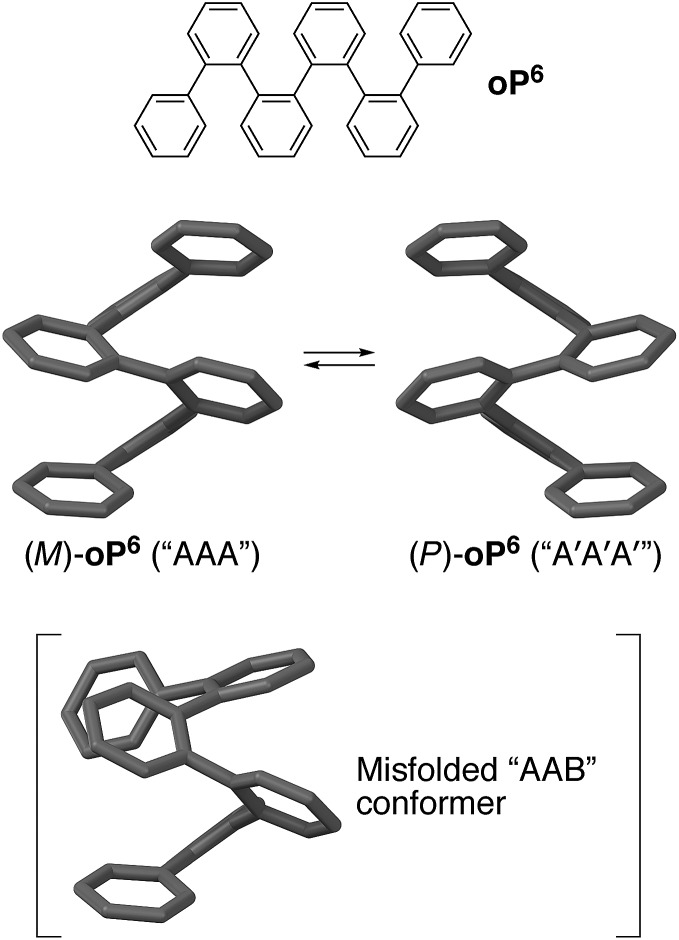
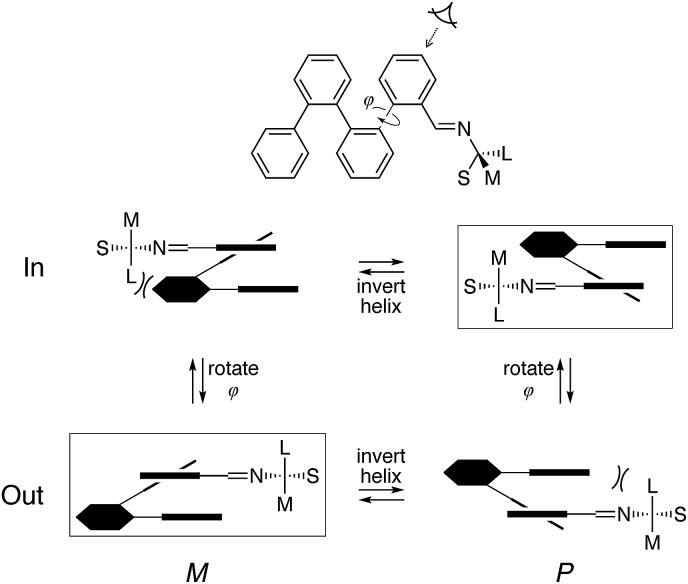
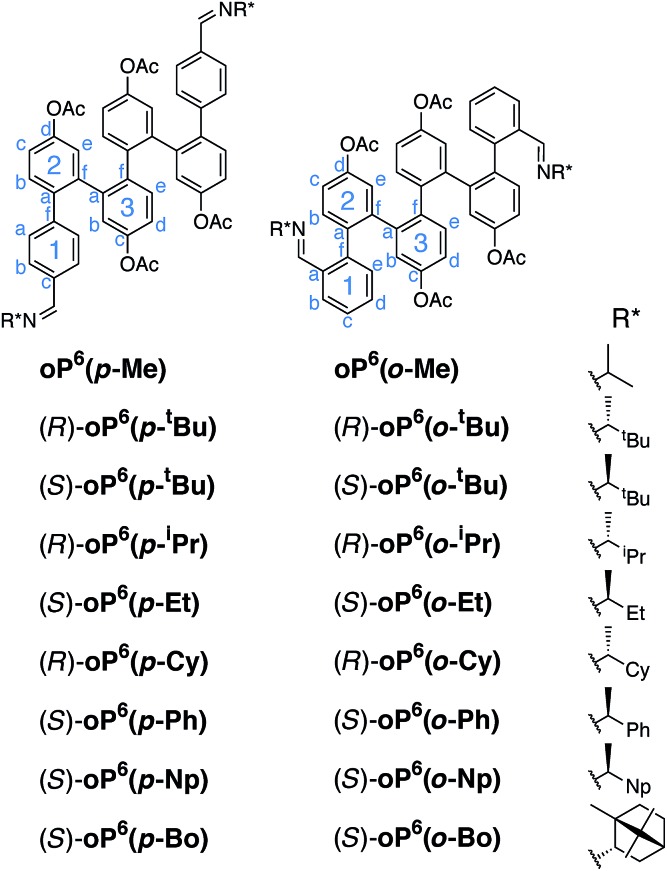
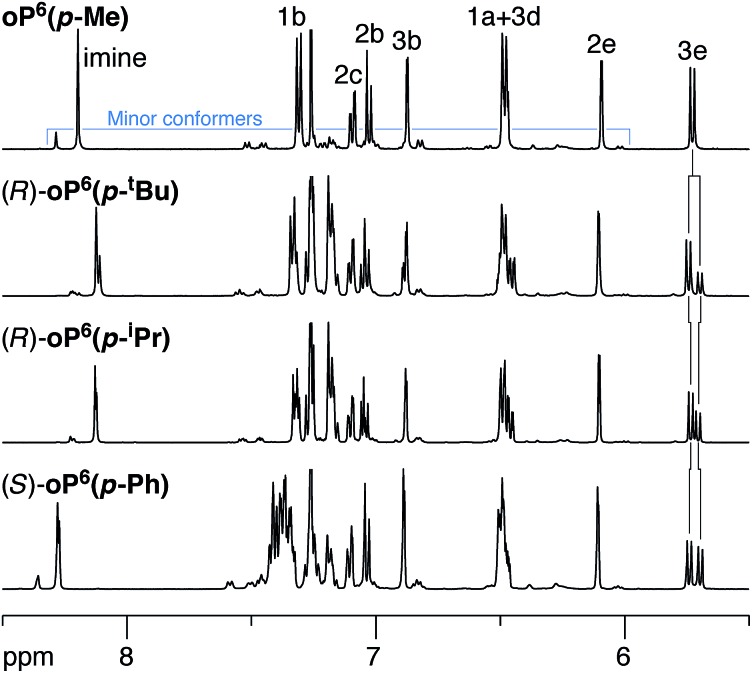
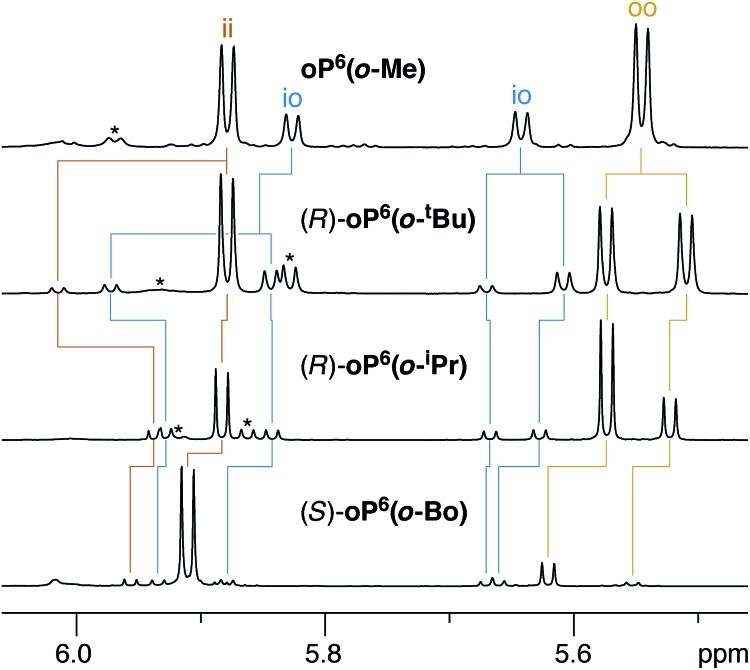
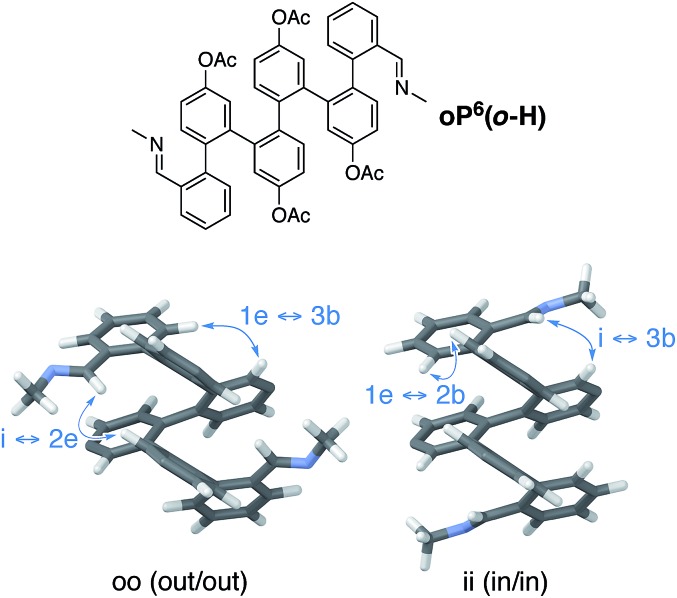
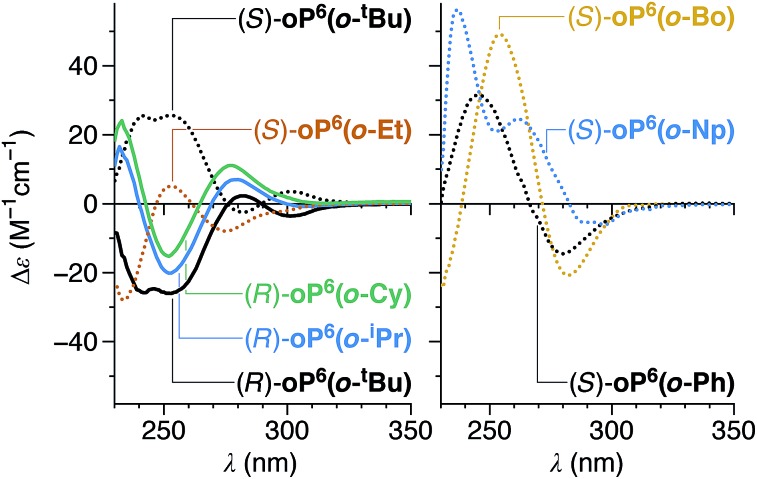
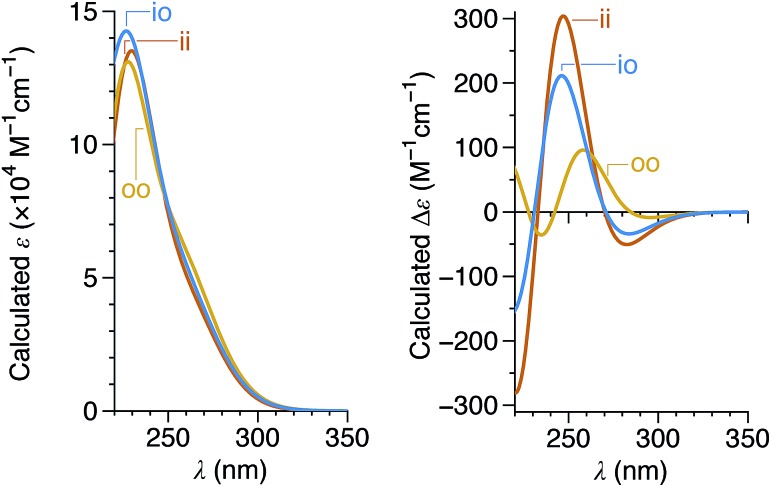
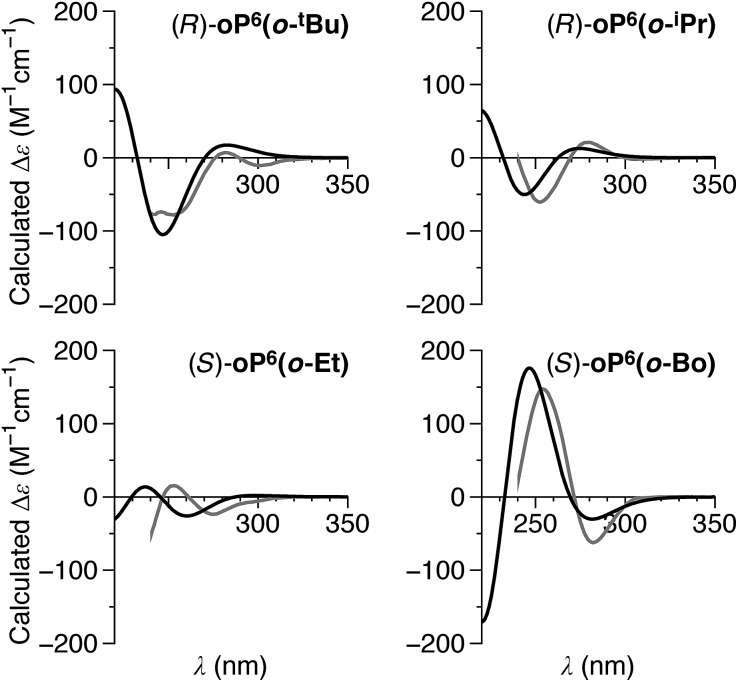
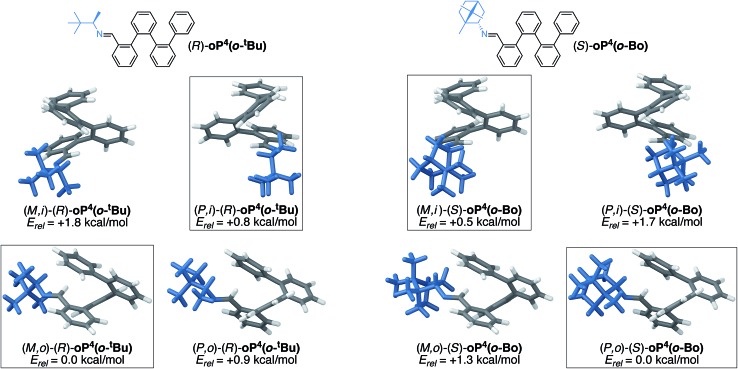
Many abiotic foldamers are based on achiral repeat units but adopt chiral geometries, especially helices. In these systems, there is no inherent preference for one handedness of the fold; however, it is well-established that the point chirality of substituents can be communicated to the helix. This capability represents a basic level of control over folding that is necessary for applications in molecular recognition and in the assembly of higher-order structures. The -phenylenes are a structurally simple class of aromatic foldamers that fold into helices driven by arene-arene stacking interactions. Although their folding is now reasonably well-understood, access to -phenylenes enriched in one twist sense has been limited to resolution, yielding conformationally dynamic samples that racemize over the course of minutes to hours. Here, we report a detailed structure-property study of chiral induction from -phenylene termini using a combination of NMR spectroscopy, CD spectroscopy, and computational chemistry. We uncover mechanistic details of chiral induction and show that the same substituents can give effective twist sense control in opposite directions in mixtures of interconverting conformers; that is, they are "ambidextrous". This behavior should be general and can be rationalized using a simple model based on sterics, noting that arene-arene stacking is, to a first approximation, unaffected by flipping either partner. We demonstrate control over this mechanism by showing that chiral groups can be chosen such that they both favor one orientation and provide effective chiral induction.
许多非生物折叠体基于非手性重复单元,但呈现出手性几何结构,尤其是螺旋结构。在这些体系中,对于折叠的某一手性并没有内在偏好;然而,已充分证实取代基的点手性能够传递给螺旋结构。这种能力代表了对折叠的一种基本控制水平,这对于分子识别和高阶结构组装中的应用是必需的。亚苯基是一类结构简单的芳香族折叠体,通过芳烃 - 芳烃堆积相互作用折叠成螺旋结构。尽管它们的折叠现在已得到较好理解,但获得富含一种扭曲方向的亚苯基一直局限于拆分,得到的是在数分钟到数小时内会发生外消旋的构象动态样品。在此,我们结合核磁共振光谱、圆二色光谱和计算化学,报告了一项关于从亚苯基末端进行手性诱导的详细结构 - 性质研究。我们揭示了手性诱导的机理细节,并表明相同的取代基在相互转化的构象混合物中可以在相反方向上实现有效的扭曲方向控制;也就是说,它们是“双手通用的”。这种行为应该具有普遍性,并且可以使用基于空间位阻的简单模型进行合理化解释,注意到芳烃 - 芳烃堆积在一级近似下不受任何一个伙伴翻转的影响。我们通过表明可以选择手性基团,使其既有利于一种取向又能提供有效的手性诱导,来证明对这一机制的控制。