Department of Zoology, Functional Morphology, Stockholm University, Svante Arrhenius väg 18B, S-10691 Stockholm, Sweden.
Toxins (Basel). 2018 Dec 8;10(12):527. doi: 10.3390/toxins10120527.
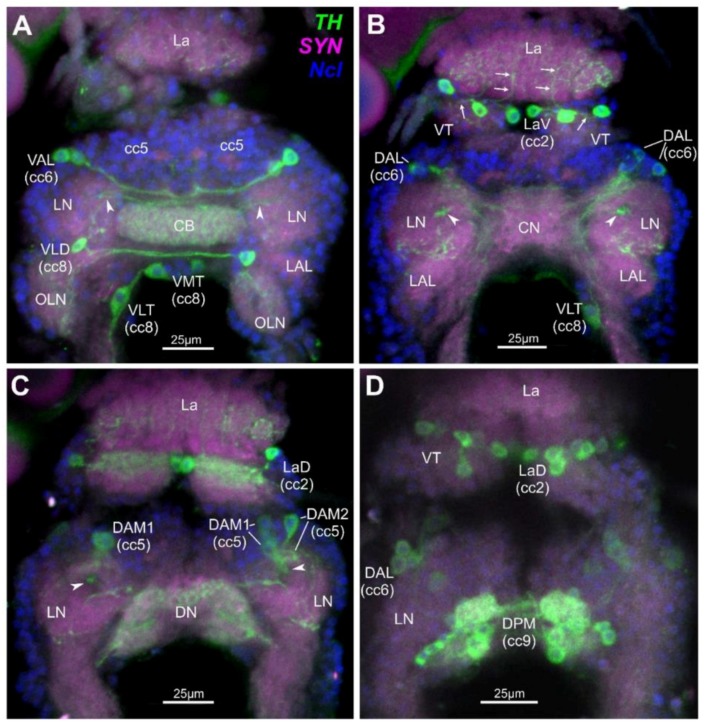
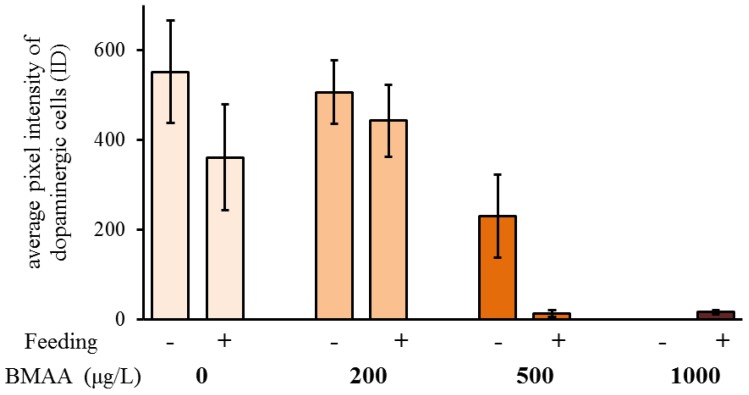
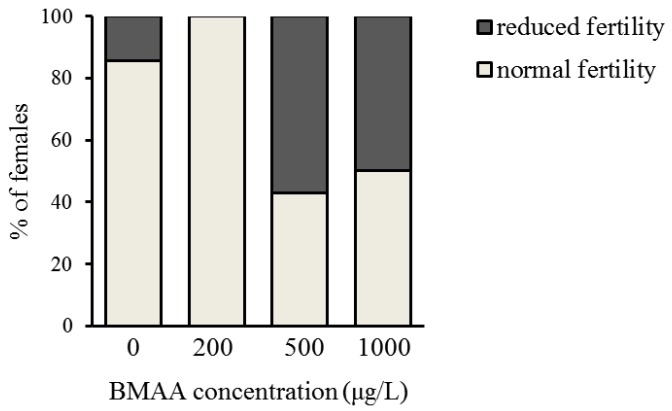
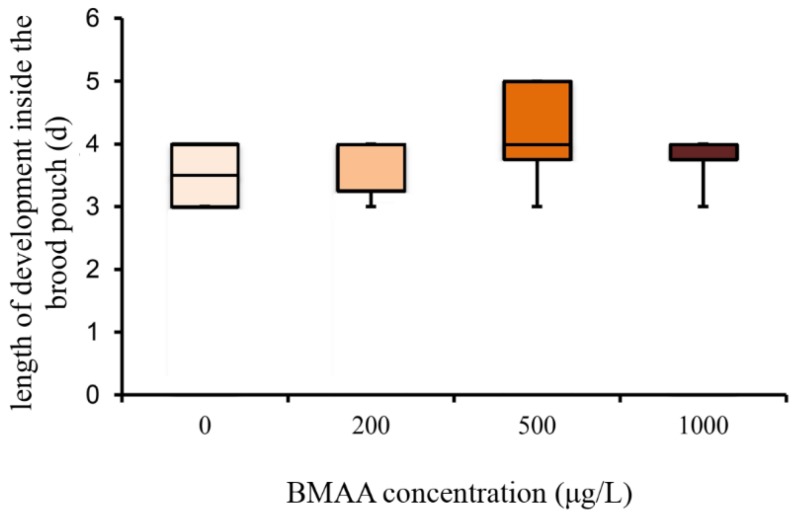
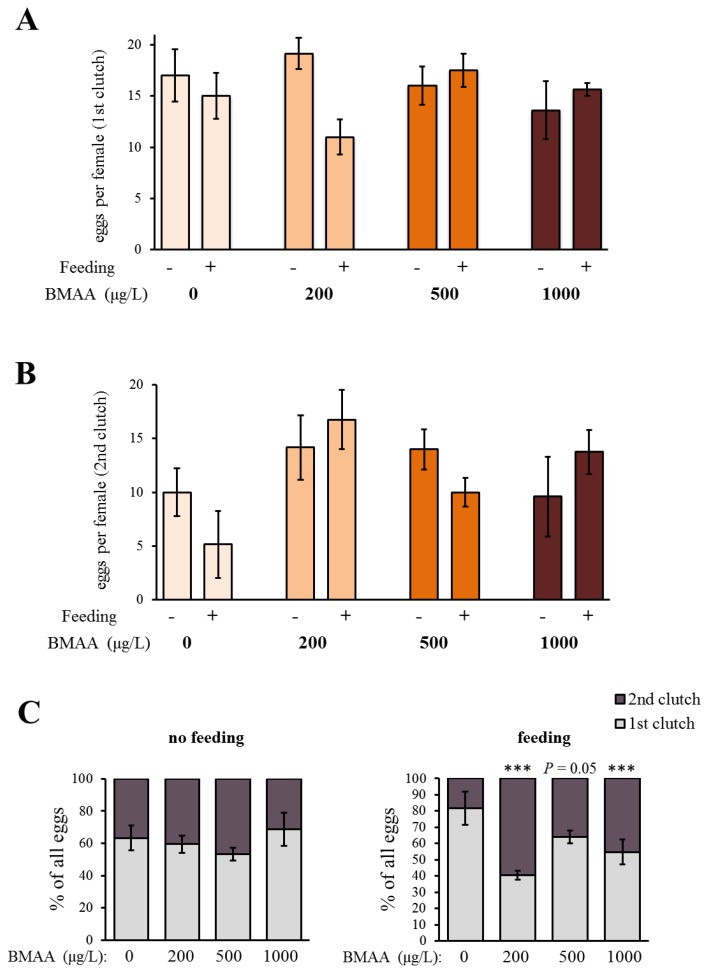
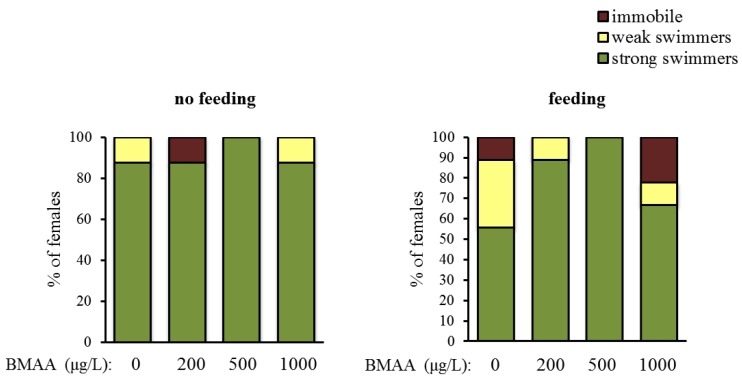
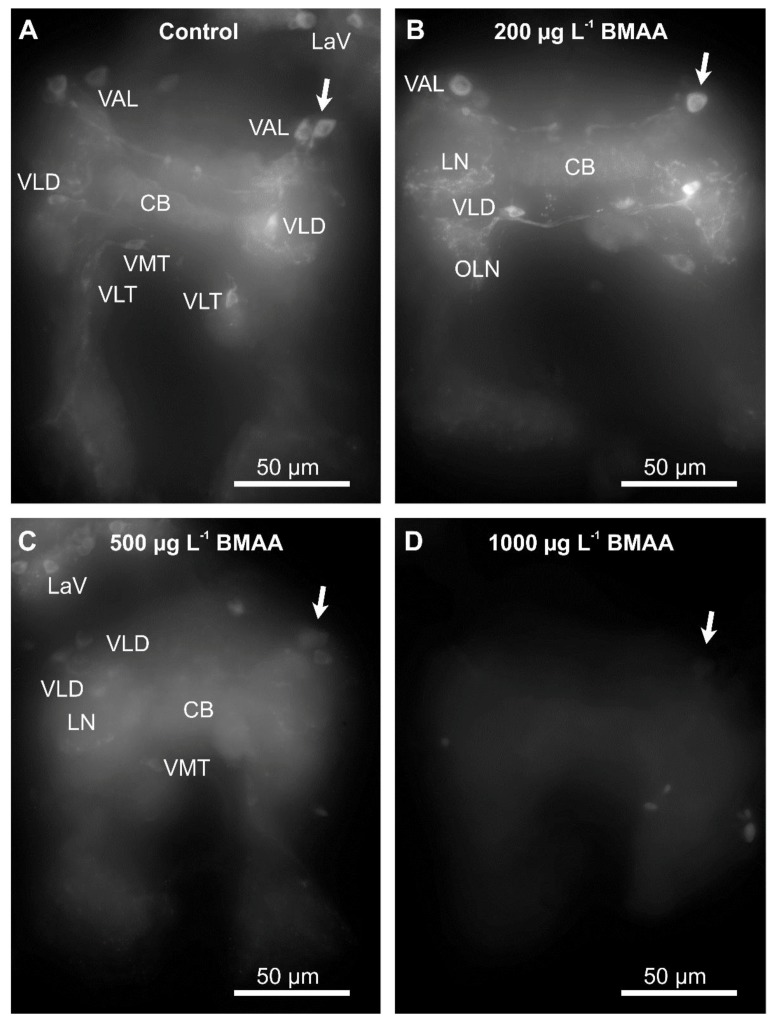
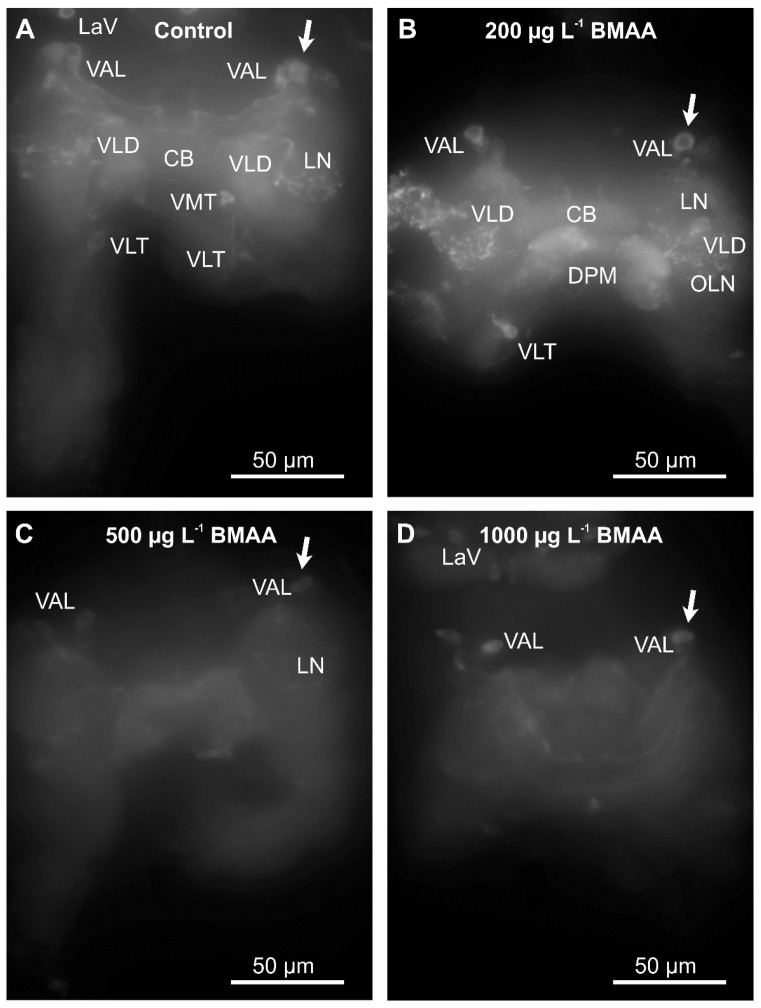
The non-proteinogenic amino acid beta-methyl-amino-l-alanine (BMAA) is a neurotoxin produced by cyanobacteria. BMAA accumulation in the brain of animals via biomagnification along the food web can contribute to the development of neurodegenerative diseases such as Amyotrophic lateral sclerosis/Parkinsonism dementia complex (ALS/PDC), the latter being associated with a loss of dopaminergic neurons. is an important microcrustacean zooplankton species that plays a key role in aquatic food webs, and BMAA-producing cyanobacteria often form part of their diet. Here, we tested the effects of BMAA on putative neurodegeneration of newly identified specific dopaminergic neurons in the optic ganglia/brain complex of using quantitative tyrosine-hydroxylase immunohistochemistry and fluorescence cytometry. The dopaminergic system was analysed in fed and starved isogenic adults incubated under different BMAA concentrations over 4 days. Increased BMAA concentration showed significant decrease in the stainability of dopaminergic neurons of , with fed animals showing a more extreme loss. Furthermore, higher BMAA concentrations tended to increase offspring mortality during incubation. These results are indicative of ingested BMAA causing neurodegeneration of dopaminergic neurons in and adversely affecting reproduction. This may imply similar effects of BMAA on known human neurodegenerative diseases involving dopaminergic neurons.
非蛋白氨基酸β-甲基-氨基-l-丙氨酸(BMAA)是一种由蓝藻产生的神经毒素。BMAA 可通过食物链中的生物放大作用在动物的大脑中积累,从而导致神经退行性疾病的发展,如肌萎缩侧索硬化症/帕金森病痴呆症复合征(ALS/PDC),后者与多巴胺能神经元的丧失有关。卤虫是一种重要的小型浮游甲壳动物,在水生食物网中起着关键作用,而产生 BMAA 的蓝藻通常是它们饮食的一部分。在这里,我们使用定量酪氨酸羟化酶免疫组织化学和荧光细胞术测试了 BMAA 对新鉴定的光神经节/脑复合体中特定多巴胺能神经元的潜在神经退行性变的影响。在 4 天的不同 BMAA 浓度下,对 fed 和饥饿的同基因 成虫进行了多巴胺能系统分析。随着 BMAA 浓度的增加, 的多巴胺能神经元的染色性显著降低,而 fed 动物的损失更为极端。此外,较高的 BMAA 浓度往往会增加孵育过程中的后代死亡率。这些结果表明,摄入的 BMAA 会导致 中多巴胺能神经元的神经退行性变,并对繁殖产生不利影响。这可能意味着 BMAA 对涉及多巴胺能神经元的已知人类神经退行性疾病具有类似的影响。