Department of Surgery, School of Clinical Medicine, University of Cambridge, Cambridge, UK.
Department of Cardiothoracic Transplantation, Papworth Hospital, Cambridge, UK.
Am J Transplant. 2019 May;19(5):1371-1379. doi: 10.1111/ajt.15212. Epub 2019 Feb 5.
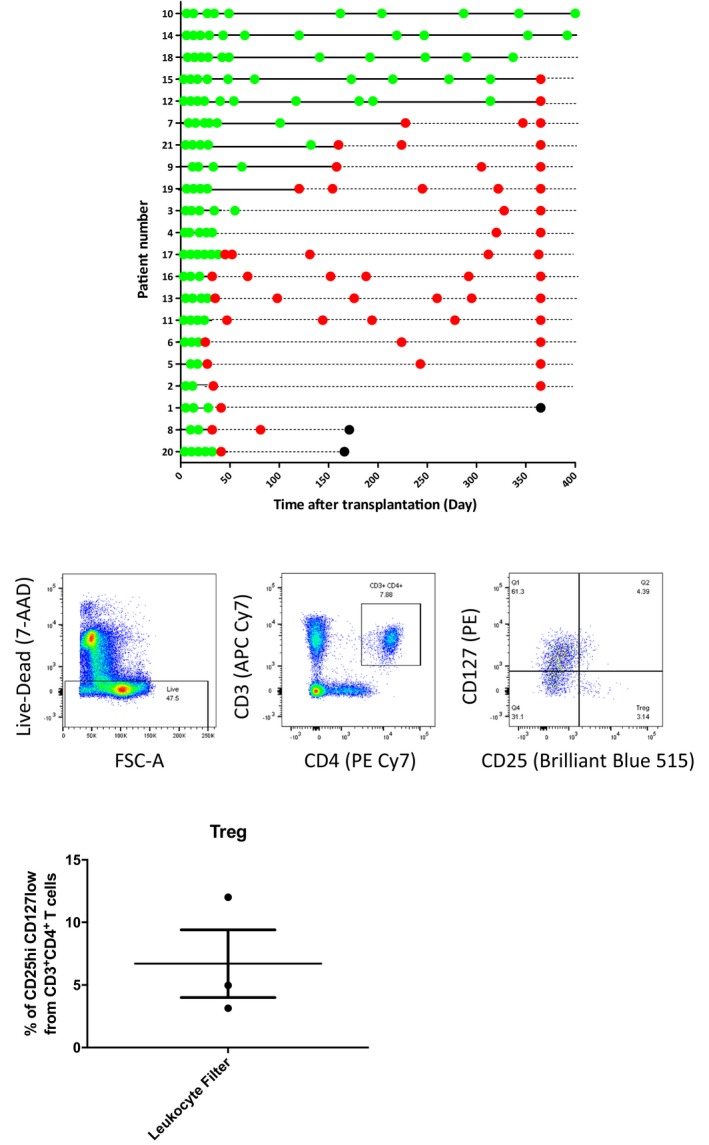
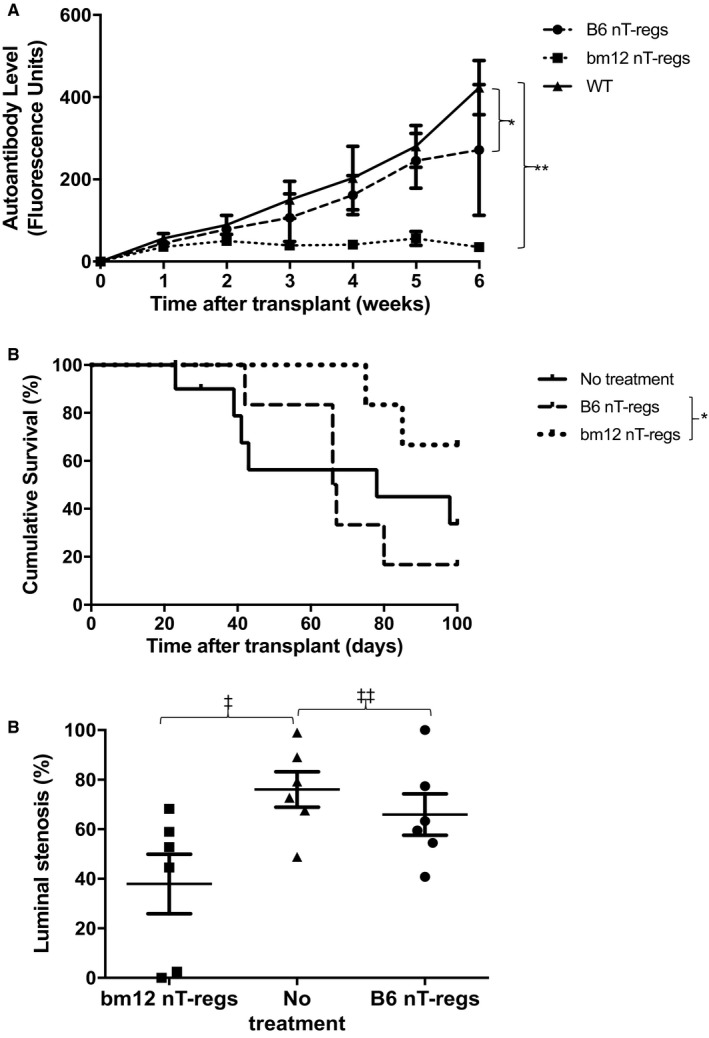
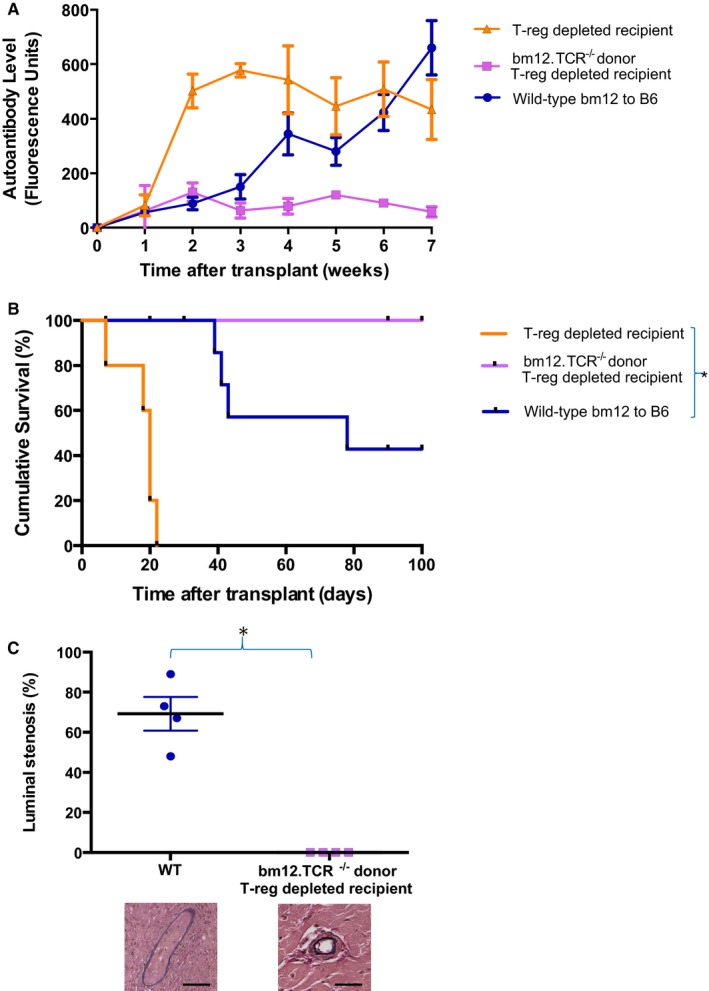
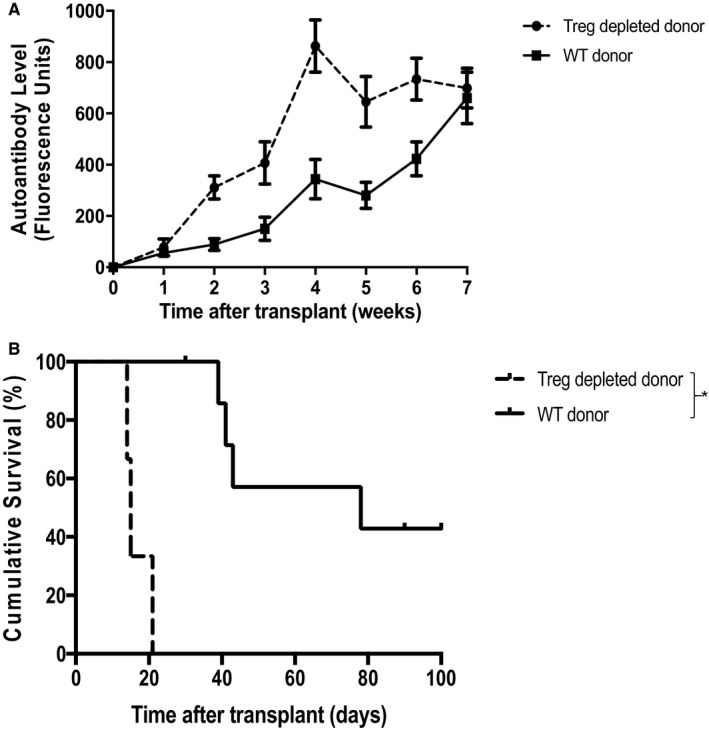
Tissue resident lymphocytes are present within many organs, and are presumably transferred at transplantation, but their impact on host immunity is unclear. Here, we examine whether transferred donor natural regulatory CD4 T cells (nT-regs) inhibit host alloimmunity and prolong allograft survival. Transfer of donor-strain lymphocytes was first assessed by identifying circulating donor-derived CD4 T cells in 21 consecutive human lung transplant recipients, with 3 patterns of chimerism apparent: transient, intermediate, and persistent (detectable for up to 6 weeks, 6 months, and beyond 1 year, respectively). The potential for transfer of donor nT-regs was then confirmed by analysis of leukocyte filters recovered from ex vivo normothermic perfusion circuits of human kidneys retrieved for transplantation. Finally, in a murine model of cardiac allograft vasculopathy, depletion of donor CD4 nT-regs before organ recovery resulted in markedly accelerated heart allograft rejection and augmented host effector antibody responses. Conversely, adoptive transfer or purified donor-strain nT-regs inhibited host humoral immunity and prolonged allograft survival, and more effectively so than following administration of recipient nT-regs. In summary, following transplantation, passenger donor-strain nT-regs can inhibit host adaptive immune responses and prolong allograft survival. Isolated donor-derived nT-regs may hold potential as a cellular therapy to improve transplant outcomes.
组织驻留淋巴细胞存在于许多器官中,推测在移植时会被转移,但它们对宿主免疫的影响尚不清楚。在这里,我们研究了转移的供体天然调节性 CD4 T 细胞(nT-reg)是否抑制宿主同种异体免疫并延长移植物的存活期。首先通过在 21 名连续的人类肺移植受者中鉴定循环供体来源的 CD4 T 细胞,评估供体淋巴细胞的转移,有 3 种嵌合模式明显:短暂、中间和持续(分别可检测长达 6 周、6 个月和 1 年以上)。然后通过分析从用于移植的人类肾脏的体外常温灌流回路中回收的白细胞过滤器来确认供体 nT-reg 转移的可能性。最后,在心脏同种异体移植物血管病的小鼠模型中,在器官回收前耗尽供体 CD4 nT-reg 导致明显加速的心脏同种异体移植物排斥反应和增强宿主效应抗体反应。相反,过继转移或纯化的供体株 nT-reg 抑制宿主体液免疫并延长移植物存活期,而且比给予受者 nT-reg 更有效。总之,移植后,过客供体株 nT-reg 可抑制宿主适应性免疫反应并延长移植物存活期。分离的供体来源的 nT-reg 可能作为一种细胞疗法具有改善移植结果的潜力。