School of Clinical Medicine, University of Cambridge, Cambridge, United Kingdom.
Department of Pathology, Papworth Hospital, Papworth Everard, United Kingdom.
Front Immunol. 2019 Jan 22;9:3039. doi: 10.3389/fimmu.2018.03039. eCollection 2018.
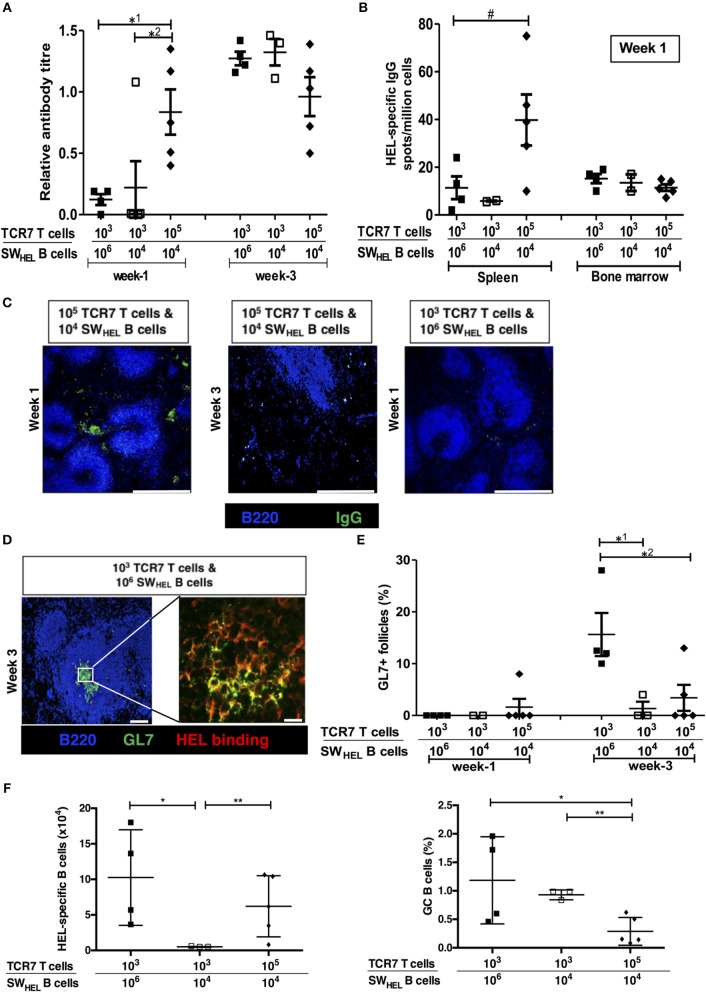
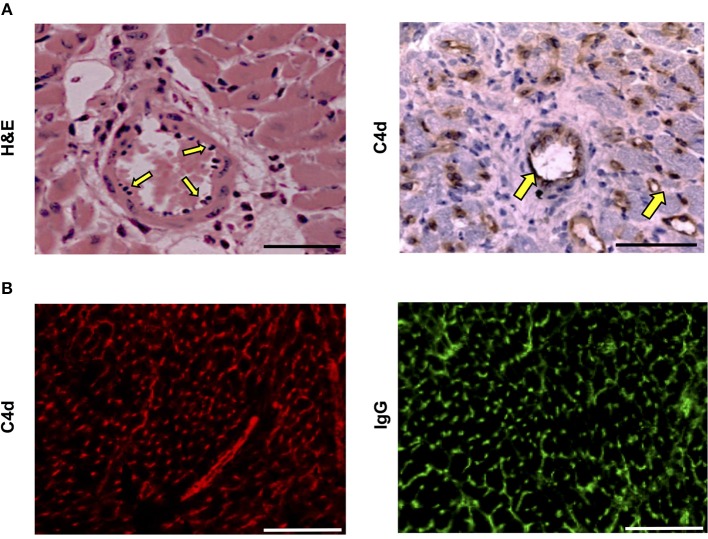
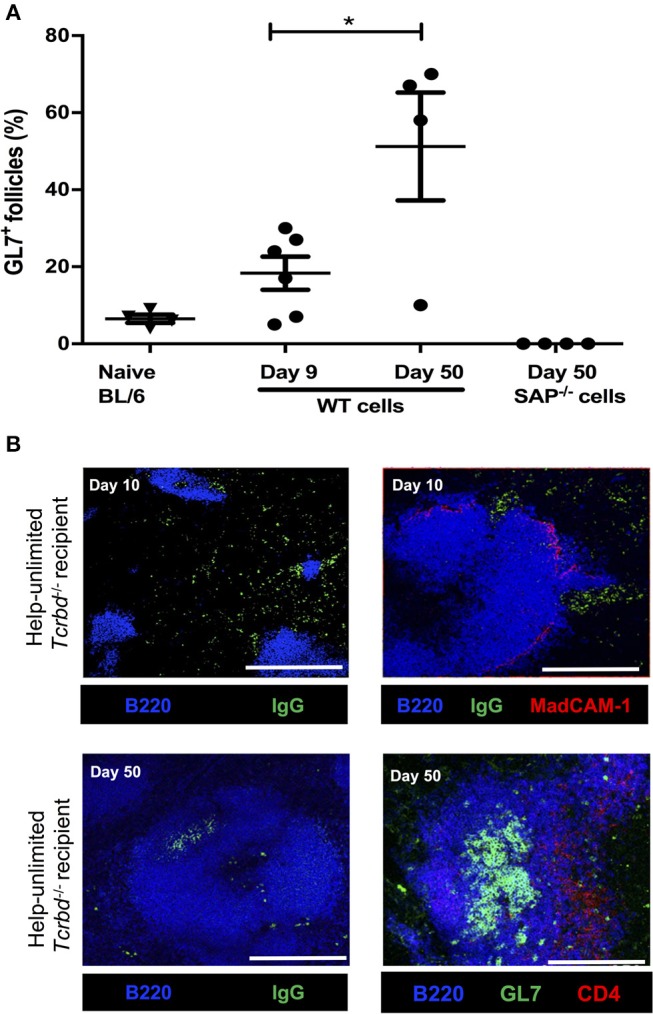
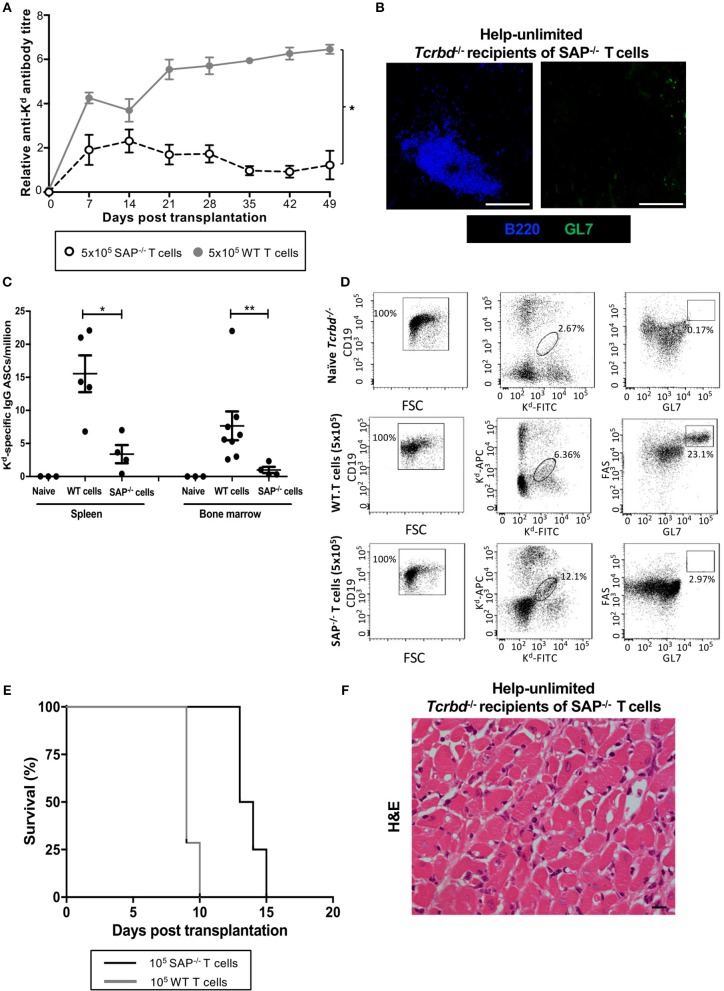
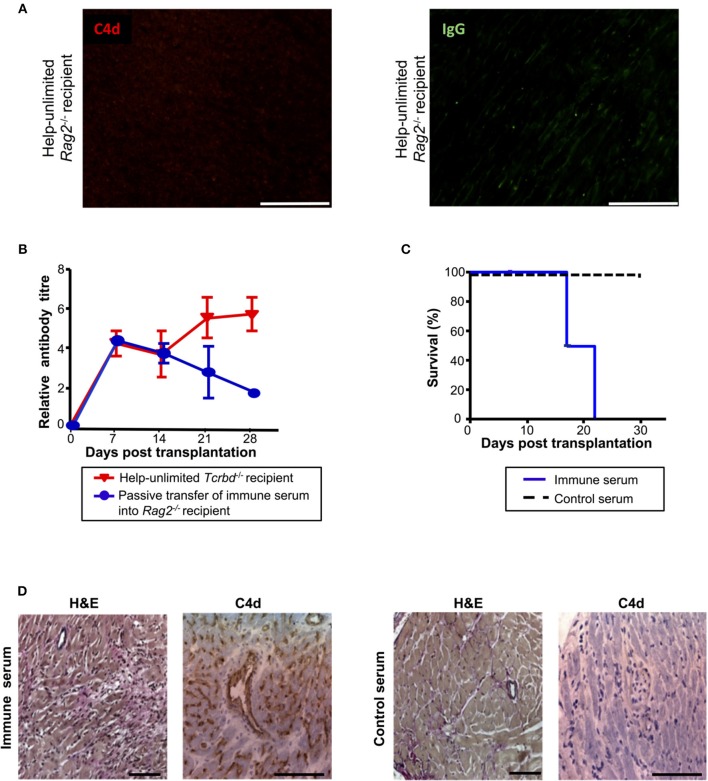
Humoral alloimmunity is now recognized as a major determinant of transplant outcome. MHC glycoprotein is considered a typical T-dependent antigen, but the nature of the T cell alloresponse that underpins alloantibody generation remains poorly understood. Here, we examine how the relative frequencies of alloantigen-specific B cells and helper CD4 T cells influence the humoral alloimmune response and how this relates to antibody-mediated rejection (AMR). An MHC-mismatched murine model of cardiac AMR was developed, in which T cell help for alloantibody responses in T cell deficient () C57BL/6 recipients against donor H-2K MHC class I alloantigen was provided by adoptively transferred "TCR75" CD4 T cells that recognize processed H-2K allopeptide via the indirect-pathway. Transfer of large numbers (5 × 10) of TCR75 CD4 T cells was associated with rapid development of robust class-switched anti-H-2K humoral alloimmunity and BALB/c heart grafts were rejected promptly (MST 9 days). Grafts were not rejected in T and B cell deficient recipients that were reconstituted with TCR75 CD4 T cells or in control (non-reconstituted) recipients, suggesting that the transferred TCR75 CD4 T cells were mediating graft rejection principally by providing help for effector alloantibody responses. In support, acutely rejecting BALB/c heart grafts exhibited hallmark features of acute AMR, with widespread complement C4d deposition, whereas cellular rejection was not evident. In addition, passive transfer of immune serum from rejecting mice to recipients resulted in eventual BALB/c heart allograft rejection (MST 20 days). Despite being long-lived, the alloantibody responses observed at rejection of the BALB/c heart grafts were predominantly generated by extrafollicular foci: splenic germinal center (GC) activity had not yet developed; IgG secreting cells were confined to the splenic red pulp and bridging channels; and, most convincingly, rapid graft rejection still occurred when recipients were reconstituted with similar numbers of TCR75 CD4 T cells that are genetically incapable of providing T follicular helper cell function for generating GC alloimmunity. Similarly, alloantibody responses generated in recipients reconstituted with smaller number of wild-type TCR75 CD4 T cells (10), although long-lasting, did not have a discernible extrafollicular component, and grafts were rejected much more slowly (MST 50 days). By modeling antibody responses to Hen Egg Lysozyme protein, we confirm that a high ratio of antigen-specific helper T cells to B cells favors development of the extrafollicular response, whereas GC activity is favored by a relatively high ratio of B cells. In summary, a relative abundance of helper CD4 T cells favors development of strong extrafollicular alloantibody responses that mediate acute humoral rejection, without requirement for GC activity. This work is composed of two parts, of which this is Part I. Please read also Part II: Chhabra et al., 2019.
体液性同种异体免疫现在被认为是移植结果的主要决定因素。MHC 糖蛋白被认为是一种典型的 T 依赖性抗原,但支持同种抗体产生的 T 细胞同种异体反应的性质仍知之甚少。在这里,我们研究了同种抗原特异性 B 细胞和辅助性 CD4 T 细胞的相对频率如何影响体液性同种免疫反应,以及这与抗体介导的排斥反应(AMR)有何关系。建立了一种 MHC 错配的心脏 AMR 小鼠模型,在该模型中,通过过继转移通过间接途径识别加工的 H-2K 同种肽的 TCR75 CD4 T 细胞,为 T 细胞缺陷()C57BL/6 受者针对供体 H-2K MHC Ⅰ类同种抗原的同种抗体反应提供 T 细胞帮助。转移大量(5×10)TCR75 CD4 T 细胞与快速发展的强类转换抗-H-2K 体液同种免疫有关,并且 BALB/c 心脏移植物迅速被排斥(MST 9 天)。在 T 和 B 细胞缺陷的接受者中,TCR75 CD4 T 细胞的重建或在对照(未重建)接受者中未排斥移植物,表明转移的 TCR75 CD4 T 细胞主要通过提供效应性同种抗体反应的帮助来介导移植物排斥。支持这一观点的是,急性排斥的 BALB/c 心脏移植物表现出急性 AMR 的标志性特征,广泛存在补体 C4d 沉积,而没有明显的细胞排斥。此外,将来自排斥小鼠的免疫血清被动转移到接受者中,最终导致 BALB/c 心脏同种移植物排斥(MST 20 天)。尽管寿命长,但在 BALB/c 心脏移植物排斥时观察到的同种抗体反应主要由滤泡外焦点产生:脾脏生发中心(GC)活性尚未发育;IgG 分泌细胞局限于脾脏红髓和桥接通道;最有说服力的是,当接受者用类似数量的不能提供产生 GC 同种免疫的滤泡辅助性 T 细胞功能的遗传缺陷型 TCR75 CD4 T 细胞重建时,仍然会迅速发生移植物排斥。同样,用较少数量(10)野生型 TCR75 CD4 T 细胞重建的接受者中产生的同种抗体反应虽然持久,但没有明显的滤泡外成分,移植物排斥速度要慢得多(MST 50 天)。通过模拟针对鸡卵溶菌酶蛋白的抗体反应,我们证实抗原特异性辅助性 T 细胞与 B 细胞的相对比例有利于滤泡外反应的发展,而 GC 活性则有利于 B 细胞的相对比例较高。总之,辅助性 CD4 T 细胞的相对丰度有利于产生强烈的滤泡外同种抗体反应,从而介导急性体液排斥反应,而不需要 GC 活性。这项工作由两部分组成,这是第一部分。请阅读第二部分:Chhabra 等人,2019 年。