School of Life Science, Beijing Institute of Technology, Beijing 100081, China.
Department of Interventional Neuroradiology, Beijing Tiantan Hospital, Capital Medical University, Beijing 100050, China.
Theranostics. 2018 Nov 10;8(20):5758-5771. doi: 10.7150/thno.28944. eCollection 2018.
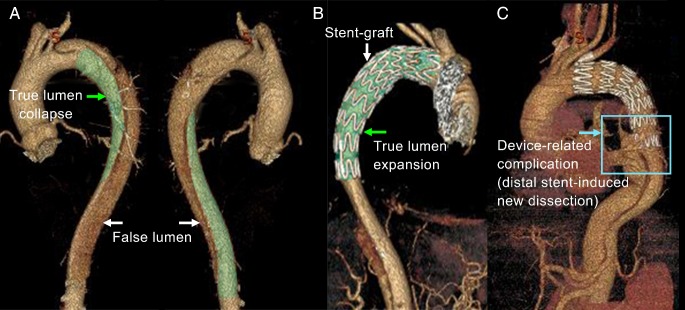
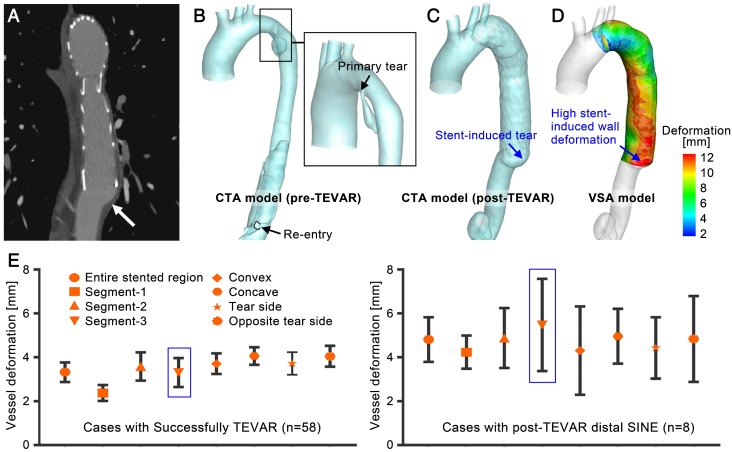
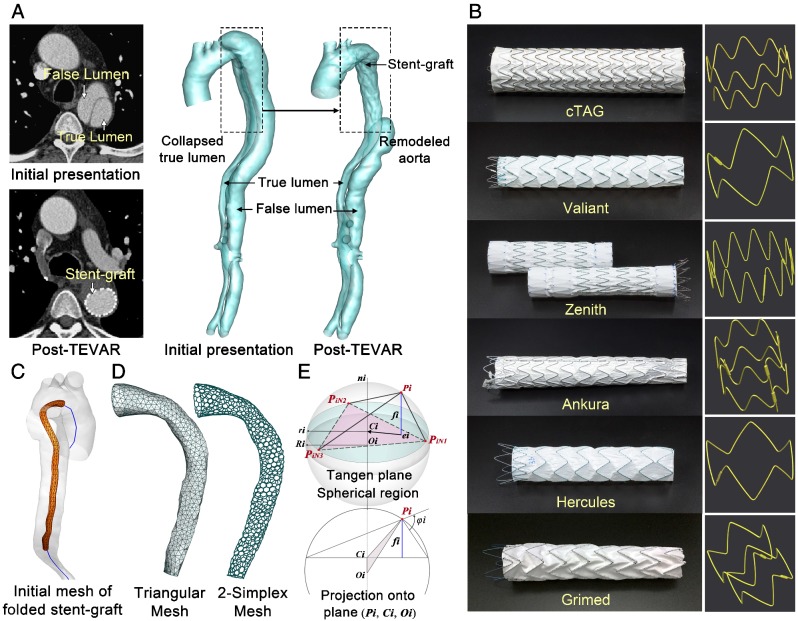
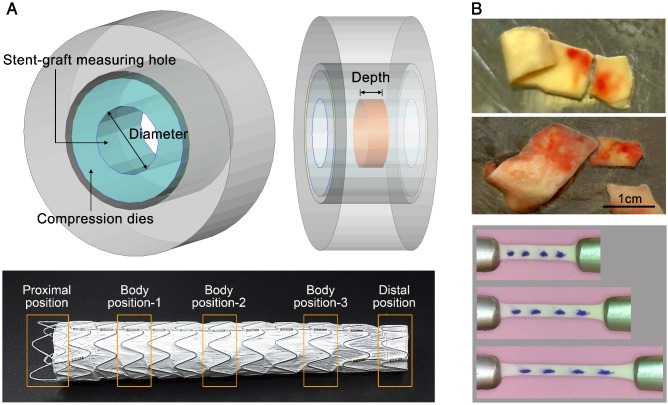
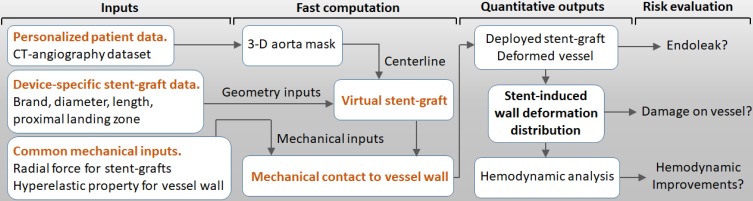
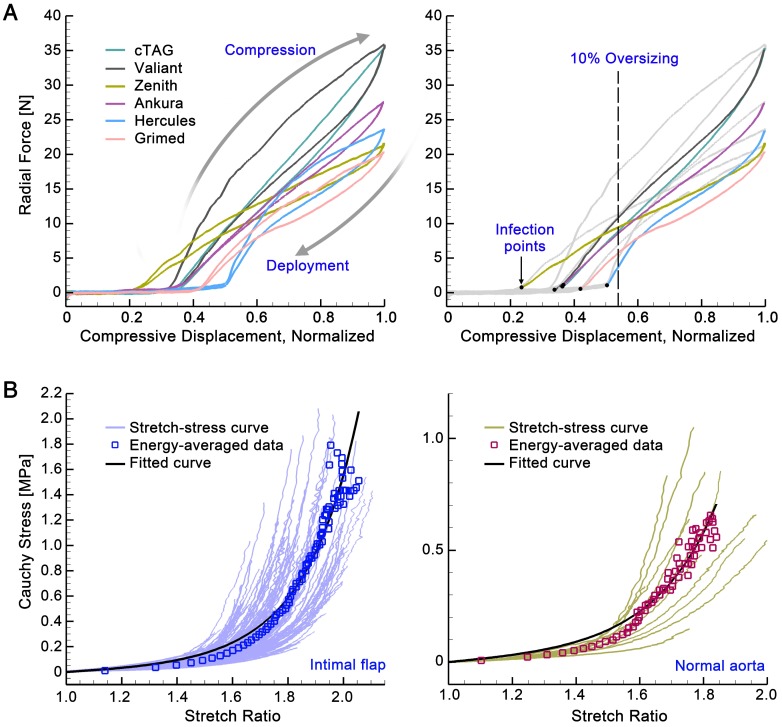
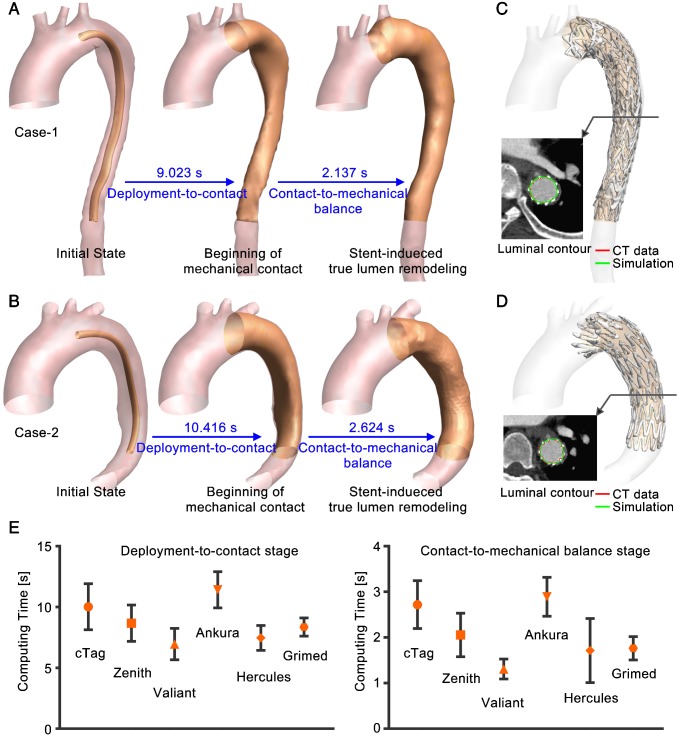
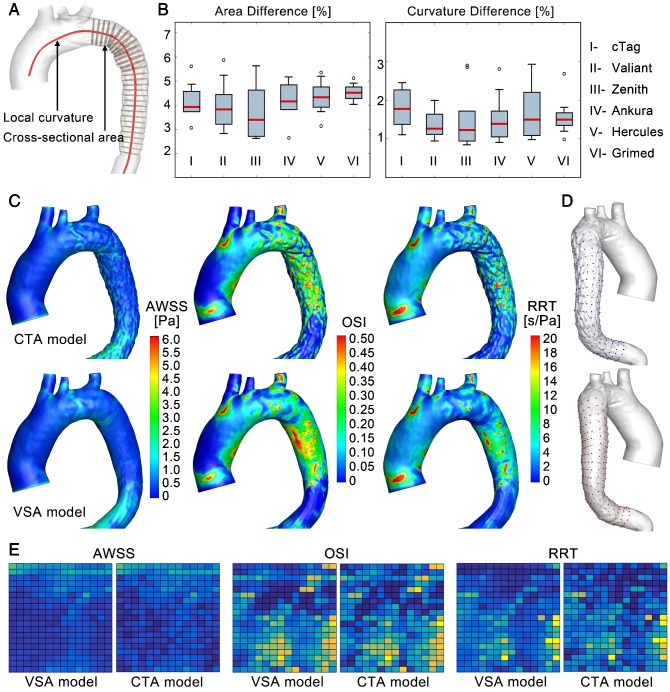
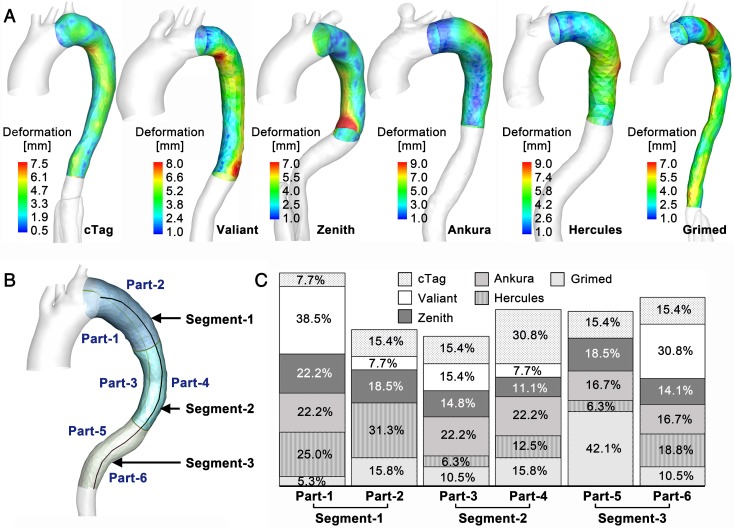
In aortic endovascular repair, the prediction of stented vessel remodeling informs treatment plans and risk evaluation; however, there are no highly accurate and efficient methods to quantitatively simulate stented vessels. This study developed a fast virtual stenting algorithm to simulate stent-induced aortic remodeling to assist in real-time thoracic endovascular aortic repair planning. The virtual stenting algorithm was established based on simplex deformable mesh and mechanical contact analysis. The key parameters of the mechanical contact analysis were derived from mechanical tests on aortic tissue (n=40) and commonly used stent-grafts (n=6). Genetic algorithm was applied to select weighting parameters. Testing and validation of the algorithm were performed using pre- and post-treatment computed tomography angiography datasets of type-B aortic dissection cases (n=66). The algorithm was efficient in simulating stent-induced aortic deformation (mean computing time on a single processor: 13.78±2.80s) and accurate at the morphological (curvature difference: 1.57±0.57%; cross-sectional area difference: 4.11±0.85%) and hemodynamic (similarity of wall shear stress-derived parameters: 90.16-90.94%) levels. Stent-induced wall deformation was higher (p<0.05) in distal stent-induced new entry cases than in successfully treated cases, and this deformation did not differ significantly among the different stent groups. Additionally, the high stent-induced wall deformation regions and the new-entry sites overlapped, indicating the usefulness of wall deformation to evaluate the risks of device-induced complications. The novel algorithm provided fast real-time and accurate predictions of stent-graft deployment with luminal deformation tracking, thereby potentially informing individualized stenting planning and improving endovascular aortic repair outcomes. Large, multicenter studies are warranted to extend the algorithm validation and determine stress-induced wall deformation cutoff values for the risk stratification of particular complications.
在主动脉血管腔内修复术中,预测支架血管重塑有助于治疗计划和风险评估;然而,目前还没有高度准确和高效的方法来定量模拟支架血管。本研究开发了一种快速虚拟支架置入算法,以模拟支架引起的主动脉重塑,辅助实时胸主动脉血管腔内修复术计划。虚拟支架置入算法基于单纯形可变形网格和力学接触分析建立。力学接触分析的关键参数源自对主动脉组织(n=40)和常用支架移植物(n=6)的力学测试。遗传算法用于选择加权参数。该算法通过 66 例 B 型主动脉夹层病例的术前和术后 CT 血管造影数据集进行了测试和验证。该算法在模拟支架引起的主动脉变形方面效率很高(单个处理器上的平均计算时间:13.78±2.80s),在形态学(曲率差异:1.57±0.57%;横截面积差异:4.11±0.85%)和血流动力学(壁切应力衍生参数相似性:90.16-90.94%)方面都很准确。与成功治疗的病例相比,远端支架置入新入口病例的支架诱导的壁变形更高(p<0.05),不同支架组之间的这种变形没有显著差异。此外,高支架诱导壁变形区域与新入口部位重叠,表明壁变形可用于评估器械诱导并发症的风险。该新算法提供了快速实时和准确的支架置入后管腔变形跟踪预测,从而可能为个体化支架置入计划提供信息,并改善血管腔内修复术的结果。需要进行大型、多中心研究,以扩展算法验证,并确定用于特定并发症风险分层的应力诱导壁变形截断值。