The Division of Plant Sciences, College of Agriculture, Food and Natural Resources, University of Missouri School of Medicine, Christopher S. Bond Life Sciences Center University of Missouri, 1201 Rollins St, Columbia, MO, 65201, USA.
The Department of Surgery, University of Missouri School of Medicine, Christopher S. Bond Life Sciences Center University of Missouri, 1201 Rollins St, Columbia, MO, 65201, USA.
Plant J. 2019 Apr;98(1):126-141. doi: 10.1111/tpj.14205. Epub 2019 Jan 30.
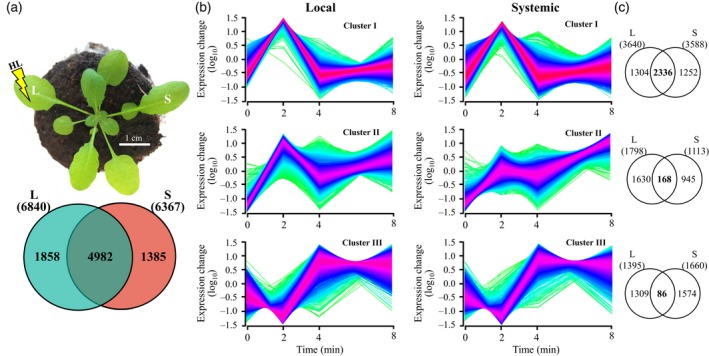
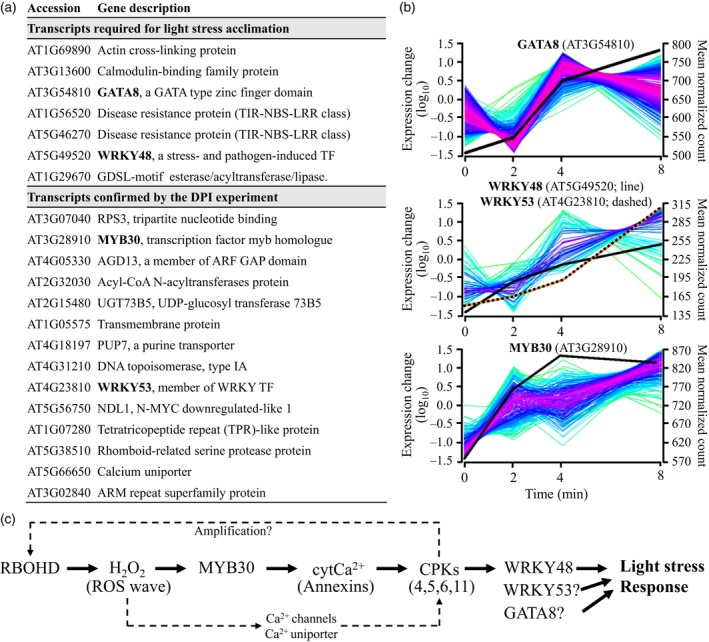
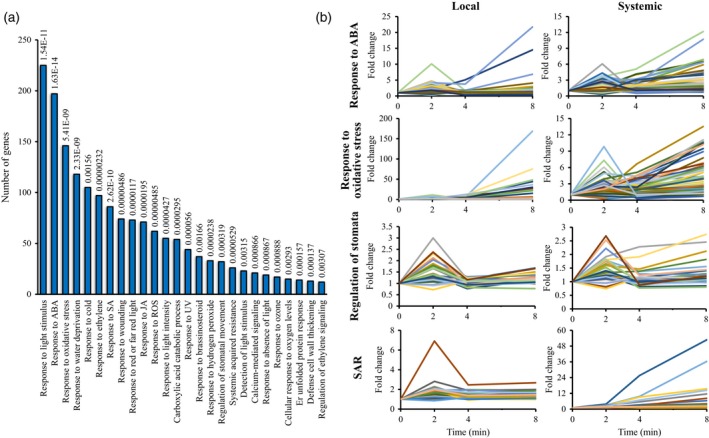
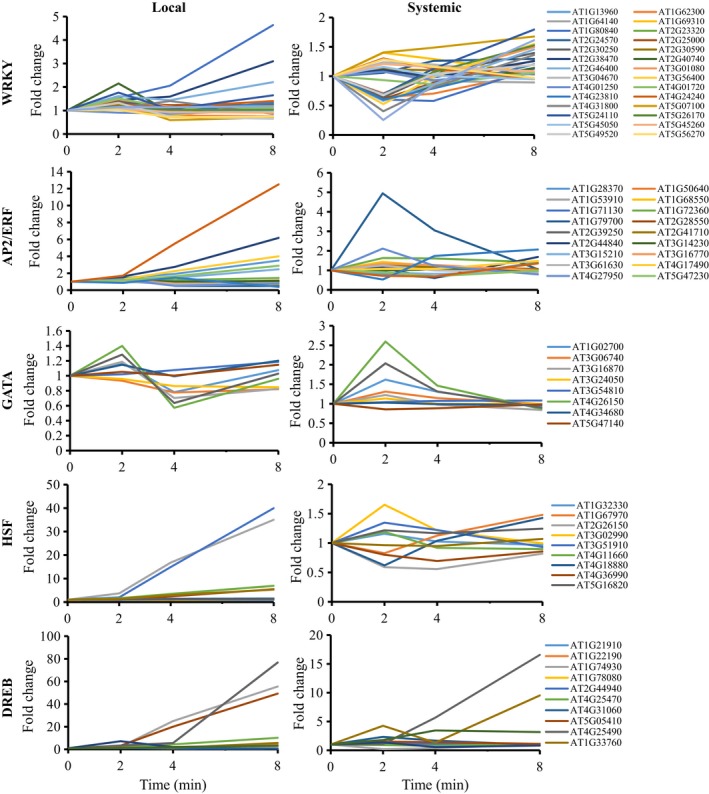
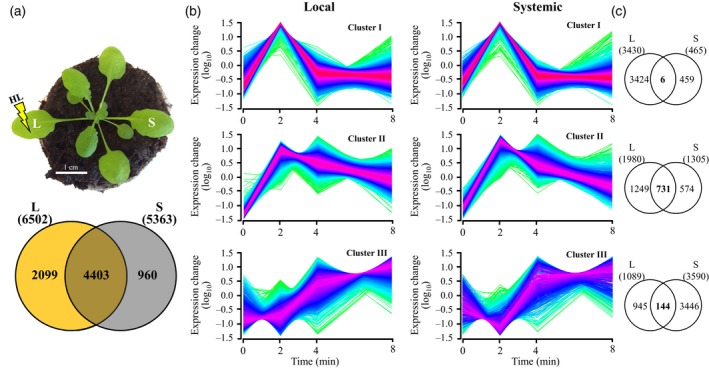
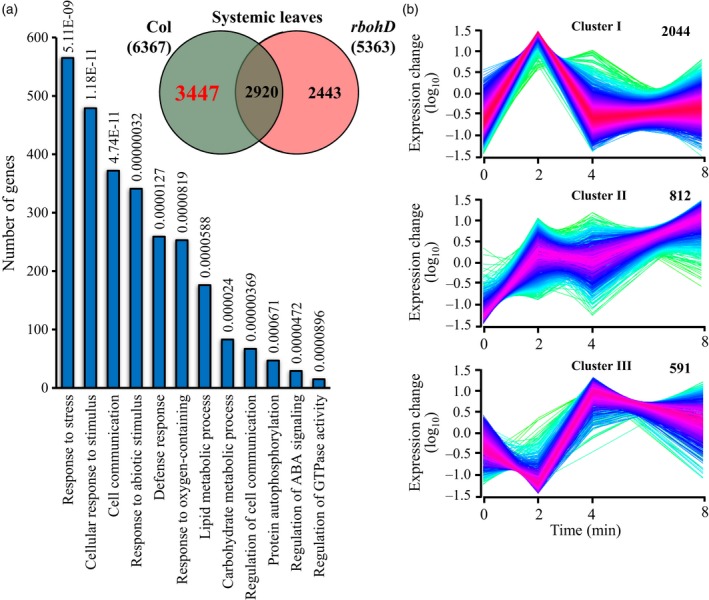
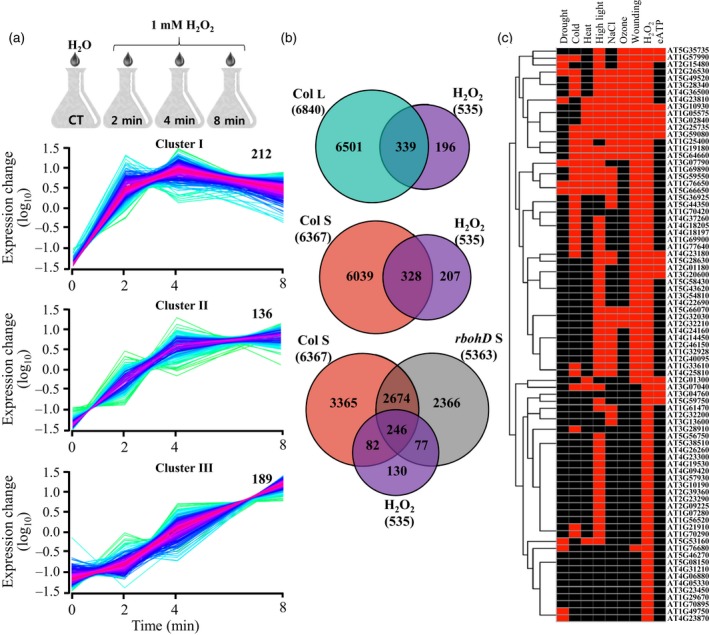
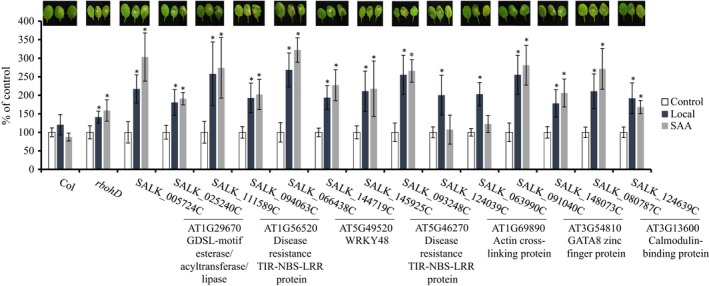
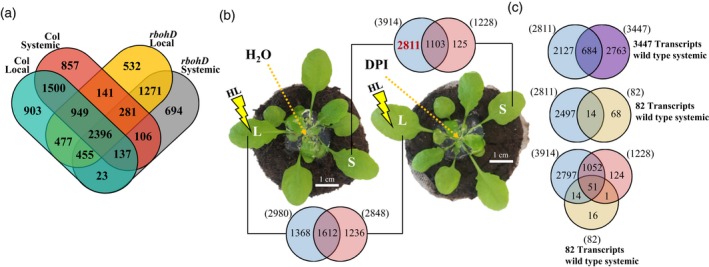
Systemic acquired acclimation (SAA) plays a key role in optimizing growth and preventing damage associated with fluctuating or abrupt changes in the plant environment. To be effective, SAA has to occur at a rapid rate and depend on rapid signaling pathways that transmit signals from affected tissues to all parts of the plant. Although recent studies have identified several different rapid systemic signaling pathways that could mediate SAA, very little information is known about the extent of their involvement in mediating transcriptomic responses. Here we reveal that the systemic transcriptomic response of plants to excess light stress is extensive in its context and involves an early (2 min) and transient stage of transcript expression that includes thousands of genes. This early response is dependent on the respiratory burst oxidase homolog D protein, and the function of the reactive oxygen species (ROS) wave. We further identify a core set of transcripts associated with the ROS wave and suggest that some of these transcripts are involved in linking ROS with calcium signaling. Priming of a systemic leaf to become acclimated to a particular stress during SAA involves thousands of transcripts that display a rapid and transient expression pattern driven by the ROS wave.
系统性获得性适应(SAA)在优化生长和防止与植物环境中波动或突然变化相关的损伤方面起着关键作用。为了有效,SAA 必须快速发生,并依赖于快速信号通路,这些信号通路将信号从受影响的组织传递到植物的所有部位。尽管最近的研究已经确定了几种不同的快速系统性信号通路,这些信号通路可以介导 SAA,但对于它们在介导转录组反应中的参与程度知之甚少。在这里,我们揭示了植物对过量光胁迫的系统性转录组反应在其背景下是广泛的,涉及一个早期(2 分钟)和短暂的转录表达阶段,包括数千个基因。这种早期反应依赖于呼吸爆发氧化酶同源物 D 蛋白和活性氧物种(ROS)波的功能。我们进一步确定了与 ROS 波相关的一组核心转录本,并表明其中一些转录本参与将 ROS 与钙信号联系起来。在 SAA 期间,通过 ROS 波驱动,成千上万的转录本表现出快速和短暂的表达模式,使系统叶片适应特定的胁迫。