Department of Molecular and Cell Biology, University of California, Berkeley, Berkeley, United States.
Howard Hughes Medical Institute, University of California, Berkeley, Berkeley, United States.
Elife. 2018 Dec 17;7:e41482. doi: 10.7554/eLife.41482.
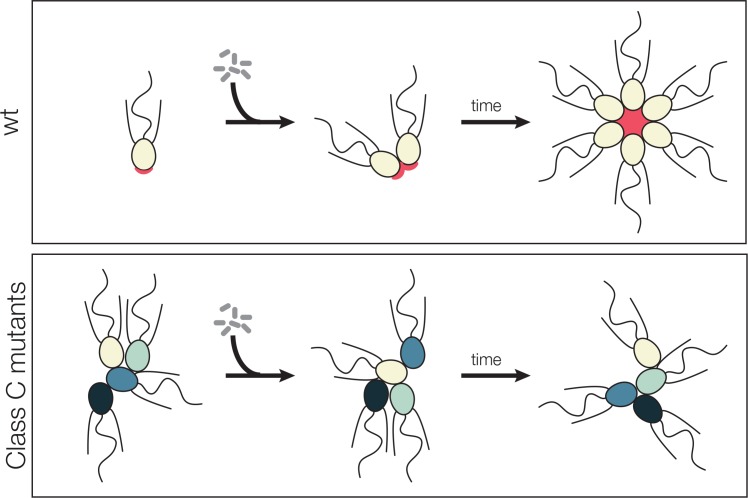
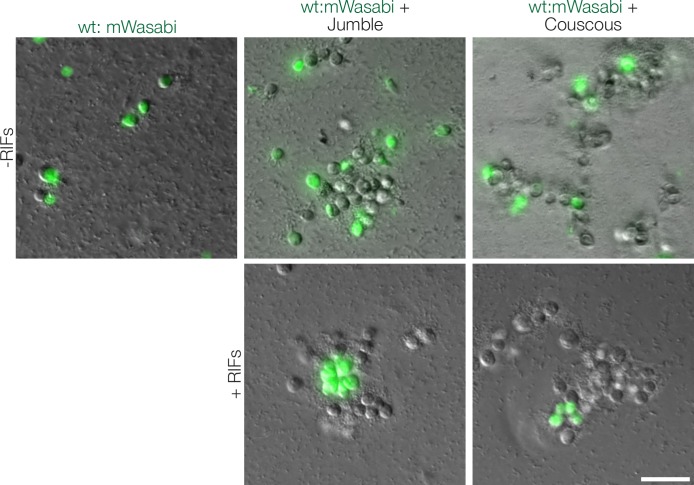
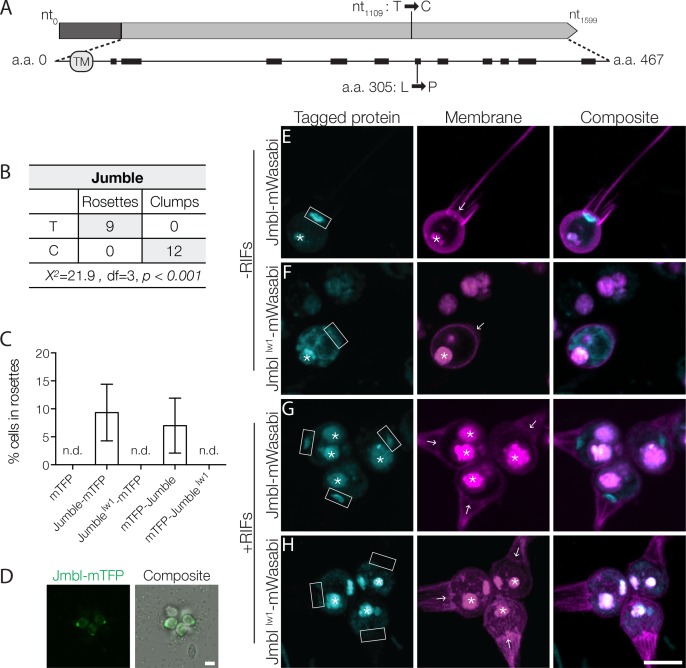
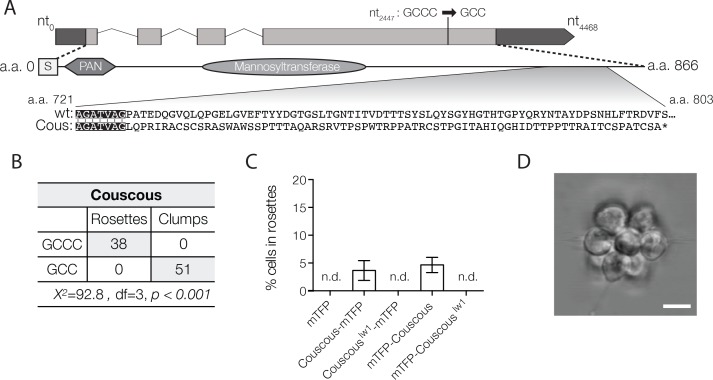
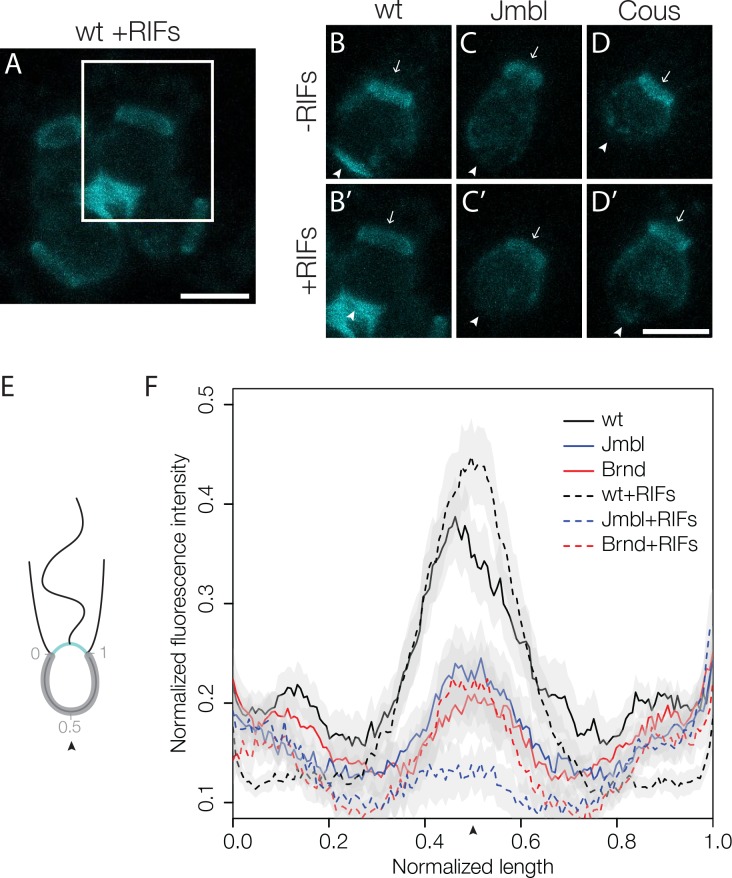
In a previous study we established forward genetics in the choanoflagellate and found that a C-type lectin gene is required for rosette development (Levin , 2014). Here we report on critical improvements to genetic screens in while also investigating the genetic basis for rosette defect mutants in which single cells fail to develop into orderly rosettes and instead aggregate promiscuously into amorphous clumps of cells. Two of the mutants, Jumble and Couscous, mapped to lesions in genes encoding two different predicted glycosyltransferases and displayed aberrant glycosylation patterns in the basal extracellular matrix (ECM). In animals, glycosyltransferases sculpt the polysaccharide-rich ECM, regulate integrin and cadherin activity, and, when disrupted, contribute to tumorigenesis. The finding that predicted glycosyltransferases promote proper rosette development and prevent cell aggregation in suggests a pre-metazoan role for glycosyltransferases in regulating development and preventing abnormal tumor-like multicellularity.
在之前的研究中,我们在领鞭毛虫中建立了正向遗传学,并发现 C 型凝集素基因对于玫瑰结的发育是必需的(Levin,2014)。在这里,我们报告了在 中遗传筛选的重要改进,同时也研究了玫瑰结缺陷突变体的遗传基础,这些突变体中单细胞不能发育成有序的玫瑰结,而是随意聚集形成无定形的细胞团。两个突变体,Jumble 和 Couscous,分别定位于编码两个不同预测糖基转移酶的基因中的缺失,并且在基底细胞外基质(ECM)中显示出异常的糖基化模式。在动物中,糖基转移酶塑造富含多糖的 ECM,调节整合素和钙黏蛋白的活性,并且当它们被破坏时,会导致肿瘤发生。预测的糖基转移酶促进领鞭毛虫中正确的玫瑰结发育并防止细胞聚集的发现表明,糖基转移酶在调节发育和防止异常的肿瘤样多细胞性方面具有前后生动物的作用。