Department of Social Sciences Applied to Sport, Physical Activity and Leisure, Sport Sciences Faculty, Universidad Politécnica de Madrid, Madrid, Spain.
PLoS One. 2018 Dec 17;13(12):e0209433. doi: 10.1371/journal.pone.0209433. eCollection 2018.
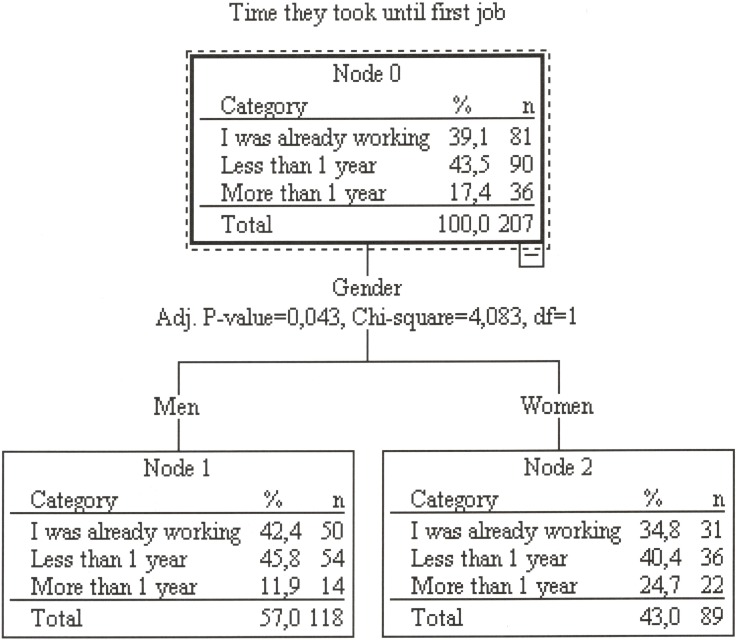
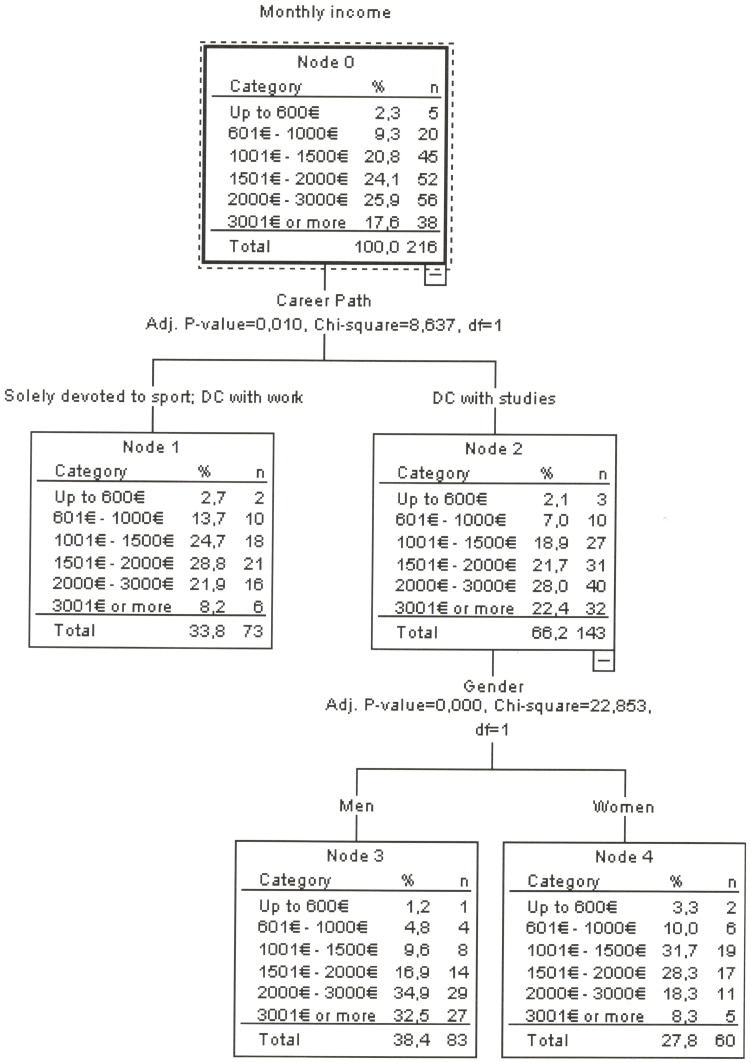
The aims of this study were: i) to examine if Dual Career (DC) pathways are independent of gender, ii) to evaluate whether those athletes who followed a DC experienced less difficulty in their integration into the labor force than the athletes devoted entirely to sport regardless of gender, as well as iii) to analyze whether the type of career path chosen was related with the current labor status, and if differences exist between men and women athletes. A quantitative, cross-sectional, and descriptive study was used based on an ad hoc questionnaire. Two-hundred and twenty-eight retired Olympic athletes completed a questionnaire. The response rate was 28.3%. Athletes who followed a DC with studies had a higher educational level at retirement than those devoted solely to sport and those who followed a DC with work, (χ2(6) = 38.76; P < .001), but no differences were found between men and women (χ2(3) = 3.23; P = .358). Athletes who followed a DC path (with studies or with work) perceived the transition out of sport more positively than those who focused solely on sport (χ2(2) = 7.79; P = .020). Regarding the type of job, more women attained a part-time job (20.9%) than men (3.1%; χ2(5) = 21.83; P = .001). The athletes who followed a DC with studies achieved higher monthly incomes than the other two groups (χ2(2) = 9.08; P = .011). Men athletes achieved higher incomes than women (Z = 5.45; P < .001), but the gender wage gap was apparent for those Olympian athletes considered as the qualified group, probably due to a higher presence of part-time women workers. The findings of this study suggest that future professional opportunities and the transition to the labor market could be made easier by following a DC during the mastery stage. Regardless of career path, women experienced more difficulties in their integration into the job market and there is a wage penalty for highly-qualified women.
i)检验双职业生涯(DC)途径是否独立于性别,ii)评估那些遵循 DC 的运动员是否比那些完全致力于运动的运动员在融入劳动力市场时遇到的困难更少,无论其性别如何,以及 iii)分析所选择的职业道路类型是否与当前的劳动力状况有关,以及男女运动员之间是否存在差异。本研究采用定量、横断和描述性研究方法,基于专门设计的问卷。228 名退役奥运运动员完成了一份问卷。回应率为 28.3%。与仅从事运动的运动员和从事 DC 工作的运动员相比,追随 DC 并接受教育的运动员在退休时具有更高的教育水平(χ2(6) = 38.76;P <.001),但男女运动员之间没有差异(χ2(3) = 3.23;P =.358)。追随 DC 道路(有学业或工作)的运动员比专注于运动的运动员更积极地看待从运动中退役(χ2(2) = 7.79;P =.020)。关于工作类型,更多的女性获得兼职工作(20.9%),而男性则为 3.1%(χ2(5) = 21.83;P =.001)。追随 DC 并接受教育的运动员的月收入高于其他两组(χ2(2) = 9.08;P =.011)。男性运动员的收入高于女性(Z = 5.45;P <.001),但对于那些被认为是合格组的奥运运动员来说,性别工资差距明显,这可能是由于兼职女性工人的比例较高。本研究的结果表明,在掌握阶段遵循 DC 可能会为未来的职业机会和向劳动力市场过渡提供便利。无论职业道路如何,女性在融入劳动力市场方面都面临更多困难,而且高技能女性的工资存在惩罚。