Institute for Biochemical Research (INIBIOLP) - Histology B & Pathology B, School of Medicine, National University of La Plata, CC 455, 1900, La Plata, Argentina.
Institute for Experimental Pharmacology Cordoba(IFEC), School of Chemical Sciences, National University of Cordoba, Cordoba, Argentina.
Stem Cell Res Ther. 2018 Dec 17;9(1):349. doi: 10.1186/s13287-018-1075-y.
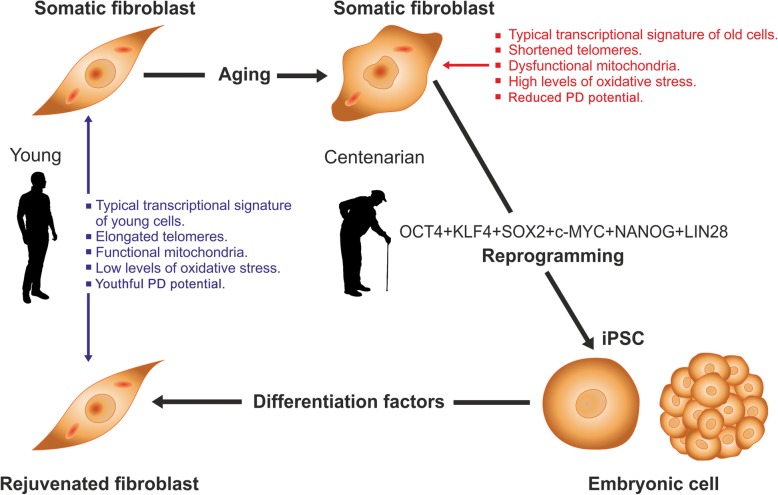
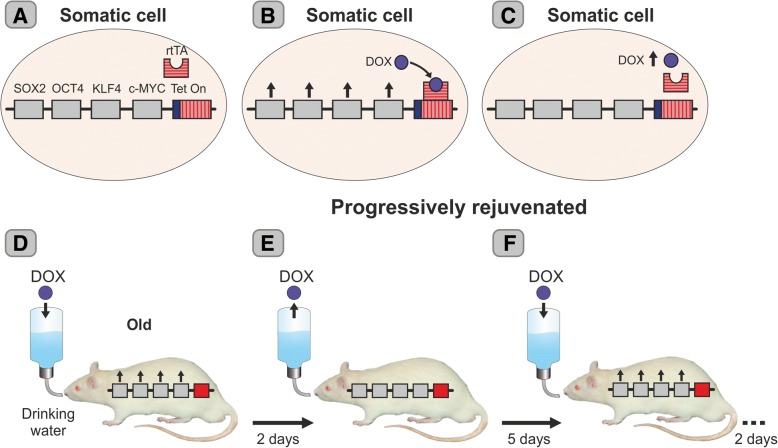
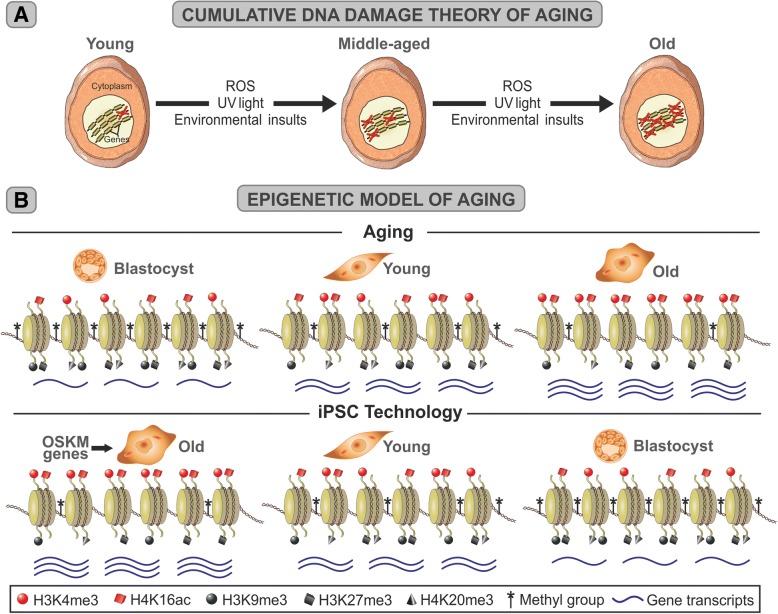
The discovery of animal cloning and subsequent development of cell reprogramming technology were quantum leaps as they led to the achievement of rejuvenation by cell reprogramming and the emerging view that aging is a reversible epigenetic process. Here, we will first summarize the experimental achievements over the last 7 years in cell and animal rejuvenation. Then, a comparison will be made between the principles of the cumulative DNA damage theory of aging and the basic facts underlying the epigenetic model of aging, including Horvath's epigenetic clock. The third part will apply both models to two natural processes, namely, the setting of the aging clock in the mammalian zygote and the changes in the aging clock along successive generations in mammals. The first study demonstrating that skin fibroblasts from healthy centenarians can be rejuvenated by cell reprogramming was published in 2011 and will be discussed in some detail. Other cell rejuvenation studies in old humans and rodents published afterwards will be very briefly mentioned. The only in vivo study reporting that a number of organs of old progeric mice can be rejuvenated by cyclic partial reprogramming will also be described in some detail. The cumulative DNA damage theory of aging postulates that as an animal ages, toxic reactive oxygen species generated as byproducts of the mitochondria during respiration induce a random and progressive damage in genes thus leading cells to a progressive functional decline. The epigenetic model of aging postulates that there are epigenetic marks of aging that increase with age, leading to a progressive derepression of DNA which in turn causes deregulated expression of genes that disrupt cell function. The cumulative DNA damage model of aging fails to explain the resetting of the aging clock at the time of conception as well as the continued vitality of species as millenia go by. In contrast, the epigenetic model of aging straightforwardly explains both biologic phenomena. A plausible initial application of rejuvenation in vivo would be preventing adult individuals from aging thus eliminating a major risk factor for end of life pathologies. Further, it may allow the gradual achievement of whole body rejuvenation.
动物克隆的发现和随后的细胞重编程技术的发展是质的飞跃,因为它们导致了通过细胞重编程实现的年轻化,以及衰老被认为是一种可逆的表观遗传过程的新兴观点。在这里,我们将首先总结过去 7 年来在细胞和动物年轻化方面的实验成果。然后,我们将对衰老的累积 DNA 损伤理论的基本原则与衰老的表观遗传模型的基本事实进行比较,包括 Horvath 的表观遗传时钟。第三部分将把这两种模型应用于两个自然过程,即哺乳动物合子中衰老时钟的设定和哺乳动物连续几代中衰老时钟的变化。第一项研究表明,健康百岁老人的皮肤成纤维细胞可以通过细胞重编程实现年轻化,该研究于 2011 年发表,并将进行详细讨论。随后发表的关于老年人类和啮齿动物的其他细胞年轻化研究将被简要提及。唯一一项报道称,通过周期性部分重编程可以使老年早衰小鼠的许多器官年轻化的体内研究也将进行详细描述。衰老的累积 DNA 损伤理论假设,随着动物年龄的增长,呼吸过程中产生的线粒体作为副产物产生的有毒活性氧会随机且渐进地损害基因,从而导致细胞功能逐渐衰退。衰老的表观遗传模型假设,随着年龄的增长,会出现衰老的表观遗传标记,导致 DNA 逐渐去抑制,进而导致基因表达失控,扰乱细胞功能。衰老的累积 DNA 损伤模型无法解释受孕时衰老时钟的重置以及随着千年的流逝物种的持续活力。相比之下,衰老的表观遗传模型可以直接解释这两种生物学现象。体内年轻化的一个合理初步应用是防止成年人衰老,从而消除生命后期病理的主要风险因素。此外,它可能允许逐步实现全身年轻化。