Karamichali Eirini, Chihab Hajar, Kakkanas Athanassios, Marchio Agnes, Karamitros Timokratis, Pogka Vasiliki, Varaklioti Agoritsa, Kalliaropoulos Antonis, Martinez-Gonzales Beatrice, Foka Pelagia, Koskinas Ioannis, Mentis Andreas, Benjelloun Soumaya, Pineau Pascal, Georgopoulou Urania
Molecular Virology Laboratory, Hellenic Pasteur Institute, Athens, Greece.
Virology Unit, Viral Hepatitis Laboratory, Institut Pasteur du Maroc, Casablanca, Morocco.
Front Microbiol. 2018 Dec 3;9:2942. doi: 10.3389/fmicb.2018.02942. eCollection 2018.
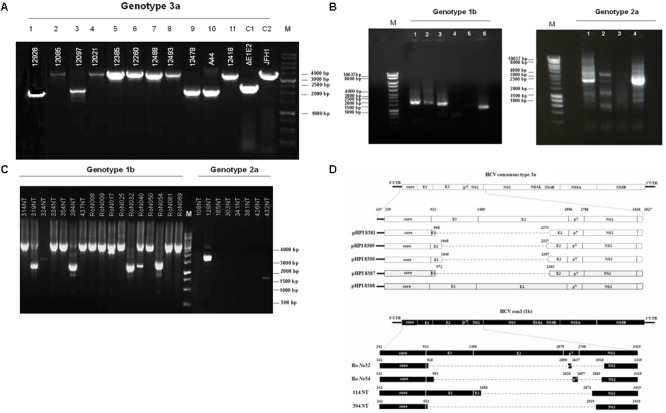
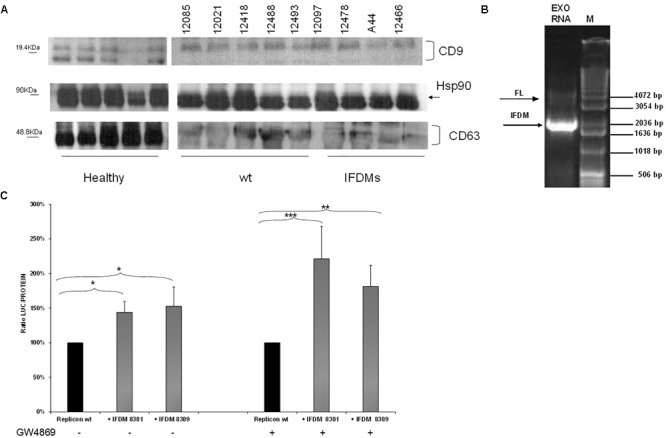
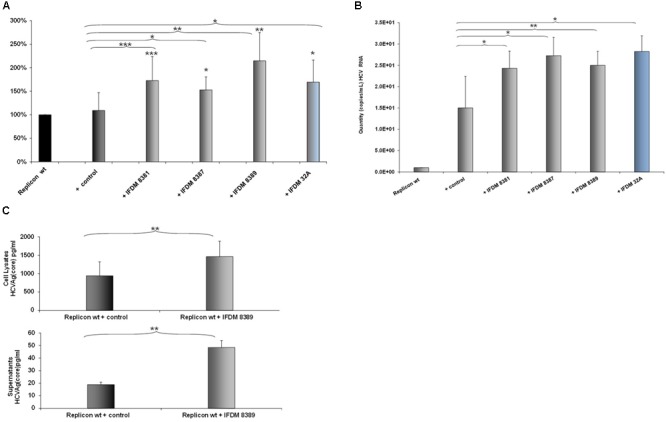
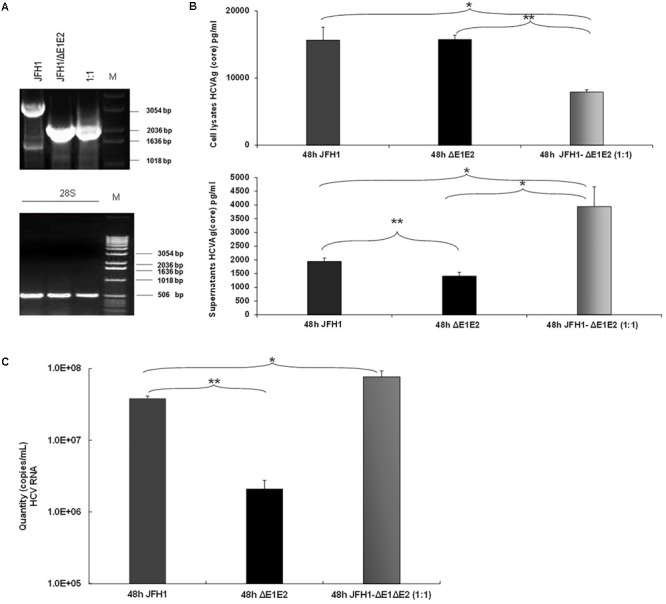
Defective interfering (DI) RNAs have been detected in several human viruses. HCV in-frame deletions mutants (IFDMs), missing mainly the envelope proteins, have been found in patient sera and liver tissues. IFDMs replicate independently and can be -packaged into infectious virions in the presence of full length viral genome. So far, their biological role is unclear. In this study, we have isolated and cloned IFDMs from sera samples and liver tissues of patients infected with HCV genotypes 1b, 2a, and 3a. IFDMs were present in up to 26% of samples tested. Using the HCV cell culture system, co-expression of the wild type (wt) HCV replicon with HCV IFDMs RNA resulted in increased HCV replication. Additionally, co-transfection of the HCV full length genome RNA and a defective mutant missing the envelope region led to increased viral release, collectively suggesting an important biological role for IFDMs in the virus life cycle. Recently, exosomes, masters of intercellular communication, have been implicated in the transport of HCV viral genomes. We report for the first time that exosomal RNA isolated from HCV sera samples contains HCV defective genomes. We also demonstrate that inhibition of exosomal biogenesis and release influences HCV viral replication. Overall, we provide evidence that the presence of HCV IFDMs affects both viral replication and release. IFDMs exploit exosomes as means of transport, a way to evade the immune system, to spread more efficiently and possibly maintain persistent infection.
在几种人类病毒中已检测到缺陷干扰(DI)RNA。在患者血清和肝组织中发现了主要缺失包膜蛋白的丙型肝炎病毒(HCV)框内缺失突变体(IFDM)。IFDM可独立复制,并且在存在全长病毒基因组的情况下可被包装到感染性病毒粒子中。到目前为止,它们的生物学作用尚不清楚。在本研究中,我们从感染HCV 1b、2a和3a基因型的患者血清样本和肝组织中分离并克隆了IFDM。在高达26%的检测样本中存在IFDM。使用HCV细胞培养系统,野生型(wt)HCV复制子与HCV IFDMs RNA共表达导致HCV复制增加。此外,HCV全长基因组RNA与缺失包膜区域的缺陷突变体共转染导致病毒释放增加,这共同表明IFDM在病毒生命周期中具有重要的生物学作用。最近,细胞间通讯的掌控者外泌体已被证明参与HCV病毒基因组的运输。我们首次报道从HCV血清样本中分离的外泌体RNA含有HCV缺陷基因组。我们还证明抑制外泌体的生物发生和释放会影响HCV病毒复制。总体而言,我们提供的证据表明HCV IFDM的存在会影响病毒的复制和释放。IFDM利用外泌体作为运输手段,作为一种逃避免疫系统、更有效地传播并可能维持持续感染的方式。