University of Connecticut, Human Performance Laboratory and Department of Nutritional Sciences, Storrs CT 06269-1110, USA.
University of Wyoming, Human Integrated Physiology Laboratory, Division of Kinesiology and Health, Laramie, WY 82071, USA.
Nutrients. 2018 Dec 5;10(12):1928. doi: 10.3390/nu10121928.
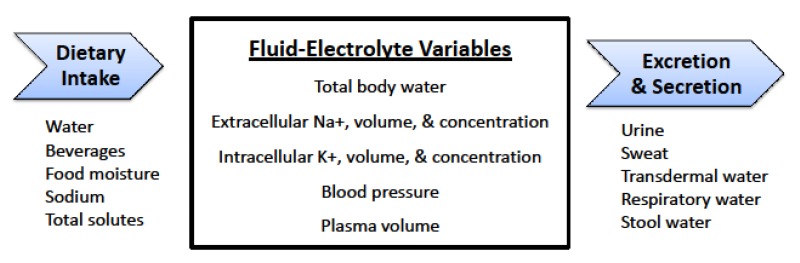
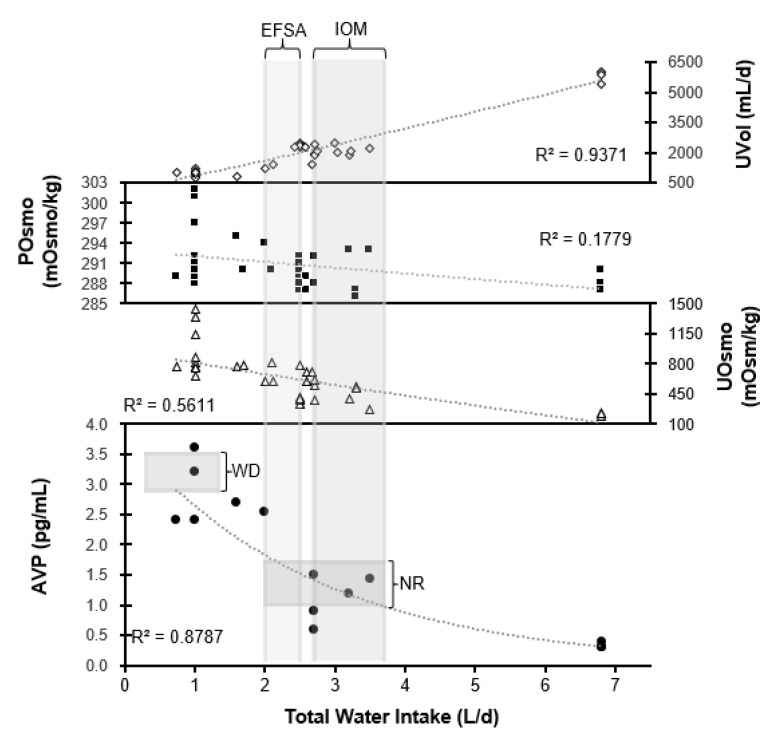
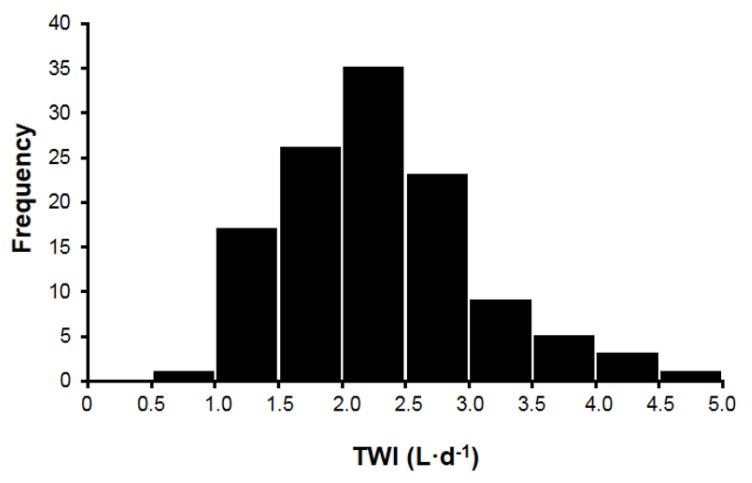
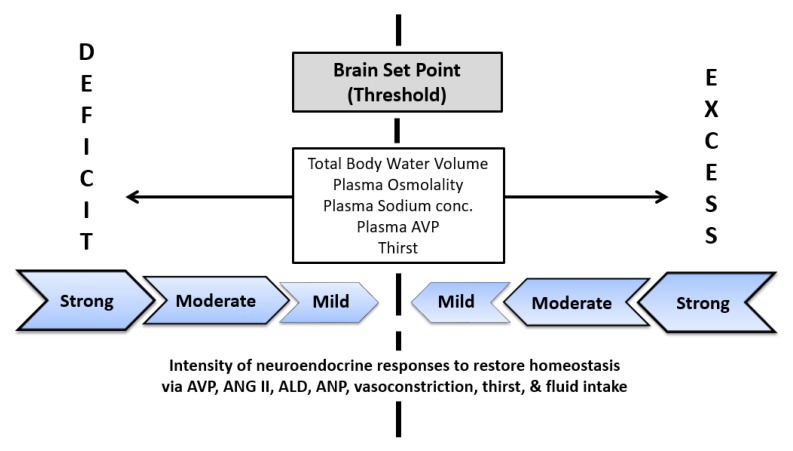
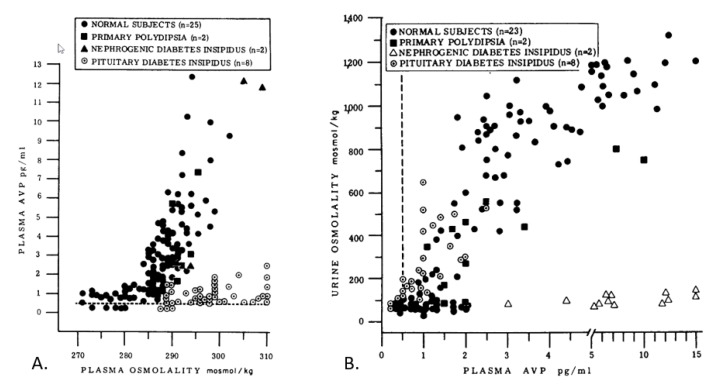
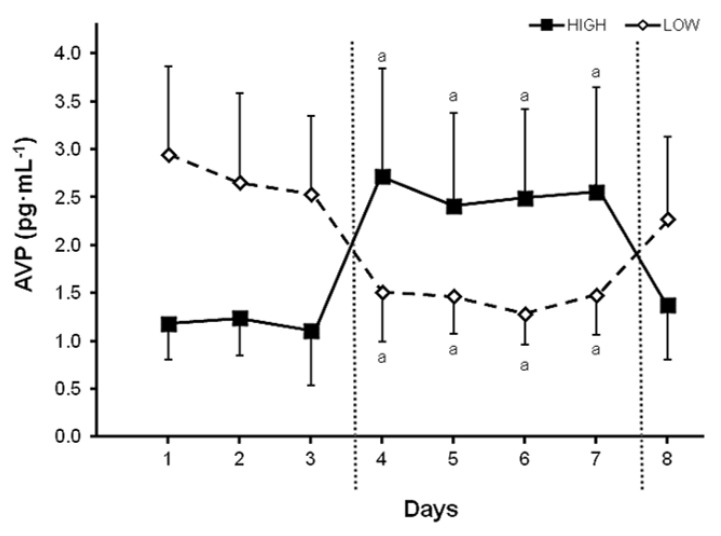
Water is essential for metabolism, substrate transport across membranes, cellular homeostasis, temperature regulation, and circulatory function. Although nutritional and physiological research teams and professional organizations have described the daily total water intakes (TWI, L/24h) and Adequate Intakes (AI) of children, women, and men, there is no widespread consensus regarding the human water requirements of different demographic groups. These requirements remain undefined because of the dynamic complexity inherent in the human water regulatory network, which involves the central nervous system and several organ systems, as well as large inter-individual differences. The present review analyzes published evidence that is relevant to these issues and presents a novel approach to assessing the daily water requirements of individuals in all sex and life-stage groups, as an alternative to AI values based on survey data. This empirical method focuses on the intensity of a specific neuroendocrine response (e.g., plasma arginine vasopressin (AVP) concentration) employed by the brain to regulate total body water volume and concentration. We consider this autonomically-controlled neuroendocrine response to be an inherent hydration biomarker and one means by which the brain maintains good health and optimal function. We also propose that this individualized method defines the elusive state of euhydration (i.e., water balance) and distinguishes it from hypohydration. Using plasma AVP concentration to analyze multiple published data sets that included both men and women, we determined that a mild neuroendocrine defense of body water commences when TWI is ˂1.8 L/24h, that 19⁻71% of adults in various countries consume less than this TWI each day, and consuming less than the 24-h water AI may influence the risk of dysfunctional metabolism and chronic diseases.
水对于新陈代谢、跨膜基质运输、细胞内稳态、体温调节和循环功能至关重要。尽管营养和生理研究团队以及专业组织已经描述了儿童、女性和男性的每日总水分摄入量(TWI,L/24h)和适宜摄入量(AI),但不同人群的人体水分需求仍未达成广泛共识。由于涉及中枢神经系统和多个器官系统以及个体间差异较大的人体水调节网络固有的动态复杂性,这些需求仍然没有得到明确界定。本综述分析了与这些问题相关的已发表证据,并提出了一种评估所有性别和生命阶段个体日常水分需求的新方法,作为基于调查数据的 AI 值的替代方法。这种实证方法侧重于大脑用于调节全身水体积和浓度的特定神经内分泌反应(例如,血浆精氨酸加压素(AVP)浓度)的强度。我们认为这种大脑自主控制的神经内分泌反应是一种固有的水合生物标志物,是大脑保持健康和最佳功能的一种手段。我们还提出,这种个性化方法定义了难以捉摸的水合状态(即水平衡),并将其与脱水区分开来。我们使用血浆 AVP 浓度分析了包括男性和女性在内的多个已发表数据集,结果表明,当 TWI<1.8 L/24h 时,轻度神经内分泌防御身体水分开始,在不同国家的成年人中有 19-71%的人每天摄入的水量少于这个 TWI,而摄入的水量少于 24 小时的水 AI 可能会影响代谢功能障碍和慢性疾病的风险。