Barritt Andrew W, Gabel Matt C, Cercignani Mara, Leigh P Nigel
Clinical Imaging Sciences Centre, Brighton and Sussex Medical School, Falmer, United Kingdom.
Hurstwood Park Neurological Centre Haywards Heath, West Sussex, United Kingdom.
Front Neurol. 2018 Dec 4;9:1065. doi: 10.3389/fneur.2018.01065. eCollection 2018.
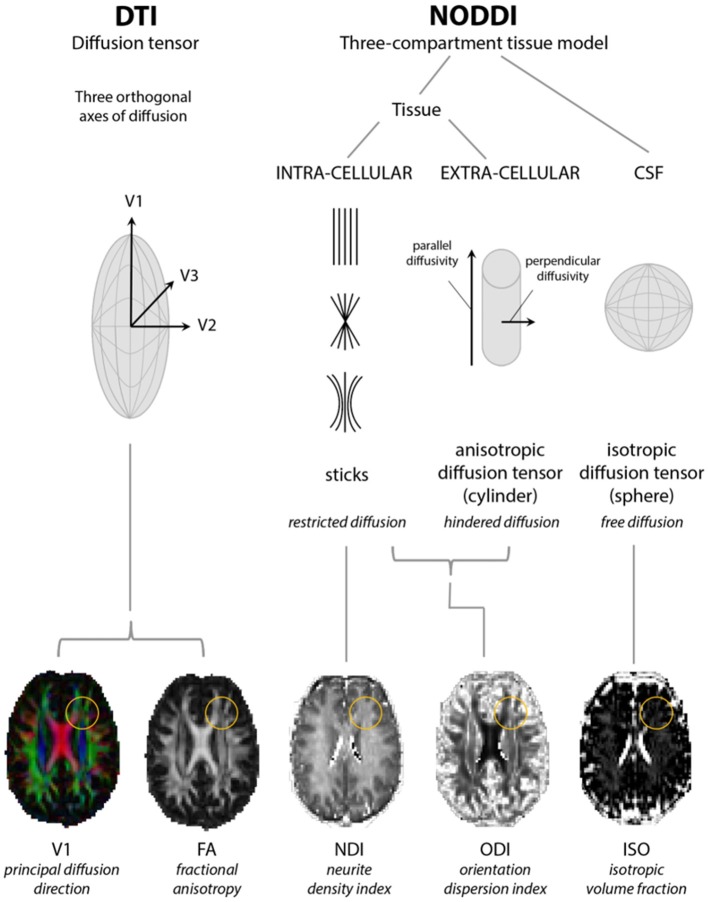
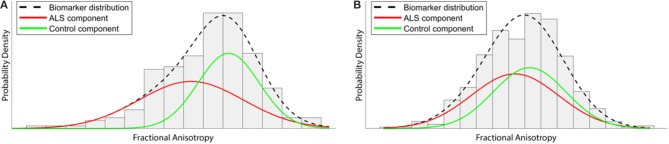
Objective markers of disease sensitive to the clinical activity, symptomatic progression, and underlying substrates of neurodegeneration are highly coveted in amyotrophic lateral sclerosis in order to more eloquently stratify the highly heterogeneous phenotype and facilitate the discovery of effective disease modifying treatments for patients. Magnetic resonance imaging (MRI) is a promising, non-invasive biomarker candidate whose acquisition techniques and analysis methods are undergoing constant evolution in the pursuit of parameters which more closely represent biologically-applicable tissue changes. Neurite Orientation Dispersion and Density Imaging (NODDI; a form of diffusion imaging), and quantitative Magnetization Transfer Imaging (qMTi) are two such emerging modalities which have each broadened the understanding of other neurological disorders and have the potential to provide new insights into structural alterations initiated by the disease process in ALS. Furthermore, novel neuroimaging data analysis approaches such as Event-Based Modeling (EBM) may be able to circumvent the requirement for longitudinal scanning as a means to comprehend the dynamic stages of neurodegeneration . Combining these and other innovative imaging protocols with more sophisticated techniques to analyse ever-increasing datasets holds the exciting prospect of transforming understanding of the biological processes and temporal evolution of the ALS syndrome, and can only benefit from multicentre collaboration across the entire ALS research community.
在肌萎缩侧索硬化症中,人们迫切渴望获得对疾病临床活动、症状进展和神经退行性变潜在底物敏感的客观标志物,以便更清晰地对高度异质性的表型进行分层,并促进为患者发现有效的疾病修饰治疗方法。磁共振成像(MRI)是一种很有前景的非侵入性生物标志物候选物,其采集技术和分析方法在不断发展,以寻求更能代表生物学上适用的组织变化的参数。神经突方向离散度和密度成像(NODDI;一种扩散成像形式)以及定量磁化传递成像(qMTi)是两种这样的新兴模式,它们各自拓宽了对其他神经系统疾病的理解,并有潜力为肌萎缩侧索硬化症疾病过程引发的结构改变提供新的见解。此外,诸如基于事件的建模(EBM)等新颖的神经影像数据分析方法可能能够规避纵向扫描的要求,以此作为理解神经退行性变动态阶段的一种手段。将这些以及其他创新成像方案与更复杂的技术相结合,以分析不断增加的数据集,有望改变对肌萎缩侧索硬化症综合征生物过程和时间演变的理解,并且只有通过整个肌萎缩侧索硬化症研究界的多中心合作才能从中受益。