Barnes Jill N, Corkery Adam T
Department of Kinesiology, Bruno Balke Biodynamics Laboratory, University of Wisconsin-Madison, Madison, WI, USA.
Department of Medicine, Division of Geriatrics and Gerontology, University of Wisconsin-Madison, Madison, WI, USA.
Brain Plast. 2018 Dec 12;4(1):65-79. doi: 10.3233/BPL-180075.
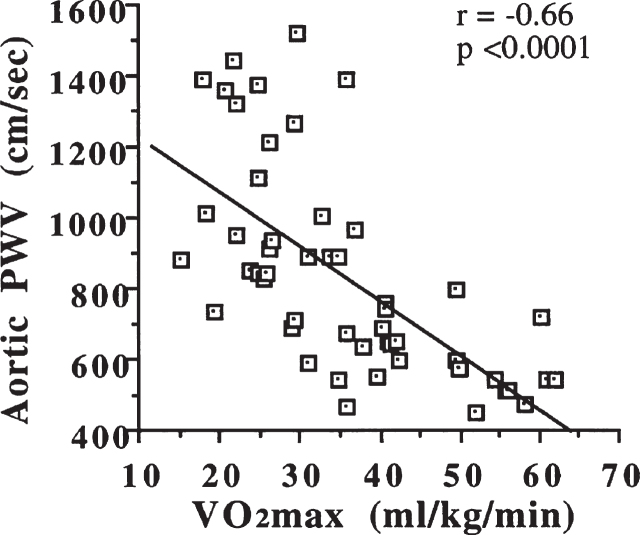
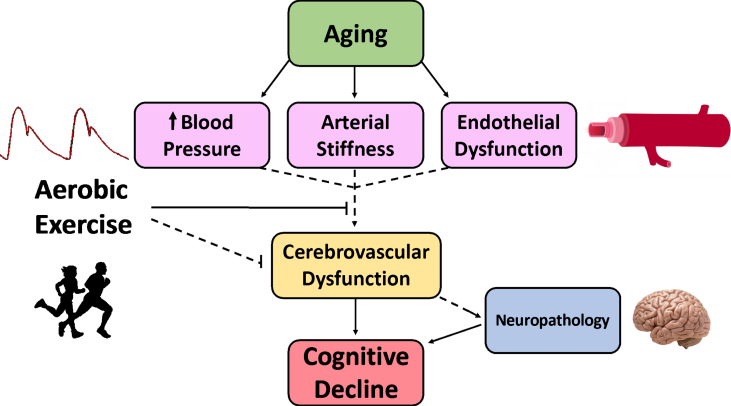
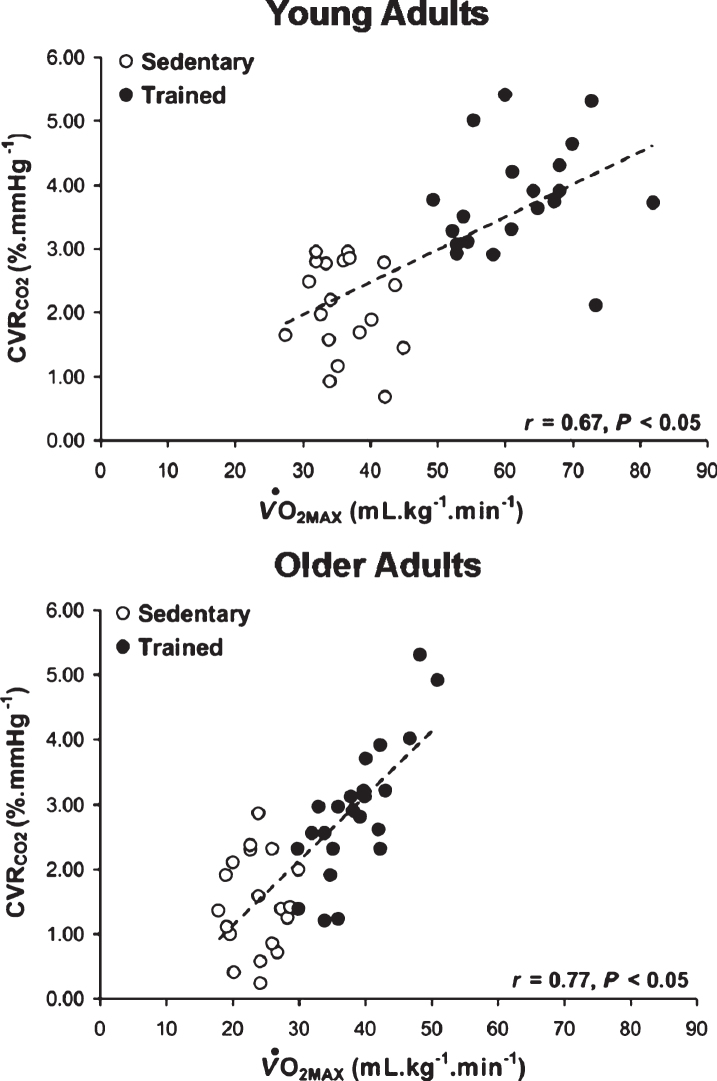
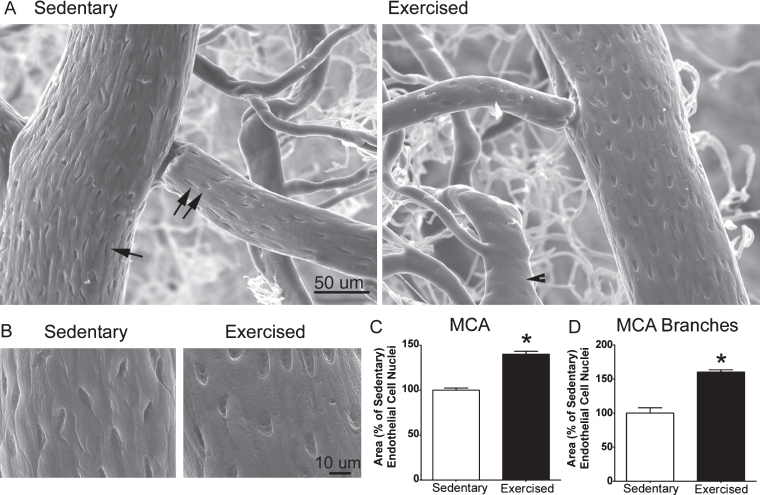
The number of adults with Alzheimer's disease (AD) or related dementia is expected to increase exponentially. Interventions aimed to reduce the risk and progression of AD and dementia are critical to the prevention and treatment of this devastating disease. Aging and cardiovascular disease risk factors are associated with reduced vascular function, which can have important clinical implications, including brain health. The age-associated increase in blood pressure and impairment in vascular function may be attenuated or even reversed through lifestyle behaviors. Greater volumes of habitual exercise and higher cardiorespiratory fitness are associated with beneficial effects on vascular health and cognition. Exercise and cardiorespiratory fitness may be most important during midlife, as physical activity and cardiorespiratory fitness during the middle-aged years are associated with future cognitive function. The extent to which exercise, and more specifically aerobic exercise, influences the cerebral circulation is not well established. In this review, we present our working hypothesis showing how cerebrovascular function may be a mediating factor underlying the association between exercise and cognition, as well as discuss recent studies evaluating the effect of exercise interventions on the cerebral circulation.
患有阿尔茨海默病(AD)或相关痴呆症的成年人数量预计将呈指数级增长。旨在降低AD和痴呆症风险及进展的干预措施对于预防和治疗这种毁灭性疾病至关重要。衰老和心血管疾病风险因素与血管功能下降有关,这可能具有重要的临床意义,包括对大脑健康的影响。通过生活方式行为,与年龄相关的血压升高和血管功能损害可能会得到缓解甚至逆转。大量的习惯性运动和较高的心肺适能与对血管健康和认知的有益影响相关。运动和心肺适能在中年时期可能最为重要,因为中年时期的身体活动和心肺适能与未来的认知功能相关。运动,尤其是有氧运动,对脑循环的影响程度尚未完全明确。在这篇综述中,我们提出了我们的工作假设,展示了脑血管功能如何可能是运动与认知之间关联的中介因素,并讨论了最近评估运动干预对脑循环影响的研究。