Golán Irene, Rodríguez de la Fuente Laura, Costoya Jose A
Molecular Oncology Laboratory MOL, Departamento de Fisioloxia, CiMUS, Facultade de Medicina, Universidade de Santiago de Compostela, IDIS, 15782 Santiago de Compostela, Spain.
Cancers (Basel). 2018 Dec 18;10(12):522. doi: 10.3390/cancers10120522.
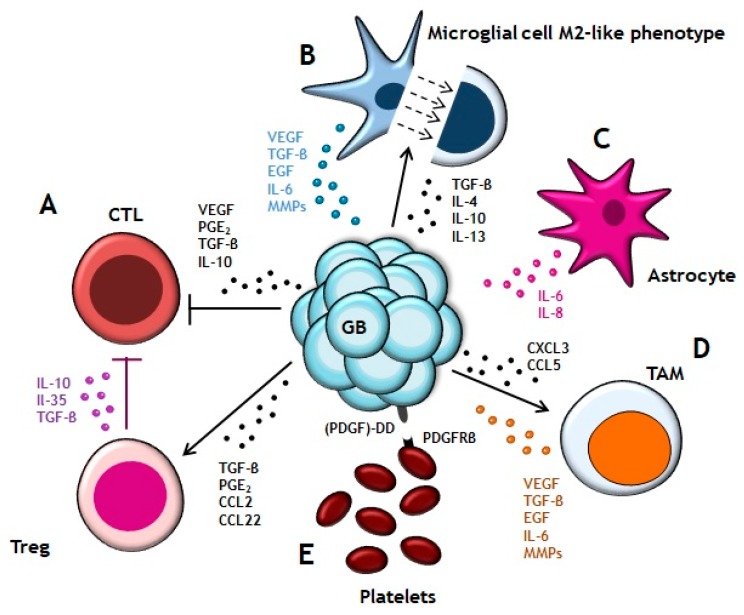
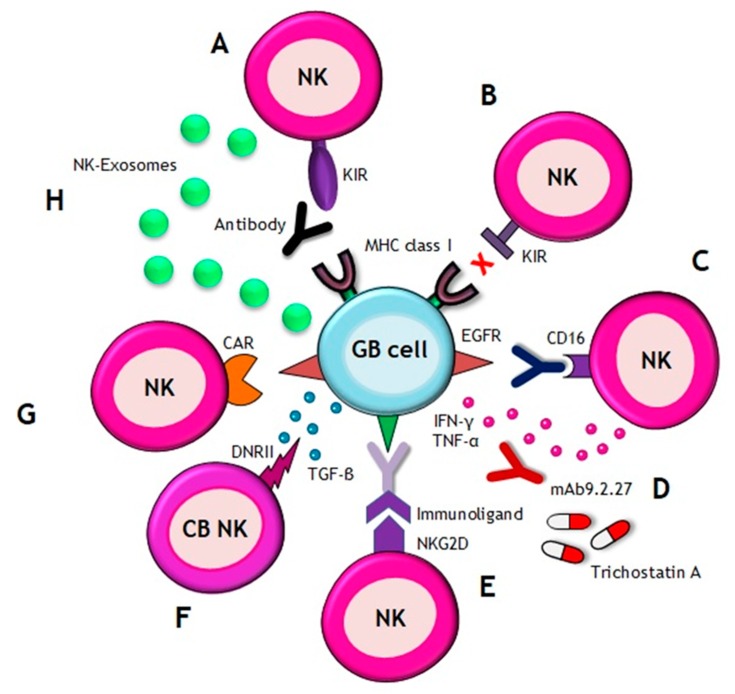
Glioblastoma (GB) is the most aggressive and most common malignant primary brain tumor diagnosed in adults. GB shows a poor prognosis and, unfortunately, current therapies are unable to improve its clinical outcome, imposing the need for innovative therapeutic approaches. The main reason for the poor prognosis is the great cell heterogeneity of the tumor mass and its high capacity for invading healthy tissues. Moreover, the glioblastoma microenvironment is capable of suppressing the action of the immune system through several mechanisms such as recruitment of cell modulators. Development of new therapies that avoid this immune evasion could improve the response to the current treatments for this pathology. Natural Killer (NK) cells are cellular components of the immune system more difficult to deceive by tumor cells and with greater cytotoxic activity. Their use in immunotherapy gains strength because they are a less toxic alternative to existing therapy, but the current research focuses on mimicking the NK attack strategy. Here, we summarize the most recent studies regarding molecular mechanisms involved in the GB and immune cells interaction and highlight the relevance of NK cells in the new therapeutic challenges.
胶质母细胞瘤(GB)是成人中诊断出的最具侵袭性且最常见的原发性恶性脑肿瘤。GB的预后较差,不幸的是,目前的治疗方法无法改善其临床结局,因此需要创新的治疗方法。预后差的主要原因是肿瘤块的细胞异质性极大及其侵袭健康组织的能力很强。此外,胶质母细胞瘤微环境能够通过多种机制(如募集细胞调节剂)抑制免疫系统的作用。开发避免这种免疫逃逸的新疗法可能会改善对这种疾病当前治疗方法的反应。自然杀伤(NK)细胞是免疫系统的细胞成分,更难被肿瘤细胞欺骗且具有更强的细胞毒性活性。它们在免疫治疗中的应用越来越受到重视,因为它们是现有疗法毒性较小的替代方案,但目前的研究集中在模仿NK攻击策略。在此,我们总结了关于GB与免疫细胞相互作用所涉及分子机制的最新研究,并强调了NK细胞在新治疗挑战中的相关性。