• 文献检索
  • 文档翻译
  • 深度研究
  • 学术资讯
  • Suppr Zotero 插件Zotero 插件
  • 邀请有礼
  • 套餐&价格
  • 历史记录
应用&插件
Suppr Zotero 插件Zotero 插件浏览器插件Mac 客户端Windows 客户端微信小程序
定价
高级版会员购买积分包购买API积分包
服务
文献检索文档翻译深度研究API 文档MCP 服务
关于我们
关于 Suppr公司介绍联系我们用户协议隐私条款
关注我们

Suppr 超能文献

核心技术专利:CN118964589B侵权必究
粤ICP备2023148730 号-1Suppr @ 2026

文献检索

告别复杂PubMed语法,用中文像聊天一样搜索,搜遍4000万医学文献。AI智能推荐,让科研检索更轻松。

立即免费搜索

文件翻译

保留排版,准确专业,支持PDF/Word/PPT等文件格式,支持 12+语言互译。

免费翻译文档

深度研究

AI帮你快速写综述,25分钟生成高质量综述,智能提取关键信息,辅助科研写作。

立即免费体验

13 例波兰患者的 1 型戊二酸血症轻度表型——来自一组新数据。

Mild phenotype of glutaric aciduria type 1 in polish patients - novel data from a group of 13 cases.

机构信息

Department of Pediatrics, Nutrition and Metabolic Diseases, The Children's Memorial Health Institute, Warsaw, Poland.

Department of Genetics and Clinical Immunology, National Institute of Tuberculosis and Lung Diseases, Warsaw, Poland.

出版信息

Metab Brain Dis. 2019 Apr;34(2):641-649. doi: 10.1007/s11011-018-0357-5. Epub 2018 Dec 20.

DOI:10.1007/s11011-018-0357-5
PMID:30570710
原文链接:https://pmc.ncbi.nlm.nih.gov/articles/PMC6428789/
Abstract

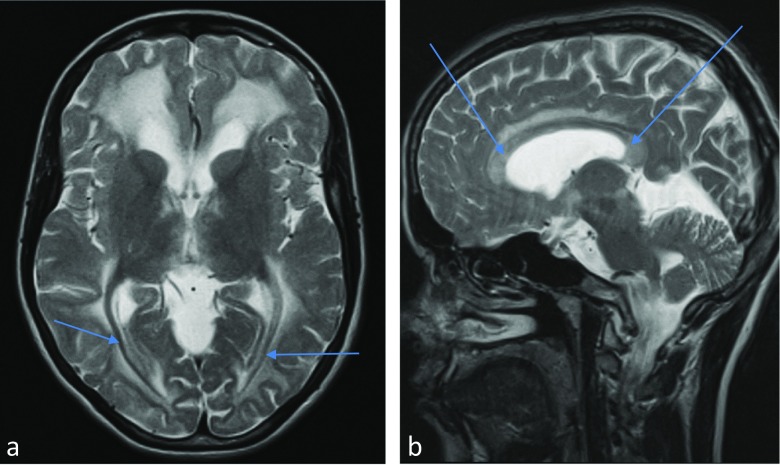
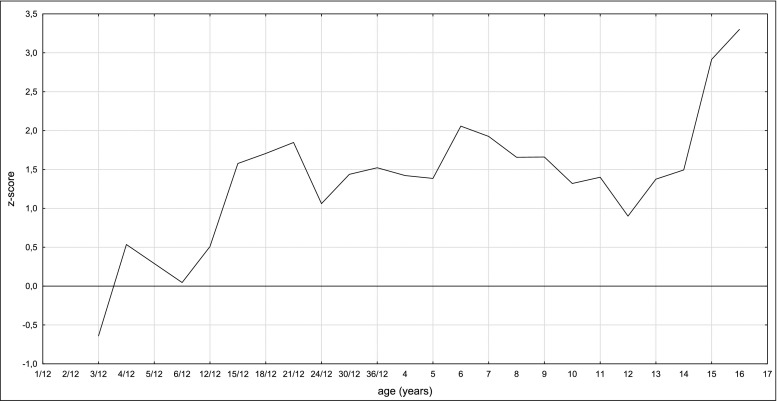
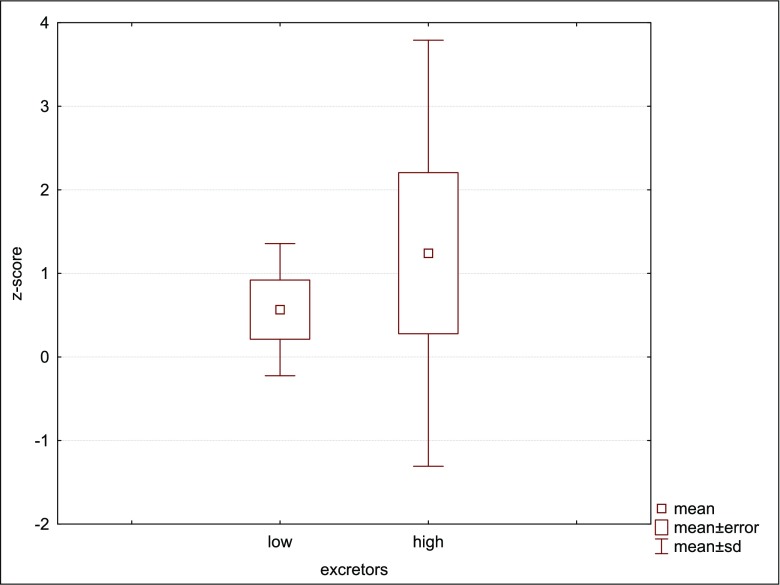
Glutaric aciduria type 1 is a neurometabolic disorder, caused by riboflavin-dependent glutaryl-CoA dehydrogenase deficiency. As its consequence, accumulation of the putatively neurotoxic metabolites (glutaric and 3-hydroxyglutaric acids) in body tissues, but especially within the brain, is observed. Estimated incidence of the disease is 1 in 110,000 newborns, The prevalence however may be higher, depending on a specific ethnic group, and result in phenotypic variation as well. In this paper we present clinical data of 13 patients of Polish nationality. They all present a mild phenotype and clinical course of glutaric aciduria type 1. Based on their clinical data, presented herein, we like to pay attention to the phenotypic and neuroimaging features important for the diagnosis of mild form of this disease. Moreover, we present novel molecular data, which may correlate with such a manifestation.

摘要

1 型戊二酸尿症是一种神经代谢紊乱,由黄素依赖的戊二酰辅酶 A 脱氢酶缺乏引起。其结果是,在身体组织中,尤其是在大脑中,观察到潜在神经毒性代谢物(戊二酸和 3-羟基戊二酸)的积累。据估计,该病的发病率为每 11 万新生儿中 1 例,但根据特定的种族,患病率可能更高,并导致表型变异。本文介绍了 13 名波兰籍患者的临床数据。他们均表现出戊二酸尿症 1 型的轻度表型和临床病程。基于本文呈现的临床数据,我们希望关注对该病轻度表型的诊断具有重要意义的表型和神经影像学特征。此外,我们还提供了可能与这种表现相关的新的分子数据。
https://cdn.ncbi.nlm.nih.gov/pmc/blobs/a487/6428789/fe69dac07c36/11011_2018_357_Fig3_HTML.jpg
https://cdn.ncbi.nlm.nih.gov/pmc/blobs/a487/6428789/ba9bf7239e24/11011_2018_357_Fig1_HTML.jpg
https://cdn.ncbi.nlm.nih.gov/pmc/blobs/a487/6428789/056a9ffb22b7/11011_2018_357_Fig2_HTML.jpg
https://cdn.ncbi.nlm.nih.gov/pmc/blobs/a487/6428789/fe69dac07c36/11011_2018_357_Fig3_HTML.jpg
https://cdn.ncbi.nlm.nih.gov/pmc/blobs/a487/6428789/ba9bf7239e24/11011_2018_357_Fig1_HTML.jpg
https://cdn.ncbi.nlm.nih.gov/pmc/blobs/a487/6428789/056a9ffb22b7/11011_2018_357_Fig2_HTML.jpg
https://cdn.ncbi.nlm.nih.gov/pmc/blobs/a487/6428789/fe69dac07c36/11011_2018_357_Fig3_HTML.jpg

相似文献

1
Mild phenotype of glutaric aciduria type 1 in polish patients - novel data from a group of 13 cases.13 例波兰患者的 1 型戊二酸血症轻度表型——来自一组新数据。
Metab Brain Dis. 2019 Apr;34(2):641-649. doi: 10.1007/s11011-018-0357-5. Epub 2018 Dec 20.
2
[Complex heterogeneity phenotypes and genotypes of glutaric aciduria type 1].[1型戊二酸血症的复杂异质性表型和基因型]
Zhongguo Dang Dai Er Ke Za Zhi. 2016 May;18(5):460-5. doi: 10.7499/j.issn.1008-8830.2016.05.016.
3
Adult-onset glutaric aciduria type I: rare presentation of a treatable disorder.成人型戊二酸血症 I 型:一种可治疗疾病的罕见表现形式。
Neurogenetics. 2020 Jul;21(3):179-186. doi: 10.1007/s10048-020-00610-9. Epub 2020 Apr 18.
4
Elevated glutaric acid levels in Dhtkd1-/Gcdh- double knockout mice challenge our current understanding of lysine metabolism.Dhtkd1-/Gcdh- 双基因敲除小鼠中天冬氨酸水平升高,这对我们目前对赖氨酸代谢的理解提出了挑战。
Biochim Biophys Acta Mol Basis Dis. 2017 Sep;1863(9):2220-2228. doi: 10.1016/j.bbadis.2017.05.018. Epub 2017 May 22.
5
The M405V allele of the glutaryl-CoA dehydrogenase gene is an important marker for glutaric aciduria type I (GA-I) low excretors.戊二酰辅酶A脱氢酶基因的M405V等位基因是I型戊二酸血症(GA-I)低排泄者的重要标志物。
Mol Genet Metab. 2016 Sep;119(1-2):50-6. doi: 10.1016/j.ymgme.2016.06.012. Epub 2016 Jul 1.
6
Clinical and molecular investigation in Chinese patients with glutaric aciduria type I.中国I型戊二酸血症患者的临床与分子研究
Clin Chim Acta. 2016 Jan 30;453:75-9. doi: 10.1016/j.cca.2015.12.003. Epub 2015 Dec 4.
7
(1)H-MRS in glutaric aciduria type 1: impact of biochemical phenotype and age on the cerebral accumulation of neurotoxic metabolites.(1)1型戊二酸尿症中的氢质子磁共振波谱分析:生化表型和年龄对神经毒性代谢物脑内蓄积的影响。
J Inherit Metab Dis. 2015 Sep;38(5):829-38. doi: 10.1007/s10545-015-9826-8. Epub 2015 Apr 10.
8
[Progress of glutaric aciduria type I].[I型戊二酸血症的研究进展]
Zhonghua Er Ke Za Zhi. 2012 Dec;50(12):912-4.
9
GAI - distinct genotype and phenotype characteristics in reported Slovak patients.斯洛伐克报告患者中独特的基因型和表型特征。
Bratisl Lek Listy. 2016;117(11):631-638. doi: 10.4149/BLL_2016_123.
10
Brain MRI findings as an important diagnostic clue in glutaric aciduria type 1.脑部磁共振成像结果作为1型戊二酸尿症的重要诊断线索。
Neuroradiol J. 2013 Apr;26(2):155-61. doi: 10.1177/197140091302600204. Epub 2013 May 10.

引用本文的文献

1
Concordance Between Biochemical and Molecular Diagnosis Obtained by WES in Mexican Patients with Inborn Errors of Intermediary Metabolism: Utility for Therapeutic Management.基于 WES 的生化和分子诊断在墨西哥先天性代谢异常患者中的一致性:对治疗管理的实用性。
Int J Mol Sci. 2024 Oct 31;25(21):11722. doi: 10.3390/ijms252111722.
2
The Spectrum of Disease-Associated Alleles in Countries with a Predominantly Slavic Population.主要为斯拉夫人种的国家中与疾病相关的等位基因谱。
Int J Mol Sci. 2024 Aug 28;25(17):9335. doi: 10.3390/ijms25179335.
3
Glutaryl-CoA Dehydrogenase Misfolding in Glutaric Acidemia Type 1.

本文引用的文献

1
Clinical and molecular characteristics of newly reported mitochondrial disease entity caused by biallelic PARS2 mutations.由双等位基因 PARS2 突变引起的新报道的线粒体疾病实体的临床和分子特征。
J Hum Genet. 2018 Apr;63(4):473-485. doi: 10.1038/s10038-017-0401-z. Epub 2018 Feb 6.
2
Selective Screening for Metabolic Disorders in the Slovenian Pediatric Population.斯洛文尼亚儿科人群代谢紊乱的选择性筛查
J Med Biochem. 2015 Jan;34(1):58-63. doi: 10.2478/jomb-2014-0056. Epub 2014 Oct 8.
3
Disease-causing mutations affecting surface residues of mitochondrial glutaryl-CoA dehydrogenase impair stability, heteromeric complex formation and mitochondria architecture.
1 型戊二酸血症中谷氨酰辅酶 A 脱氢酶的错误折叠
Int J Mol Sci. 2023 Aug 24;24(17):13158. doi: 10.3390/ijms241713158.
4
Low excretor glutaric aciduria type 1 of insidious onset with dystonia and atypical clinical features, a diagnostic dilemma.隐匿性起病伴肌张力障碍及非典型临床特征的低排泄型1型戊二酸血症,诊断难题。
JIMD Rep. 2020 Nov 16;58(1):12-20. doi: 10.1002/jmd2.12187. eCollection 2021 Mar.
5
Clinical, biochemical, neuroradiological and molecular characterization of Egyptian patients with glutaric acidemia type 1.对 1 型戊二酸血症埃及患者的临床、生化、神经放射学和分子特征进行描述。
Metab Brain Dis. 2019 Aug;34(4):1231-1241. doi: 10.1007/s11011-019-00422-3. Epub 2019 May 6.
影响线粒体戊二酰辅酶A脱氢酶表面残基的致病突变会损害稳定性、异源复合物形成和线粒体结构。
Hum Mol Genet. 2017 Feb 1;26(3):538-551. doi: 10.1093/hmg/ddw411.
4
Proposed recommendations for diagnosing and managing individuals with glutaric aciduria type I: second revision.戊二酸血症I型患者诊断与管理的建议方案:第二次修订版
J Inherit Metab Dis. 2017 Jan;40(1):75-101. doi: 10.1007/s10545-016-9999-9. Epub 2016 Nov 16.
5
Glutaric aciduria type 1: neuroimaging features with clinical correlation.1型戊二酸血症:神经影像学特征与临床相关性
Pediatr Radiol. 2015 Oct;45(11):1696-705. doi: 10.1007/s00247-015-3395-8. Epub 2015 Jun 26.
6
Molecular analysis of Cypriot patients with Glutaric aciduria type I: identification of two novel mutations.塞浦路斯I型戊二酸血症患者的分子分析:两种新突变的鉴定。
Clin Biochem. 2014 Sep;47(13-14):1300-5. doi: 10.1016/j.clinbiochem.2014.06.017. Epub 2014 Jun 25.
7
Does p.Q247X in TRIM63 cause human hypertrophic cardiomyopathy?TRIM63 中的 p.Q247X 是否导致人类肥厚型心肌病?
Circ Res. 2014 Jan 17;114(2):e2-5. doi: 10.1161/CIRCRESAHA.114.302662.
8
Glutaric aciduria type I: outcome of patients with early- versus late-diagnosis.Ⅰ型戊二酸血症:早诊与晚诊患者的结局比较。
Eur J Paediatr Neurol. 2013 Jul;17(4):383-9. doi: 10.1016/j.ejpn.2013.01.003. Epub 2013 Feb 5.
9
Organic acids in man: analytical chemistry, biochemistry, and diagnosis of the organic acidurias.人体内的有机酸:有机酸血症的分析化学、生物化学及诊断
Arch Dis Child. 1983 Mar;58(3):240. doi: 10.1136/adc.58.3.240-c.
10
Glutaric aciduria types I and II.
Brain Dev. 2006 Apr;28(3):136-40. doi: 10.1016/j.braindev.2005.06.010. Epub 2005 Dec 20.