Department of Internal Medicine, Faculty of Veterinary Medicine, University of Tehran, Tehran, Iran.
Institute of Biomedical Research, University of Tehran, Tehran, Iran.
Crit Care. 2018 Dec 20;22(1):353. doi: 10.1186/s13054-018-2272-x.
Lung diseases such as acute respiratory distress syndrome (ARDS) have a high incidence worldwide. The current drug therapies for ARDS have supportive effects, making them inefficient. New methods such as stromal cell therapy are needed for this problem.
This research was performed with ten New Zealand rabbits in two groups. Bone marrow aspiration was performed on the treated group, and mesenchymal stem cells were isolated and cultured. The experimental model of ARDS was induced using LPS from Escherichia coli strain O55:B5. Then, 10 bone marrow mesenchymal stem cells (BM-MSCs) were autologously transplanted intrapulmonary in the treatment group, and 1-2 ml of PBS in the control group. The clinical signs, computed tomographic (CT) scans, echocardiography, blood gas analysis, complete blood count, and cytokine levels were measured before and at 3, 6, 12, 24, 48, 72, and 168 h after BM-MSC transplant. Finally, the rabbits were killed, and histopathological examination was performed.
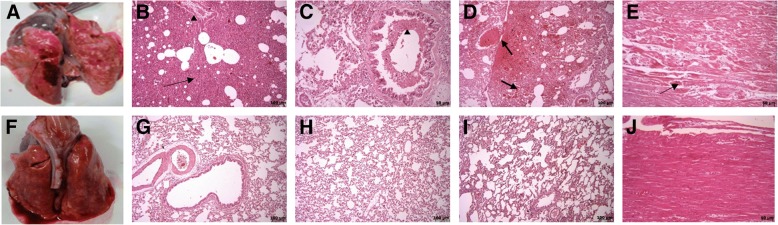
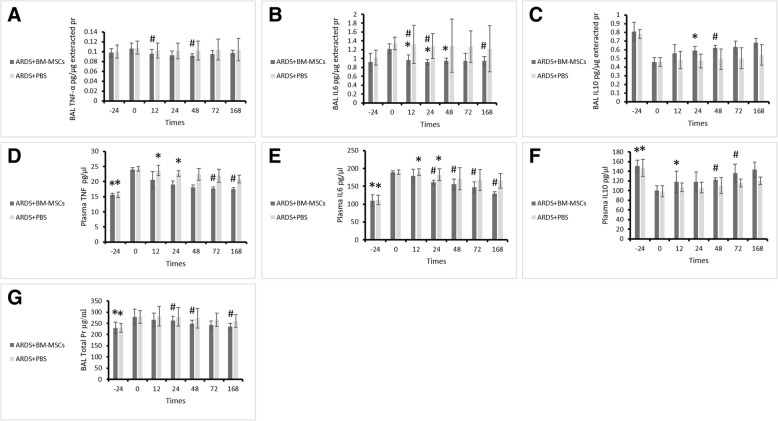
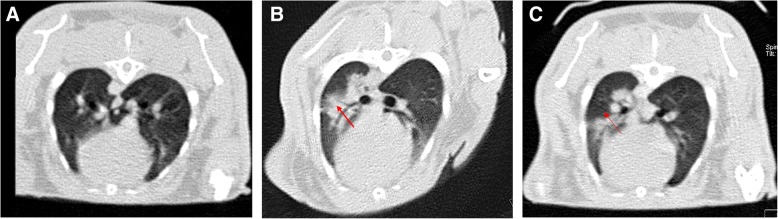
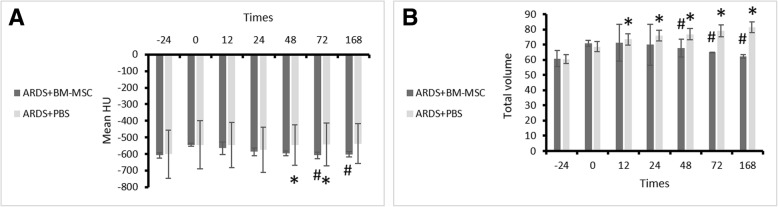
The results showed that BM-MSCs decreased the severity of clinical symptoms, the number of white blood cells and heterophils in the blood, the total cell count, and number of heterophils and macrophages in bronchoalveolar lavage, and balanced the values of arterial blood gases (increase in partial pressure of oxygen and O saturation and decrease in the partial pressure of carbon dioxide). They also downregulated the tumor necrosis factor (TNF)-α and interleukin (IL)-6 concentrations and increased the IL-10 concentrations at different times compared with time 0 and in the control group, significantly. In the CT scan, a significant decrease in the Hounsfield units and total lung volume was found by echocardiography, and in comparing the two groups, a significant difference in the parameters was noticed. The histopathology demonstrated that the BM-MSCs were able to reduce the infiltration of inflammatory cells and pulmonary hemorrhage and edema.
This study indicated that BM-MSCs play a significant role in the repair of lung injury.
急性呼吸窘迫综合征(ARDS)等肺部疾病在全球范围内发病率较高。目前 ARDS 的药物治疗仅具有支持作用,疗效不理想。对于这一问题,需要新的方法,如基质细胞疗法。
本研究采用新西兰大白兔 10 只,分为两组。实验组行骨髓穿刺术,分离培养骨髓间充质干细胞。采用大肠杆菌 O55:B5 脂多糖诱导 ARDS 实验模型。然后,实验组将 10 个骨髓间充质干细胞(BM-MSCs)经肺内自体移植,对照组注入 1-2ml PBS。在 BM-MSC 移植前及移植后 3、6、12、24、48、72 和 168h 测量临床症状、计算机断层扫描(CT)、超声心动图、血气分析、全血细胞计数和细胞因子水平。最后处死兔子,进行组织病理学检查。
结果显示,BM-MSCs 可减轻临床症状严重程度,降低血液中白细胞和中性粒细胞计数、总细胞计数以及支气管肺泡灌洗液中中性粒细胞和巨噬细胞计数,平衡血气分析指标(增加氧分压和氧饱和度,降低二氧化碳分压)。它们还能在不同时间点下调肿瘤坏死因子(TNF)-α和白细胞介素(IL)-6 浓度,增加 IL-10 浓度,与 0 时间点和对照组相比,差异均有统计学意义。CT 扫描显示,超声心动图检测到单位的 Hounsfield 降低和总肺容积减少,两组间参数存在显著差异。组织病理学显示,BM-MSCs 能够减少炎症细胞浸润和肺出血水肿。
本研究表明,BM-MSCs 在肺损伤修复中具有重要作用。