Laboratory of Cell Biology and Developmental Pathology, FSBSI Institute of General Pathology and Pathophysiology, 125315 Moscow, Russia.
Institute for Regenerative Medicine, Sechenov First Moscow State Medical University (Sechenov University), 8-2 Trubetskaya St., 119991 Moscow, Russia.
Int J Mol Sci. 2022 Mar 22;23(7):3417. doi: 10.3390/ijms23073417.
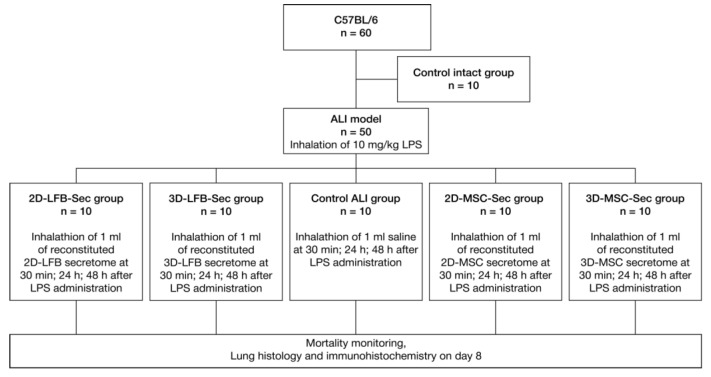
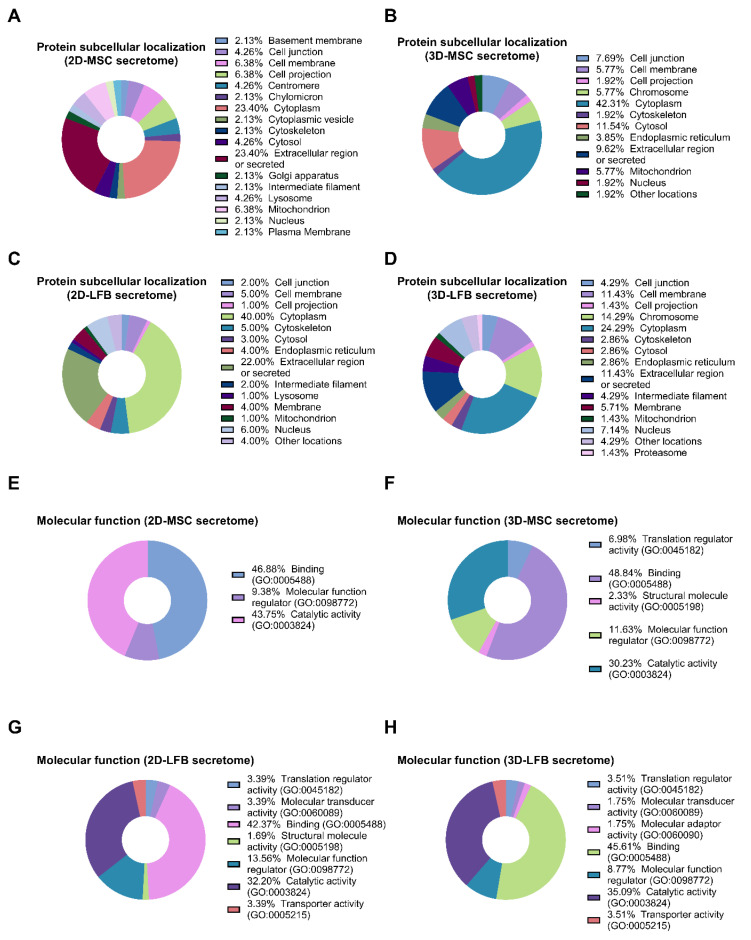
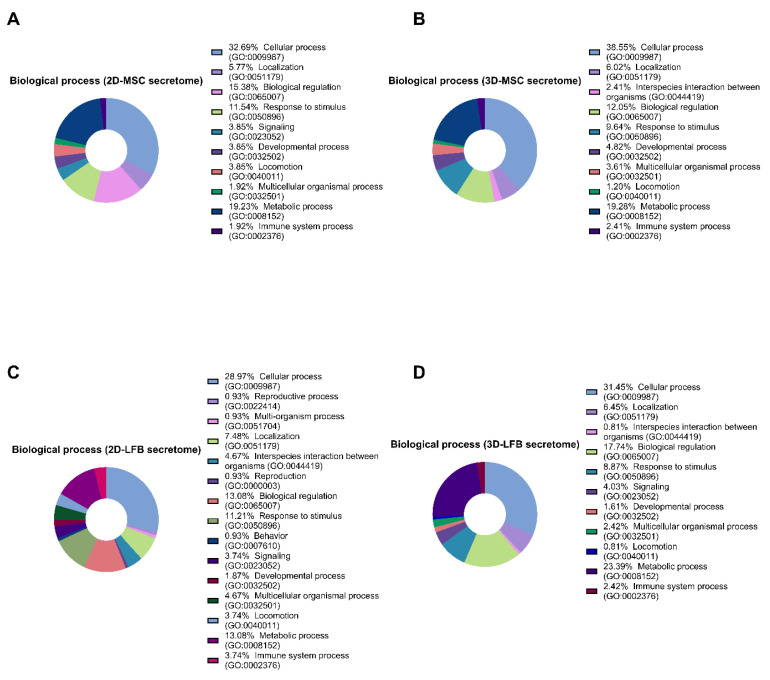
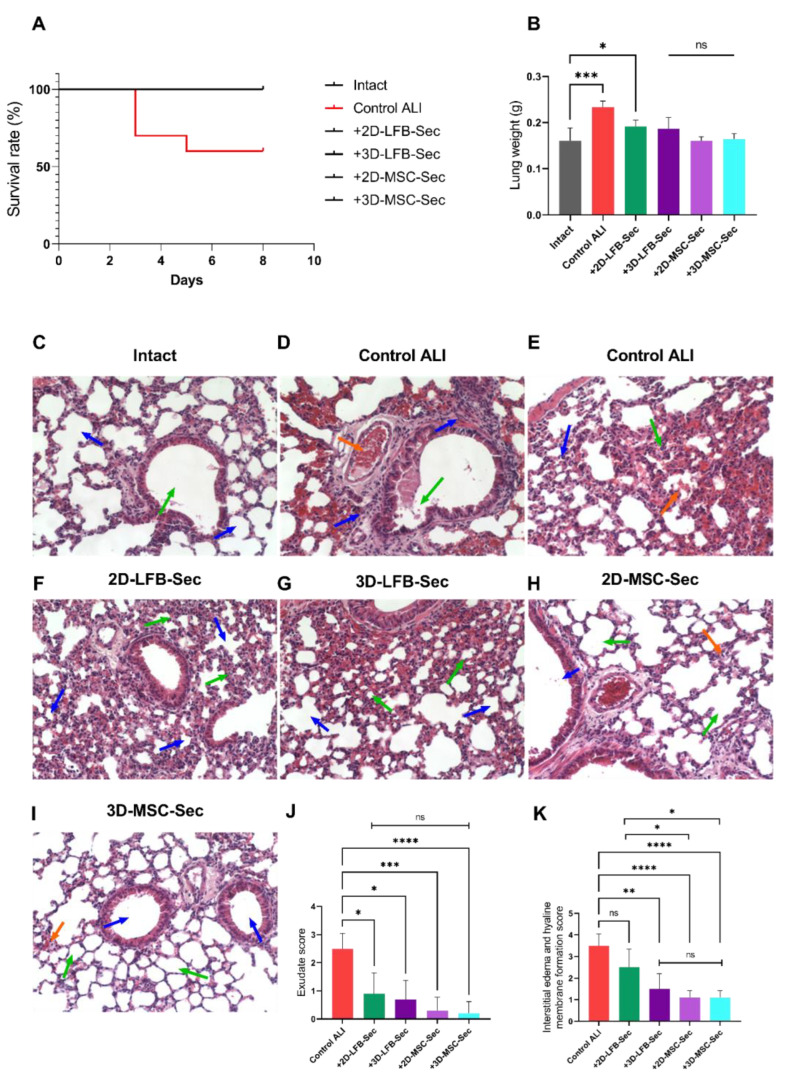
Acute lung injury (ALI) and acute respiratory distress syndrome (ARDS) is a common clinical problem, leading to significant morbidity and mortality, and no effective pharmacotherapy exists. The problem of ARDS causing mortality became more apparent during the COVID-19 pandemic. Biotherapeutic products containing multipotent mesenchymal stromal cell (MMSC) secretome may provide a new therapeutic paradigm for human healthcare due to their immunomodulating and regenerative abilities. The content and regenerative capacity of the secretome depends on cell origin and type of cultivation (two- or three-dimensional (2D/3D)). In this study, we investigated the proteomic profile of the secretome from 2D- and 3D-cultured placental MMSC and lung fibroblasts (LFBs) and the effect of inhalation of freeze-dried secretome on survival, lung inflammation, lung tissue regeneration, fibrin deposition in a lethal ALI model in mice. We found that three inhaled administrations of freeze-dried secretome from 2D- and 3D-cultured placental MMSC and LFB protected mice from death, restored the histological structure of damaged lungs, and decreased fibrin deposition. At the same time, 3D MMSC secretome exhibited a more pronounced trend in lung recovery than 2D MMSC and LFB-derived secretome in some measures. Taking together, these studies show that inhalation of cell secretome may also be considered as a potential therapy for the management of ARDS in patients suffering from severe pneumonia, including severe acute respiratory syndrome coronavirus 2 (SARS-CoV-2), however, their effectiveness requires further investigation.
急性肺损伤(ALI)和急性呼吸窘迫综合征(ARDS)是一种常见的临床问题,导致发病率和死亡率显著增加,目前尚无有效的药物治疗方法。在 COVID-19 大流行期间,ARDS 导致的死亡率问题变得更加明显。含有多能间充质基质细胞(MMSC)分泌组的生物治疗产品由于其免疫调节和再生能力,可能为人类健康提供新的治疗范例。分泌组的内容和再生能力取决于细胞来源和培养类型(二维或三维(2D/3D))。在这项研究中,我们研究了 2D 和 3D 培养胎盘 MMSC 和肺成纤维细胞(LFB)分泌组的蛋白质组图谱,以及吸入冻干分泌组对致命 ALI 模型中小鼠存活、肺炎症、肺组织再生、纤维蛋白沉积的影响。我们发现,三次吸入冻干 2D 和 3D 培养胎盘 MMSC 和 LFB 分泌组可保护小鼠免于死亡,恢复受损肺的组织学结构,并减少纤维蛋白沉积。同时,在某些措施上,3D MMSC 分泌组在肺恢复方面表现出比 2D MMSC 和 LFB 衍生分泌组更明显的趋势。综上所述,这些研究表明,细胞分泌组的吸入也可以被认为是一种治疗严重肺炎患者 ARDS 的潜在疗法,包括严重急性呼吸综合征冠状病毒 2(SARS-CoV-2),但它们的有效性需要进一步研究。