University of Michigan Rogel Cancer Center and Department of Internal Medicine, Division of Hematology and Oncology, University of Michigan, Ann Arbor, Michigan.
Semin Radiat Oncol. 2019 Jan;29(1):42-54. doi: 10.1016/j.semradonc.2018.10.003.
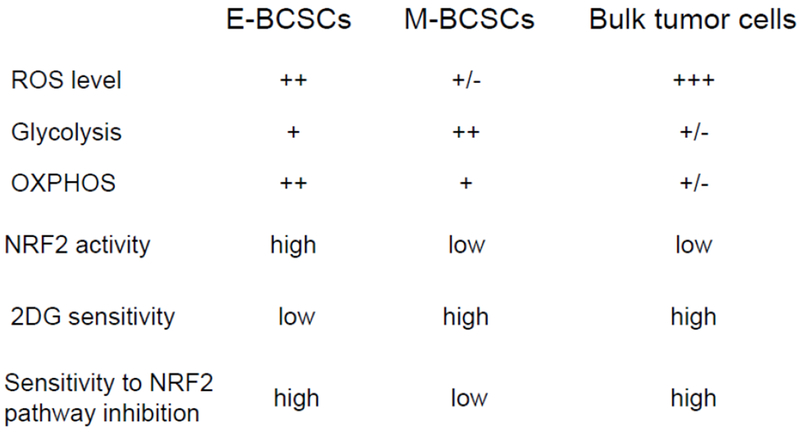
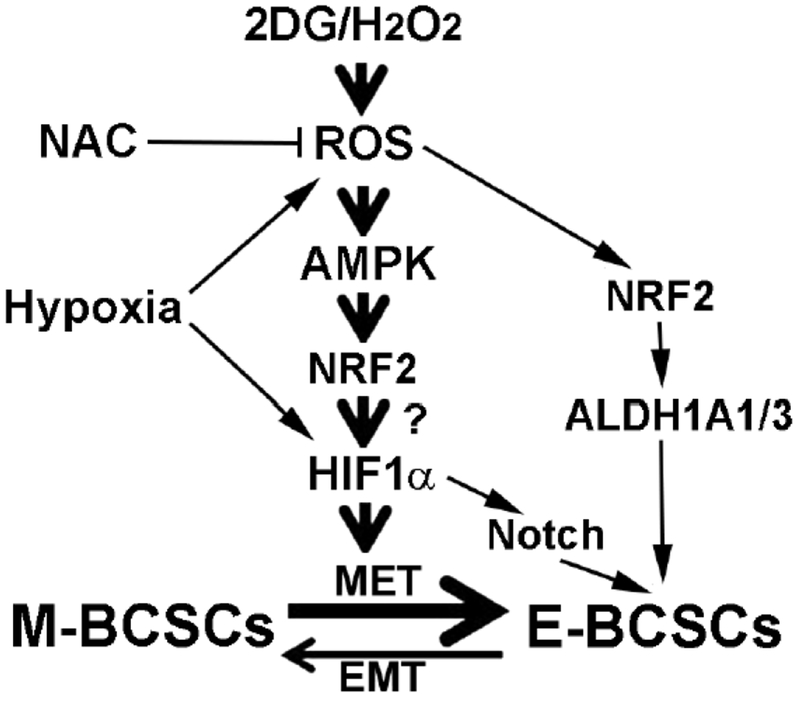
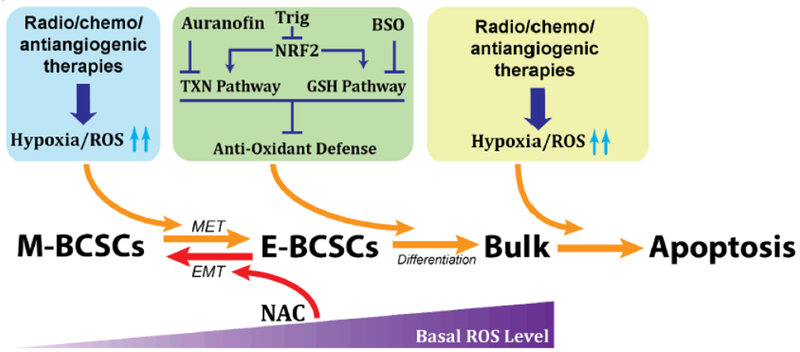
Cancer has long been viewed as a disease of altered metabolism. Although it has long been recognized that the majority of cancer cells display increased dependence on glycolysis, the metabolism of "cancer stem-like cells" (CSCs) that drive tumor growth and metastasis is less well characterized. In this chapter, we review the current state of knowledge of CSC metabolism with an emphasis on the development of therapeutic strategies to exploit the metabolic vulnerabilities of these cells. We outline emerging evidence indicating distinct metabolic pathways active in the proliferative, epithelial- (E) and quiescent, mesenchymal-like (M) CSC states in triple negative breast cancer. These CSC states are characterized by their different redox potentials and divergent sensitivities to inhibitors of glycolysis and redox metabolism. We highlight the roles of two redox-regulated signaling pathways, hypoxia-inducible factor 1α and nuclear factor erythroid 2-related factor 2, in regulating CSC epithelial-mesenchymal plasticity during metabolic and/or oxidative stress, and discuss clinical strategies using combinations of pro-oxidant-based therapeutics simultaneously targeting E- and M-like CSCs. By specifically targeting CSCs of both states, these strategies have the potential to increase the therapeutic efficacy of traditional chemotherapy and radiation therapy.
癌症长期以来被视为一种代谢异常的疾病。尽管人们早就认识到大多数癌细胞对糖酵解的依赖性增加,但驱动肿瘤生长和转移的“癌症干细胞样细胞”(CSC)的代谢情况则知之甚少。在本章中,我们重点介绍了目前关于 CSC 代谢的知识状况,并强调了开发利用这些细胞代谢脆弱性的治疗策略。我们概述了新出现的证据,表明在三阴性乳腺癌中增殖性、上皮样(E)和静止、间充质样(M)CSC 状态中存在不同的代谢途径。这些 CSC 状态的特征是其不同的氧化还原电势以及对糖酵解和氧化还原代谢抑制剂的不同敏感性。我们强调了两个氧化还原调节信号通路,缺氧诱导因子 1α 和核因子红细胞 2 相关因子 2,在调节 CSC 上皮-间充质可塑性方面的作用,在代谢和/或氧化应激期间,并讨论了使用同时针对 E 和 M 样 CSC 的促氧化剂为基础的治疗药物联合的临床策略。通过专门针对两种状态的 CSC,这些策略有可能提高传统化疗和放疗的治疗效果。