Department of Molecular Cell Biology, The Weizmann Institute of Science, 76100, Rehovot, Israel.
Department of Immunology, The Weizmann Institute of Science, 76100, Rehovot, Israel.
Nat Commun. 2018 Dec 21;9(1):5435. doi: 10.1038/s41467-018-07825-3.
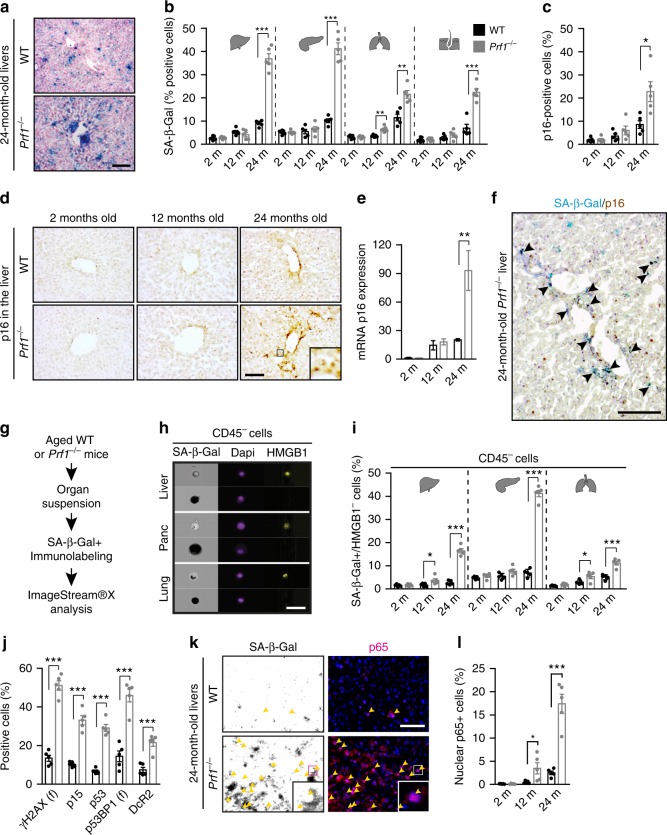
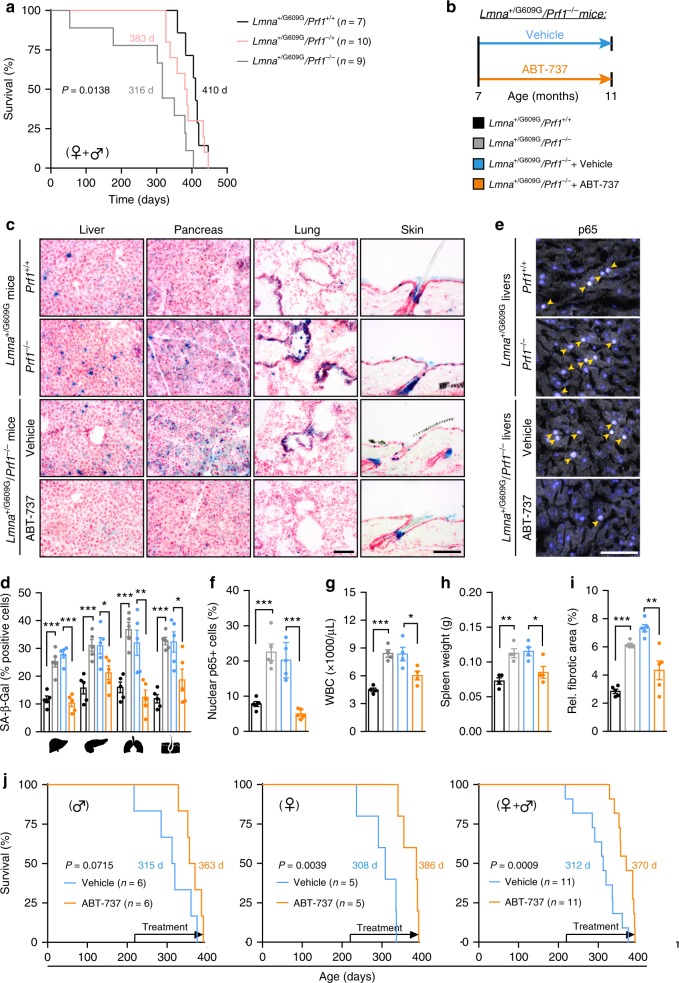
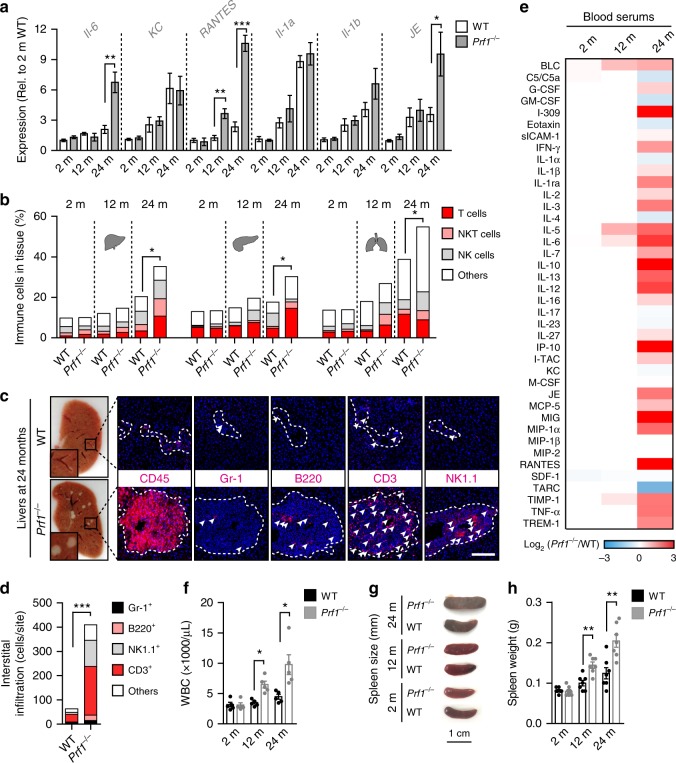
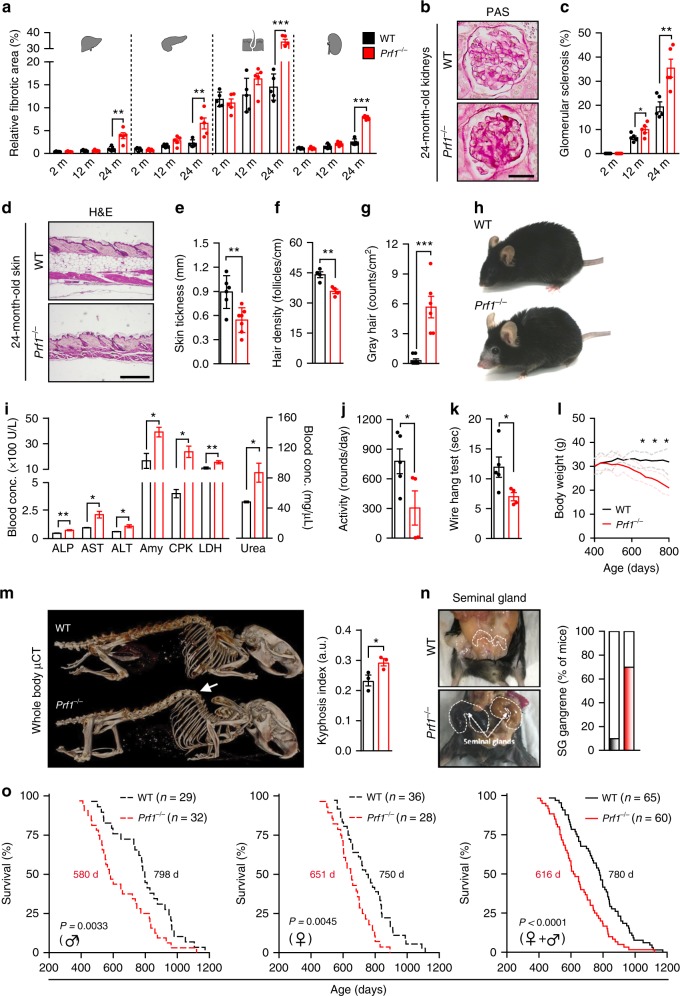
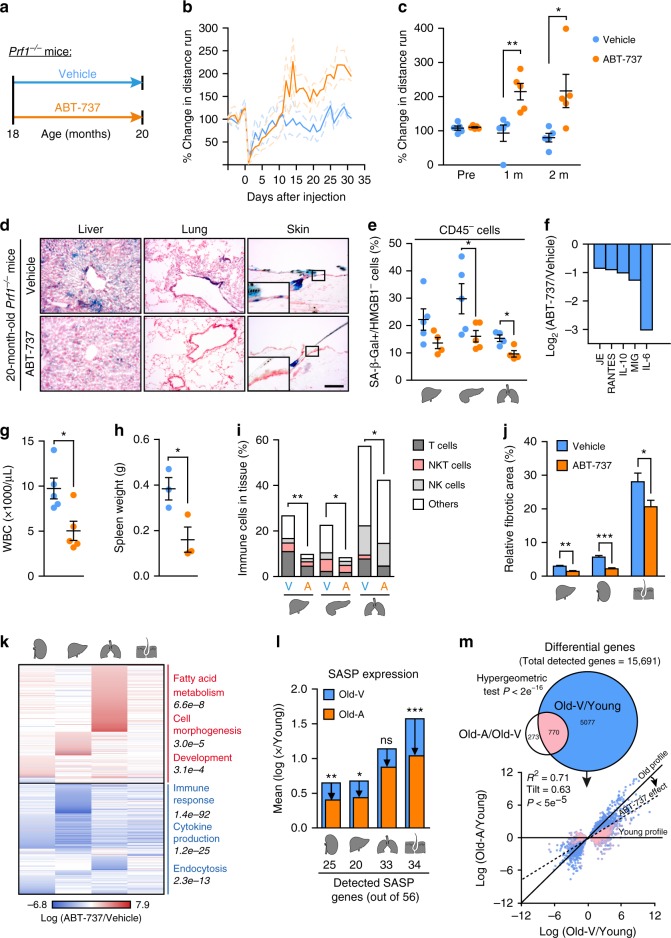
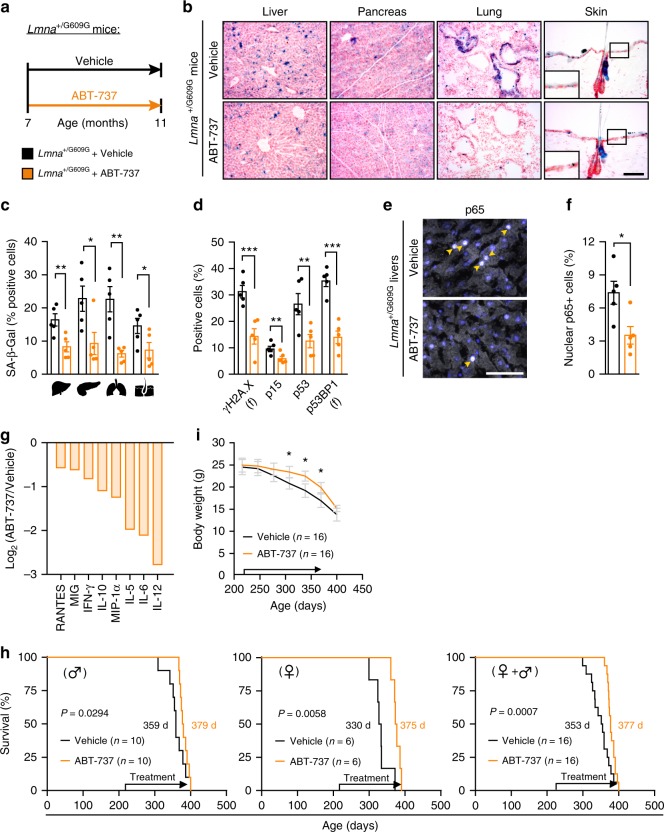
Cellular senescence is a stress response that imposes stable cell-cycle arrest in damaged cells, preventing their propagation in tissues. However, senescent cells accumulate in tissues in advanced age, where they might promote tissue degeneration and malignant transformation. The extent of immune-system involvement in regulating age-related accumulation of senescent cells, and its consequences, are unknown. Here we show that Prf1 mice with impaired cell cytotoxicity exhibit both higher senescent-cell tissue burden and chronic inflammation. They suffer from multiple age-related disorders and lower survival. Strikingly, pharmacological elimination of senescent-cells by ABT-737 partially alleviates accelerated aging phenotype in these mice. In LMNA progeroid mice, impaired cell cytotoxicity further promotes senescent-cell accumulation and shortens lifespan. ABT-737 administration during the second half of life of these progeroid mice abrogates senescence signature and increases median survival. Our findings shed new light on mechanisms governing senescent-cell presence in aging, and could motivate new strategies for regenerative medicine.
细胞衰老(Cellular senescence)是一种应激反应,它会使受损细胞的细胞周期稳定停滞,防止其在组织中增殖。然而,衰老细胞会在老年时在组织中积累,从而可能促进组织退化和恶性转化。免疫系统在调节与年龄相关的衰老细胞积累及其后果方面的参与程度尚不清楚。在这里,我们发现细胞毒性受损的 Prf1 小鼠表现出更高的衰老细胞组织负担和慢性炎症。它们患有多种与年龄相关的疾病,生存率较低。引人注目的是,通过 ABT-737 药理学消除衰老细胞部分缓解了这些小鼠的加速衰老表型。在 LMNA 早老样小鼠中,细胞毒性受损进一步促进了衰老细胞的积累并缩短了寿命。在这些早老样小鼠的生命后半期给予 ABT-737 可消除衰老特征并延长中位寿命。我们的研究结果为衰老过程中衰老细胞存在的机制提供了新的见解,并可能为再生医学提供新的策略。